

The most suitable IRS tax debt negotiation strategies aren’t always the ones that reduce your balance immediately. If you can’t pay now, Currently Not Collectible status may temporarily delay collection. If you can’t pay the full debt, an Offer in Compromise may let you settle for less. The right option depends on your financial situation and what the IRS could collect.
It’s understandable to feel uncertain when notices, payment demands, and unfamiliar options arrive at once. This guide explains how IRS debt negotiation works and how to assess whether a temporary collection delay or an Offer in Compromise may fit your circumstances. You’ll learn which financial details to gather, how the main options differ, and what to consider before choosing your next step.
Key Takeaways
- Build a clear picture of your income, assets, and allowable expenses before weighing hardship-based relief.
- Gather pay stubs, bank statements, tax returns, and monthly expense reports to support your financial position.
- The Offer in Compromise application fee is currently $205 and is waived for low-income taxpayers, according to the Internal Revenue Service.
- According to the Internal Revenue Service, a streamlined installment agreement is available for balances under $50,000 and can last up to 72 months.
Currently not collectible status
For IRS debt, assess whether your finances support a temporary collection delay or another resolution. State tax debts are owed to state tax agencies and follow state rules. IRS debts are federal obligations handled under federal collection rules.
-
Review Collection Notices and Financial Disclosure
Gather each IRS collection notice, follow its response instructions, and identify any proposed levy. Prepare pay stubs, bank statements, filed tax returns, and monthly expense records to document your income, assets, and essential costs. Compare these with the balance and penalties shown. Incomplete or inconsistent financial details can weaken a request. Use the records to show what, if any, payment your current budget can support.
-
Assess Currently Not Collectible Status
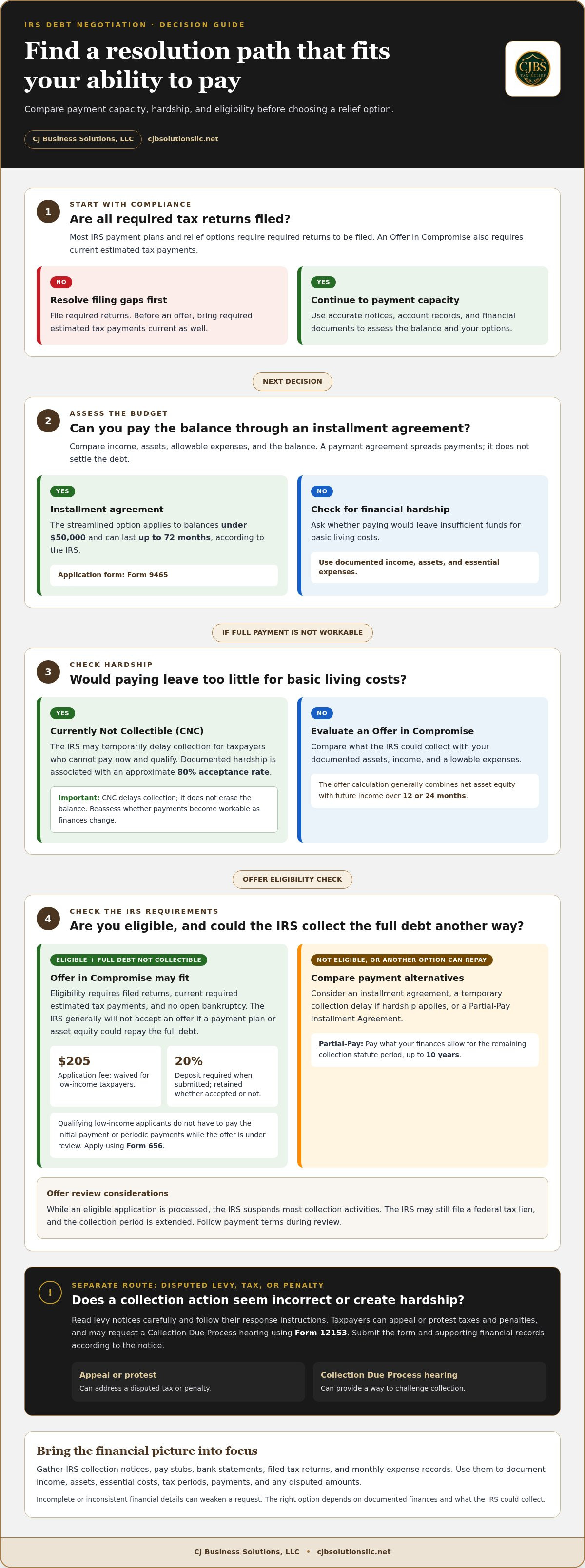
Compare your income and necessary expenses to determine whether paying would leave insufficient funds for basic living costs. The IRS may grant a temporary delay of collection to taxpayers who cannot pay now and qualify. Documented hardship is associated with an approximate 80% acceptance rate for Currently Not Collectible status. This status delays collection; it doesn’t erase the balance, so review whether a payment plan may become workable as finances change.
-
Respond to Collection Actions and Consider an Appeal
Read levy notices carefully and decide whether the amount or proposed collection action is incorrect or creates hardship. Taxpayers can appeal or protest taxes and penalties, and can request a Collection Due Process hearing using Form 12153. Submit the form and supporting financial records according to the notice’s instructions. A hearing can provide a way to challenge collection, while an appeal can address a disputed tax or penalty.
Offer in compromise eligibility
Compare an Offer in Compromise with payment arrangements and hardship relief before deciding how to address the balance. Eligibility and the amount offered depend on documented finances and IRS requirements.
-
Check Offer in Compromise Eligibility
Confirm that all required tax returns are filed, required estimated tax payments are current, and you aren’t in an open bankruptcy. The Internal Revenue Service application fee is currently $205, and the fee is waived for low-income taxpayers. Qualifying low-income applicants also don’t have to pay the initial payment or periodic payments while the offer is under review. Apply using Form 656.
-
Review Offer Calculation and Alternatives
List your assets, income, and allowable expenses, then estimate what the IRS could collect. The calculation generally combines net asset equity with future income over 12 or 24 months. The IRS generally won’t accept an offer if a payment plan or asset equity could repay the full debt. If an offer doesn’t fit, consider currently not collectible status or an installment agreement instead.
A Partial-Pay Installment Agreement lets you pay what your finances allow for the remaining collection statute period, up to 10 years. To apply for an installment agreement, submit Form 9465; the IRS streamlined option covers balances under $50,000 and can last up to 72 months, according to the Internal Revenue Service. Available relief options include an offer in compromise, installment agreements, and a temporary collection delay. For a clearer comparison of financial records and options, consider tax resolution services.
How IRS debt negotiation works
Start by matching the IRS option to your ability to pay and current compliance status. Prepare accurate returns and financial records before requesting relief.
- Confirm the balance and filing status first. Most IRS payment plans and relief options require all required returns to be filed. Review notices and account transcripts, then identify the tax periods, penalties, payments, and any disputed amounts. Accurate records help you compare a payment plan, an Offer in Compromise, or hardship relief on consistent terms.
- Compare payment capacity with available options. According to the Internal Revenue Service, a streamlined installment agreement is available for balances under $50,000 and can last up to 72 months. An agreement spreads payments rather than settling the debt. If full payment would cause hardship, assess whether another option better fits income, assets, and allowable expenses.
- Prepare carefully before submitting an offer. According to the Internal Revenue Service, an Offer in Compromise requires a 20% deposit when submitted, and the IRS retains the deposit whether or not it accepts the offer. While an eligible application is processed, the IRS suspends most collection activities, but may file a federal tax lien and extends the collection period. Follow payment terms during review.
- Weigh professional help against handling the process yourself. A tax professional can analyze records and prepare a resolution request. Taxpayers who understand their finances and IRS forms may be able to manage a straightforward payment plan themselves. Be cautious of settlement companies promising guaranteed results or claiming every debt can be settled for a small amount. Review the proposed work and terms before paying for assistance.
If you want help assessing records and resolution options, explore tax resolution services.
CJ Business Solutions: Tax Resolution Services
CJ Business Solutions, LLC can help you assess IRS tax debt and consider a resolution path based on your financial records. Its Enrolled Agent provides Tax Resolution Services, and transcript analysis can identify specific tax issues and inform possible next steps. If an IRS audit is involved, IRS audit strategy defense can help you prepare for the examination.
Consider professional support when notices, account transcripts, and payment options are difficult to reconcile, or when you need help organizing information before pursuing relief. A focused review can clarify the balance, tax periods, and relevant issues before you decide how to proceed.
Visit the CJ Business Solutions, LLC website to learn more.
Take the Next Step With a Clear Plan
The next step is to build a consistent account of your tax periods, finances, and communications with the IRS. Keep notices and supporting records together, and note what you submitted and when. This gives you a practical reference as you follow through on IRS tax debt negotiation strategies and respond to future correspondence.
If you’d value professional support, CJ Business Solutions, LLC offers Tax Resolution Services led by an Enrolled Agent, along with IRS audit strategy defense. These services can help you organize the facts and consider an appropriate resolution path that reflects your financial circumstances.
Contact CJ Business Solutions, LLC for help when you’re ready to discuss your next step. A careful, informed decision can help you move forward with greater clarity.
Frequently Asked Questions
What is IRS Debt Negotiation?
IRS debt negotiation means working with the Internal Revenue Service to address unpaid federal taxes through an available resolution option. Depending on your circumstances, IRS tax debt negotiation strategies may include arranging payments, requesting a temporary collection delay, seeking penalty relief, or applying to settle for less through an Offer in Compromise. The key is matching the request to your documented ability to pay.
How does an IRS Offer in Compromise work, and who qualifies?
An Offer in Compromise asks the IRS to accept less than the full balance when the taxpayer cannot pay in full or full payment would cause financial hardship. Eligibility generally requires filed tax returns, current estimated payments when required, and no open bankruptcy. The IRS weighs asset equity and future income. Form 656 is used to apply, and Form 656-B provides application instructions.
How do I request currently not collectible status from the IRS?
Contact the IRS and explain why your current finances prevent payment. Provide a clear account of your income, assets, expenses, and necessary living costs. Keep supporting records, such as pay statements and bank records, together, and respond to requests for more information. If granted, Currently Not Collectible status temporarily delays collection, but the tax balance remains owed.
Can penalties or interest on IRS tax debt be reduced or removed?
Penalty relief may reduce or remove penalties when circumstances support it. A clean compliance history may support first-time penalty relief. Serious illness, hospitalization, a natural disaster, or incorrect IRS advice may also explain a failure to file or pay on time. Describe what happened, provide relevant records, and ask the IRS to review the specific penalties on your account.
What steps should I take to negotiate tax debt directly with the IRS?
First, review IRS notices and confirm the tax periods and amount due. File missing returns, organize financial records, and identify a payment amount your budget can sustain before discussing an option. Individuals can call the IRS at 800-829-1040; businesses can call 800-829-4933. Keep notes of conversations and follow any written instructions or deadlines in your notices.

Article by
Crystal R. Johnson, MBA EA
Crystal Johnson founded CJ Business Solutions to give individuals and small-business owners something often missing from the tax and accounting process: clear explanations, practical solutions, and trusted support.
With more than 27 years of accounting and financial experience, Crystal helps clients understand complicated tax matters, restore compliance, respond to IRS concerns, and make stronger business decisions. As an Enrolled Agent, she is federally authorized to represent taxpayers before the Internal Revenue Service.


