

Tax audit representation costs depend on the audit’s complexity, the tax years involved, and the work needed to prepare a response and deal with the IRS. Professionals may bill hourly or charge a flat fee, depending on the scope of representation.
It’s reasonable to want a clear picture of what you’re paying for before deciding how to proceed. This article explains how full representation differs from help with a basic correspondence audit, what affects the workload, and how hourly billing works. It also describes services representation may include, from reviewing records and planning a response to communicating with the IRS, so you can better understand the support an audit may require.
Key Takeaways
- Compare the audit type and scope when estimating representation costs, since correspondence, office, and field audits can require different levels of support.
- Understand how hourly billing differs from a flat fee, and consider how document readiness and audit complexity can affect the work involved.
- Review what representation may cover, including IRS communication and case preparation, and understand that a power of attorney authorizes full representation.
- For help with an IRS examination, explore how tax resolution services, audit strategy defense, and transcript analysis can support your next steps.
How much does Full Audit Representation cost?
Full representation costs depend on the audit’s scope, the tax years involved, and the records that need review. The billing structure and services included matter as much as the audit format.
Standard IRS Audit Fees
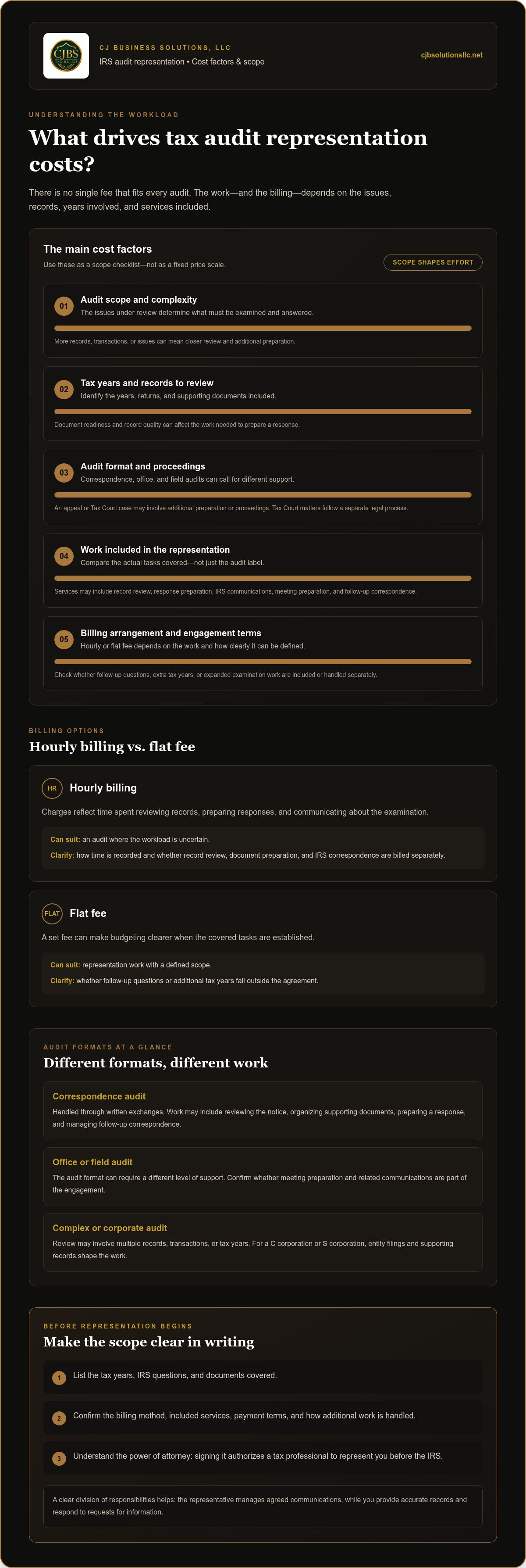
Representation may be billed at a flat fee or hourly, with the work shaped by the return and issues under review. Before comparing estimates, identify which tax years, documents, IRS responses, and meetings are covered. A clear scope shows what the charge includes and whether extra work could arise if the examination expands.
Correspondence Audit Pricing
A correspondence audit is handled through written exchanges, so representation typically involves reviewing the IRS notice, organizing supporting documents, and preparing a response. The workload depends on the questions raised and the quality of the available records. Check whether the proposed scope includes follow-up correspondence, not just the initial response. That distinction can affect the total work required.
Complex and Corporate Audit Fees
Complex audits may require closer review of multiple records, transactions, or tax years. For matters involving specialized holdings such as digital assets, consulting dedicated firms like Block3 Finance can assist in clarifying intricate financial records. A corporate audit examines a C corporation or S corporation, so the entity’s filings and supporting records shape the work. Representation for an in-person audit, an appeal, or a Tax Court case may cost more if it involves additional preparation or proceedings. Tax Court matters follow a separate legal process.
Representation by Tax Professionals
Fees for a CPA, Enrolled Agent, or tax attorney vary with the audit’s scope, the professional’s experience, and the billing arrangement. For those exploring different models of retaining legal advocates directly, services such as barristersdirect.ie demonstrate how direct access to counsel can help streamline initial consultation and representation. Credentials alone don’t make fees directly comparable. Compare the work covered and whether billing is hourly or flat-fee, including services such as document review, IRS communications, and meeting preparation.
Hourly billing for IRS audit representation
With hourly billing, charges reflect time spent reviewing records, preparing responses, and communicating about the examination. The total depends on the audit’s scope and the work required.
Hourly Billing Structure
CPAs and Enrolled Agents may charge within a broad range, depending on experience and the work involved. Ask how time is recorded and whether reviewing income records, preparing documents, and corresponding with the IRS are billed separately.
Hourly and Flat-Fee Options
Tax professionals may bill by the hour or set a flat fee for defined representation work. Hourly billing can suit an audit with an uncertain workload, because charges reflect time spent. A flat fee can make budgeting clearer when the covered tasks are established. Compare the scope carefully: follow-up questions or additional tax years may fall outside a flat-fee agreement.
Fee Negotiation and Engagement Terms
Discuss fees before work begins by clarifying the audit’s scope and separating essential tasks from optional work. An engagement letter should identify the billing method, covered tax years, included services, payment terms, and how additional work is handled. Review the written terms before authorizing representation.
Audit representation services
Audit defense involves more than sending paperwork to the IRS. Representation can help you understand why the examination is taking place, organize documentation, and respond to the issues raised in the notice.
Full representation requires authorization: you must sign a power of attorney so a tax professional can represent you before the IRS. Taxpayers also have the right to representation in tax matters and to contest IRS decisions. Understand the authority you’re granting and which parts of the audit the engagement covers.
Work often starts with reviewing the IRS notice and comparing its questions with the relevant tax return and supporting records. For example, if the IRS questions a deduction, a representative can help organize receipts and other documents that support the reported amount. The response should address the specific issue raised, rather than include unrelated paperwork that may not resolve the examiner’s concern.
Representation may also include preparing written replies, communicating with the IRS, and explaining requests or next steps. Ask how deadlines, document submissions, and follow-up questions will be handled. A clear division of responsibilities helps prevent missed requests: the representative manages agreed communications, while you provide accurate records and respond to requests for information.
Transcript analysis can help identify account activity relevant to an audit or related tax issue. If you need support understanding your IRS examination and planning a response, discuss your audit situation with a tax professional.
CJ Business Solutions: Tax Resolution Services
CJ Business Solutions, LLC provides IRS audit strategy defense for taxpayers responding to a federal examination. Led by an Enrolled Agent, the firm helps organize audit responses and clarify tax issues through transcript analysis.
Consider Tax Resolution Services when an IRS notice raises questions about your return, your records need closer review, or you want professional guidance on how to respond. Transcript analysis can help identify account details relevant to understanding the issue and planning next steps. The appropriate support depends on the questions raised and the records available.
For help addressing an IRS audit, contact CJ Business Solutions.
Move forward with a considered plan
Understanding tax audit representation costs can help you assess your options, but your next step is deciding what support would be useful for your situation. Before seeking help, gather the IRS notice, identify the issues it raises, and collect records related to those questions. This gives you a practical starting point for discussing the audit and the response you may need.
CJ Business Solutions offers Tax Resolution Services and IRS audit strategy defense, with an Enrolled Agent providing professional tax support. If you would like guidance on approaching an IRS examination, you can contact CJ Business Solutions to discuss your circumstances and possible next steps.
A clear, organized conversation can help you approach the process with greater understanding and confidence.
Frequently Asked Questions
What is Audit Defense?
Audit defense is professional support for understanding and responding to questions raised during a tax examination. It can help you assess whether your return position is supported by records and prepare a clear explanation for the IRS. It doesn’t make the audit disappear or assure a particular result. Its purpose is to address the examination with organized information.
How much does a tax professional charge to represent someone in an IRS audit?
Tax audit representation costs on the market typically range from $2,600 to $5,600, with a median of about $3,500. These figures describe market pricing, not CJ Business Solutions’ fees. The amount a taxpayer pays depends on the agreed scope, audit complexity, and billing method. Compare the work covered before treating two quotes as equivalent.
Do IRS audit representation fees vary by audit type, complexity, or amount of tax at issue?
Yes. Tax audit representation costs can vary with the audit’s format and complexity, which affect the review, preparation, and communication required. The amount of tax at issue may also affect the significance of the matter, but it doesn’t determine the hours needed by itself. A narrow question with organized records may require different work from several issues needing extensive documentation.
How do tax professionals charge for audit representation: hourly, flat fee, or retainer?
Tax professionals may bill hourly or charge a flat fee for defined work. Hourly billing tracks time spent, while a flat fee covers an agreed scope. If an engagement involves a retainer, clarify whether it is an advance payment, how it will be applied, and what happens if the work expands. Get the terms in writing.
Can a taxpayer represent themselves in an IRS audit, and when should they hire a professional?
You can respond to an audit yourself, but professional representation before the IRS requires signed authorization. Consider professional help if the IRS raises several issues, records are difficult to organize, or you’re unsure how to explain a tax return position. A power of attorney authorizes an eligible tax professional to represent you before the IRS within the stated scope.

Article by
Crystal R. Johnson, MBA EA
Crystal Johnson founded CJ Business Solutions to give individuals and small-business owners something often missing from the tax and accounting process: clear explanations, practical solutions, and trusted support.
With more than 27 years of accounting and financial experience, Crystal helps clients understand complicated tax matters, restore compliance, respond to IRS concerns, and make stronger business decisions. As an Enrolled Agent, she is federally authorized to represent taxpayers before the Internal Revenue Service.


