

Respond to an IRS audit notice by following the instructions and deadline in the mailed letter, then provide the requested records. The IRS generally can audit U.S. returns filed within the last three years; a substantial error, typically one exceeding 25% of gross income, may lead it to add years, usually no more than six. Effective IRS audit notice response assistance starts with recognizing what the letter asks you to do.
An IRS notice can feel alarming, especially when it’s unclear whether the agency is asking a question, proposing a change, or beginning an audit. The IRS notifies taxpayers selected for an audit by mail, not by telephone. Read the letter carefully and note the response date.
This article explains how to distinguish a tax notice from an audit letter, what records to gather and submit, and what may happen if you disagree with the IRS’s findings. You’ll also learn when professional guidance can help you organize a response and understand your options.
Key Takeaways
- Check the notice number and the specific action requested to understand whether the IRS is asking a question, proposing a change, or examining your return.
- Match each document you submit to the issue under review, and send copies rather than original records.
- For an audit conducted by mail, the Internal Revenue Service can ordinarily grant a one-time automatic 30-day extension to respond.
- If the proposed changes don't match your records, organize the evidence supporting your position before deciding how to reply.
How do I respond to an IRS notice (and what if they want to audit me)?
Start by identifying the action requested and the due date, then gather records related to the specific issue. IRS audit notice response assistance can help you organize a focused reply when you’re unsure how to address the examination.
Identifying and Resolving an Audit
An IRS audit examines return details, such as reported income, credits, or expenses, against supporting records. The notice identifies the tax year, issues, and requested documents, helping you focus your response. You may represent yourself or use an authorized representative. To dispute proposed changes, explain each disagreement and provide records that support your return. If the IRS’s information is correct, you may accept its revised calculation.
Notice Resolution Timeframes
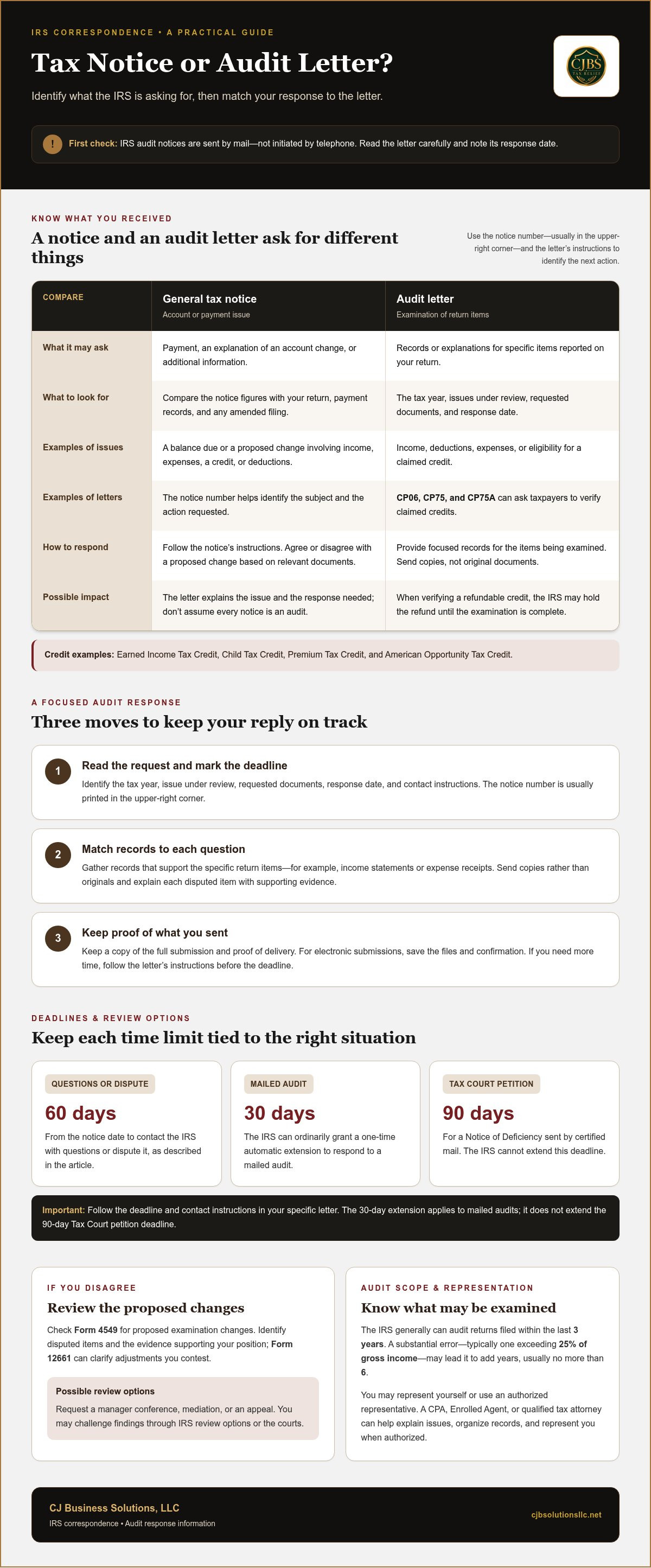
Resolution time depends on the notice’s deadline, your reply, and the IRS review. The notice number appears in the top-right corner; use it and the letter’s contact instructions when asking about an audit. You have 60 days from the notice date to contact the IRS with questions or dispute it. For a mailed audit, the Internal Revenue Service can ordinarily grant a one-time automatic 30-day extension. A tax professional offering IRS audit notice response assistance can help keep correspondence tied to the requested issues.
Choosing Audit Representation
A CPA, Enrolled Agent, or qualified tax attorney can help explain audit issues, organize records, and represent you when authorized. Choose support based on the questions raised and your needs. An Enrolled Agent can help with audit strategy, while a tax attorney may be appropriate when legal advice is central. You may also represent yourself during the examination.
Appealing an Audit Decision
You can challenge findings through IRS review options or the courts. Review Form 4549 for proposed examination changes, then identify disputed items and evidence; Form 12661 can clarify adjustments you contest. Options include requesting a manager conference, mediation, or an appeal. For a Notice of Deficiency sent by certified mail, the deadline to petition the U.S. Tax Court is 90 days, and the IRS cannot extend it.
Distinguishing IRS tax notices from audit letters
An IRS tax notice may request payment, explain an account change, or ask for information; an audit letter examines specific items on your return. Identify the letter’s purpose before gathering records, because a balance notice and an examination request call for different responses. The notice number, usually printed in the upper-right corner, helps identify its subject and the next action.
An audit letter names the tax year and issues under review, such as income, deductions, or a claimed credit. For example, CP06, CP75, and CP75A notices can ask taxpayers to verify claimed credits. An audit may examine eligibility for the Earned Income Tax Credit, Child Tax Credit, Premium Tax Credit, or American Opportunity Tax Credit. The IRS notifies taxpayers selected for audit by mail; it doesn’t initiate an audit by telephone.
For a general tax notice, compare its figures with your return, payment records, and any amended filing. If the IRS proposes a change, identify whether it concerns income, expenses, a credit, or deductions. Then decide whether to agree or disagree based on documents addressing that issue. During an audit to verify a refundable credit, the IRS may hold your refund until the examination is complete.
A tax professional can help interpret correspondence, organize records, and prepare a focused reply when the issue is complex or you disagree with proposed changes. For support centered on an examination, IRS audit strategy defense can help structure your response around the items the IRS is reviewing. Respond according to the letter’s instructions rather than assuming every IRS notice is an audit.
Responding promptly to an IRS audit notice
A timely reply gives the IRS relevant records and your position before it completes its review. IRS audit notice response assistance can help you organize a clear answer around the issues identified in the letter.
Timely Notice Responses
Responding by the due date gives the IRS time to consider documentation for the items under examination. Match each requested item to records that support your return, such as income statements or expense receipts. If you need more time, follow the notice’s instructions to request an extension before the deadline.
Keep a copy of everything you send, along with proof of delivery. Certified mail with return receipt requested can document delivery; a delivery-confirmation service can also provide a record. For electronic submissions, save the files and confirmation. IRS audit notice response assistance can help you assemble a focused package when the request involves several records or tax issues.
Consequences of Not Responding
If you don’t respond by the date in the audit letter, the IRS will complete the audit and send a report with proposed changes to your return. Those adjustments may result in additional tax. Review the report against your records and identify the items you dispute, rather than assuming every proposed change is final. During an audit to verify a refundable credit, the IRS may hold your refund until the examination ends.
If a deadline is approaching, IRS audit notice response assistance can help you prepare a timely, organized reply. Get assistance with your IRS audit response.
CJ Business Solutions, LLC: Tax Resolution Services
CJ Business Solutions, LLC helps taxpayers assess IRS audit letters and prepare considered responses. Its IRS audit strategy defense supports taxpayers facing questions about return items, records, or proposed changes. Crystal Johnson, an Enrolled Agent, CPA, and Audit Defender, can guide a review of the issues raised and the documents relevant to the examination.
When your IRS account history or the source of a tax issue is unclear, transcript analysis can help identify specific concerns and inform a resolution path. Tax Resolution Services may also help when an audit notice connects to a broader tax matter. This support can help you understand correspondence, organize relevant information, and determine how to address the IRS’s position.
Contact CJ Business Solutions, LLC to discuss your audit notice and next steps.
Choose a Clear Next Step
An IRS examination can raise questions beyond the requested documents, including how a proposed adjustment affects your overall tax position. Before sending another response, consider the outcome you’re seeking and whether your records support it. A deliberate plan can help keep later decisions consistent with the facts on your return.
IRS audit notice response assistance may be useful when correspondence is difficult to interpret or the issues extend beyond a single adjustment. CJ Business Solutions, LLC provides tax resolution and audit defense support to help you consider your next step. You remain in control of your decisions, while informed guidance can clarify the options before you.
If you would like to discuss your circumstances, contact CJ Business Solutions, LLC. A thoughtful response begins with understanding the issue and choosing a practical way forward.
Frequently Asked Questions
How far back can the IRS go to audit my return?
Generally, the IRS can audit returns filed within the last three years. If it identifies a substantial error, typically one exceeding 25% of gross income, it may add years and usually does not go back more than six years. These are general limits; the tax years named in your notice show which returns are under examination.
Audits by mail: What should I do?
For a mailed audit, use the response method stated in the letter and organize records by each issue under review. The IRS may accept electronic records instead of, or alongside, other records; contact the assigned auditor to confirm what is acceptable. IRS Publication 3498-A explains the examination process for audits conducted by mail.
How am I notified?
The IRS notifies taxpayers selected for an audit by mail, not by telephone. The letter identifies the return or tax year and explains what the IRS needs next. Check the notice number in the upper-right corner, then use the contact details printed on the notice if you have questions. A phone call alone isn’t an audit notification.
How do I know if the IRS received my response?
Keep the delivery receipt or tracking confirmation with a copy of your response. If your audit letter lists 866-897-0177 or 866-897-0161, you can also view audit status in the Records and Status tab of your individual online account. If no status update appears, retain proof of delivery and follow the notice’s contact instructions.
How does the IRS conclude an audit?
The IRS reviews evidence for the items examined and then issues its audit result. If proposed adjustments remain, the report explains the changes; Form 4549 can help you review reported income tax examination changes. You may accept the findings or pursue disagreement options, such as requesting an IRS manager conference or an appeal, while observing applicable deadlines.

Article by
Crystal R. Johnson, MBA EA
Crystal Johnson founded CJ Business Solutions to give individuals and small-business owners something often missing from the tax and accounting process: clear explanations, practical solutions, and trusted support.
With more than 27 years of accounting and financial experience, Crystal helps clients understand complicated tax matters, restore compliance, respond to IRS concerns, and make stronger business decisions. As an Enrolled Agent, she is federally authorized to represent taxpayers before the Internal Revenue Service.


