

An IRS examination is not just a test of whether you can produce requested records. You also have rights throughout the process. Taxpayer rights during IRS examination include the right to be informed, to privacy, to challenge the IRS’s position, and to retain representation. These protections can help you respond thoughtfully, but they do not remove valid tax obligations or deadlines.
An IRS notice can raise questions about which documents to provide, when to respond, and what to do if you disagree with a finding. This article explains the core protections described in IRS Publication 1 and how to use them in an organized way. You’ll learn how to review an information request, prepare a response, and understand when an authorized representative, such as an Enrolled Agent, may help with examination issues and IRS communications.
Key Takeaways
- Taxpayer rights during an IRS examination include protections related to privacy, representation, appeals, and the opportunity to challenge the IRS’s position.
- Read the examination notice carefully, note the response date and instructions, and keep copies of relevant records and communications.
- Organize documents by tax year and examination issue so you can connect each record to the question it addresses.
- For eligible taxpayers, an authorized Enrolled Agent may help interpret examination issues and organize communications with the IRS.
Which Taxpayer Rights Matter Most During an IRS Examination?
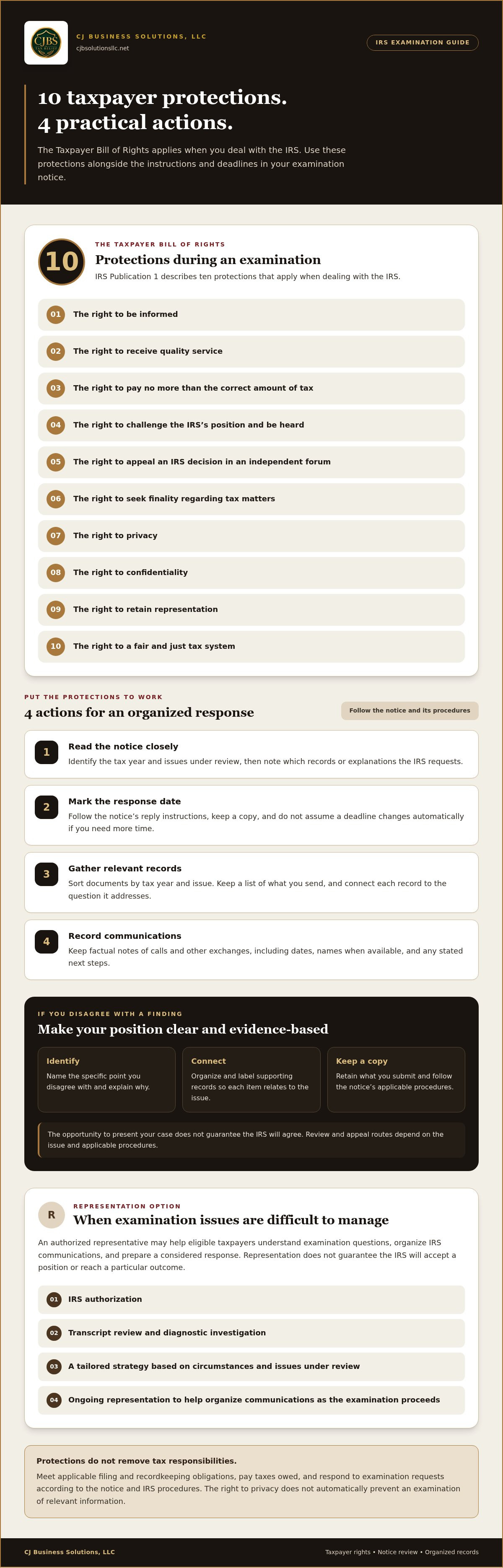
An examination notice can feel unsettling, especially when it questions records or information on a tax return. The Taxpayer Bill of Rights, described in IRS Publication 1, sets out ten protections that apply when you deal with the IRS.
Taxpayer rights during IRS examination include the right to be informed about IRS decisions and instructions, receive quality service, and pay no more than the correct amount of tax. You may challenge the IRS’s position and be heard, appeal an IRS decision in an independent forum, and seek finality regarding tax matters. The rights to privacy, confidentiality, representation, and a fair and just tax system also apply. The Taxpayer Bill of Rights 2 and the Taxpayer Advocate Service provide historical context for the creation of the Office of the Taxpayer Advocate, a resource that may assist taxpayers facing unresolved difficulties with the IRS.
These protections do not erase your tax responsibilities. You still need to meet applicable filing and recordkeeping obligations, pay taxes owed, and respond to examination requests according to the notice and IRS procedures. The right to privacy, for example, does not automatically prevent the IRS from examining relevant information.
How the right to challenge and be heard applies
If you disagree with an IRS finding, you may explain your position and provide relevant supporting information through the applicable examination or appeal procedures. If the IRS questions a reported expense, for example, you could provide records that support how you reported it. The right gives you an opportunity to present your case and have it considered, but it does not guarantee the IRS will agree. Keep your explanation factual, connect each document to the issue, and follow the notice’s response instructions and deadlines.
Exercising Your Rights During an IRS Examination
Your rights are most useful when you apply them to the specific notice and issues under review. They provide important protections, but they do not replace the need to understand what the IRS is requesting and respond appropriately.
- Read the notice closely. Identify the tax year and issues under review, then note the records or explanations the IRS requests.
- Mark the response date. Follow the notice’s instructions for replying and keep a copy for your records. Do not assume a deadline changes automatically if you need more time.
- Gather relevant records. Sort documents by issue and tax year, and keep a list of what you send. Read each request in context rather than assuming every document you have is relevant or required.
- Record communications. Keep factual notes of calls and other exchanges, including dates, names when available, and any stated next steps.
If a request is unclear, review the notice’s instructions and use its stated process to seek clarification. Questions, disagreements, and procedural options depend on the notice and your circumstances. The IRS Taxpayer Advocate Service explains its role and how taxpayers can seek assistance.
What to do if you disagree with an examiner
Identify the specific point you disagree with, explain why, and organize supporting records so each item connects to the issue. Label documents and briefly note what each one helps establish. Keep your explanation factual and retain a copy of everything you submit. Review or appeal routes depend on the issue and applicable procedures, so follow the instructions in your notice rather than assuming the same process applies to every examination.
If the issues or communications are difficult to organize, IRS examination representation can help eligible taxpayers understand the examination and prepare a considered response.
When IRS Representation Can Help Protect Your Interests
Representation may be helpful when examination questions involve complex records, several issues, or uncertainty about which information is relevant. An authorized representative can help you understand the questions raised, organize communications, and prepare a considered response. Representation does not guarantee that the IRS will accept your position or reach a particular outcome.
Crystal Johnson is an Enrolled Agent, CPA, and Audit Defender. She represents eligible taxpayers within the scope of authorization available to an Enrolled Agent. The right to retain representation is one of the Taxpayer rights during IRS examination. Support from an authorized representative can help you approach IRS communications with a clearer understanding of the issues.
What to expect from a tailored examination review
The process begins with IRS authorization, followed by transcript review and diagnostic investigation. These steps help clarify the tax history, examination questions, and records that may be relevant. That context informs a tailored strategy based on your circumstances and the issues under review. Ongoing representation can help organize communications as the examination proceeds and keep the response aligned with applicable IRS procedures.
The review is intended to clarify the situation and identify a practical next step, not to promise a particular result. Any strategy and potential resolution remain subject to IRS guidelines and the facts of the case. Learn more about Tax Resolution & IRS Representation.
Choose a Clear Next Step
An examination can raise new questions as records are reviewed. Keep decisions deliberate, and use your taxpayer rights as a framework for engaging with the process. The right response depends on the notice, the facts, and applicable procedures. If the issues feel difficult to manage alone, representation can help you understand your options and prepare for what comes next.
A careful review can help you identify what needs attention, which questions remain, and what next steps fit your circumstances. For guidance tailored to your situation, explore Tax Resolution & IRS Representation. Contact CJ Business Solutions, LLC to discuss your examination and take an informed next step.
Frequently Asked Questions
Can I have someone represent me during an IRS examination?
Yes. You may authorize a representative to communicate with the IRS within the scope of that authorization. An Enrolled Agent may represent eligible taxpayers under applicable IRS rules. A representative can help clarify which examination issue a document relates to and keep communications organized. Representation can support your participation, but it does not ensure the IRS will accept your position or remove your responsibilities.
What should I do first after receiving an IRS examination notice?
Read the notice carefully and identify the tax year, issues, requested information, response date, and instructions for replying. The right to be informed means you can note terms or directions that are unclear and seek clarification through the process described in the notice. Keep the notice with related records, and do not assume the response date is automatically extended.
Can I challenge the IRS examiner’s findings?
Yes. You may challenge an IRS position and be heard, and review or appeal options may be available under applicable procedures. If you disagree, separate factual errors from differences in how the rules were applied, then connect each point to relevant records. For example, identify the item in question and explain what the supporting document shows. The notice and issue determine which review route applies.
Does the right to representation mean I can ignore IRS requests?
No. Representation does not mean you can disregard a request or assume the examination is paused. Pay attention to the notice’s instructions and response date. A representative may help assess how a request relates to the issues under review and prepare a response under applicable procedures. Your responsibilities and available options depend on the circumstances, so address uncertainty promptly rather than letting a deadline pass.

Article by
Crystal R. Johnson, MBA EA
Crystal Johnson founded CJ Business Solutions to give individuals and small-business owners something often missing from the tax and accounting process: clear explanations, practical solutions, and trusted support.
With more than 27 years of accounting and financial experience, Crystal helps clients understand complicated tax matters, restore compliance, respond to IRS concerns, and make stronger business decisions. As an Enrolled Agent, she is federally authorized to represent taxpayers before the Internal Revenue Service.


