

A tax bill doesn’t always have to be paid in full right away. Tax debt is an unpaid tax balance that may include penalties and interest. An IRS tax debt consultation can help clarify the available ways to address it.
It’s reasonable to seek clear guidance before committing to paid help. A consultation can cover your account, possible payment relief, and the IRS criteria for an offer in compromise. Reputable resolution specialists, such as US Tax Advocate Services LLC, can assist with evaluating IRS options, while IRS self-service tools and taxpayer assistance programs can also help you understand your options and decide what support may be useful.
Key Takeaways
- Compare an installment agreement with temporary collection delay to understand which approach may fit your ability to pay.
- Assess offer-in-compromise eligibility by reviewing your filing status, income, expenses, and asset equity.
- Use IRS self-service tools to review account details and explore possible payment or tax-debt resolution options.
- Before choosing paid assistance, clarify what you need help with, such as understanding transcripts or planning a response to an IRS issue.
When Does Payment Deferral or “Currently not Collectible” End with the IRS?
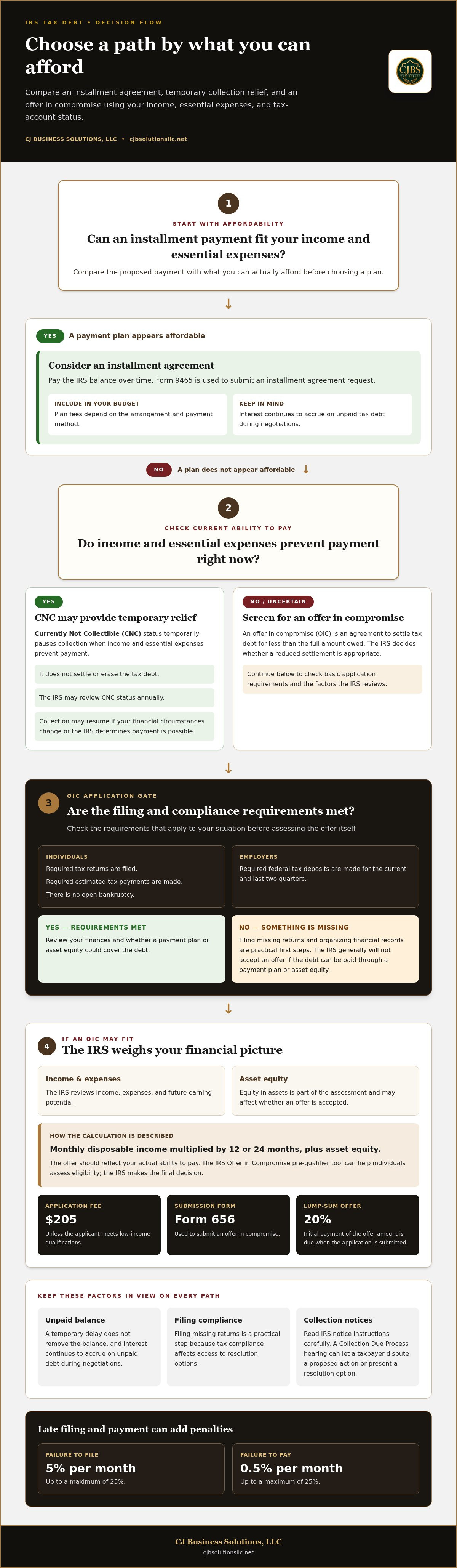
A payment plan lets a taxpayer pay an IRS balance over time. Currently Not Collectible (CNC) status temporarily pauses collection when income and essential expenses prevent payment. A temporary collection delay postpones collection but doesn’t settle or erase tax debt. These options provide relief, not automatic cancellation.
Fees for a payment plan depend on the arrangement and payment method, so include them when assessing affordability. Interest continues to accrue on unpaid IRS tax debt during negotiations. According to the Internal Revenue Service, Form 9465 is used to submit an installment agreement request. The taxpayer should compare the proposed payment with income and essential expenses before choosing a plan. If paying the full amount isn’t possible, provide accurate financial information when seeking relief.
CNC status can end if a taxpayer’s financial circumstances change or the IRS determines that payments are possible. The IRS may review CNC status annually, so keep income and expense records current. A temporary delay also doesn’t remove the balance, and collection may resume if the taxpayer’s ability to pay changes. Filing missing returns is a practical step because tax compliance affects access to resolution options.
Penalties can add to the amount owed. The Internal Revenue Service sets the failure-to-file penalty at 5% per month, up to a maximum of 25%. According to the Internal Revenue Service, the failure-to-pay penalty is 0.5% per month, up to a maximum of 25%. Addressing late filing and payment can help limit further complications.
A Collection Due Process hearing is an IRS review process connected to certain collection actions. A taxpayer may use an appeal to dispute a proposed action or present a resolution option. Read the IRS notice carefully, note its response instructions, and gather records that support your disagreement or payment proposal.
Offer in compromise eligibility
An offer in compromise (OIC) is an agreement to settle tax debt for less than the full amount owed. Other IRS relief options include installment agreements, which let eligible taxpayers pay over time. The right option depends on whether a payment plan is affordable and whether the IRS determines a reduced settlement is appropriate.
To qualify to apply for an OIC, individuals must file required tax returns, make required estimated tax payments, and have no open bankruptcy. Employers must also make required federal tax deposits for the current and last two quarters. The IRS generally won’t accept an offer if the taxpayer can pay the debt through a payment plan or asset equity. Filing missing returns and organizing financial records are practical first steps.
The IRS reviews income, expenses, asset equity, and future earning potential to assess an offer. Its calculation considers monthly disposable income multiplied by 12 or 24 months, plus asset equity. An offer should reflect the taxpayer’s actual ability to pay. The IRS Offer in Compromise pre-qualifier tool can help individuals assess eligibility, but the IRS makes the final decision.
According to the Internal Revenue Service, the application fee is $205 unless the applicant meets low-income qualifications. The IRS identifies Form 656 as the form used to submit an OIC. A lump-sum offer requires an initial payment of 20% of the offer amount when the application is submitted, according to the Internal Revenue Service. Review the forms and financial figures carefully before filing.
Because income, expenses, and asset records shape the application, transcript analysis can help clarify the tax account before deciding how to proceed. Tax resolution services can provide support with evaluating tax debt and potential resolution paths.
Free IRS tax debt consultation
Free help can start with IRS self-service tools or taxpayer assistance programs. These options can clarify account details before you decide whether paid professional support is useful.
IRS and State Tax Debt Assistance
IRS tax debt assistance addresses federal tax balances, while state tax debt services deal with obligations owed to a state revenue agency. Start with the agency named on your notice, because federal and state accounts require separate steps. The IRS Tax Debt Help tool uses your answers about finances and tax debt to outline possible options without requesting personally identifiable information. Low Income Taxpayer Clinics may also help eligible taxpayers with IRS disputes.
Documents for a Consultation
For a consultation, gather records that explain your tax balance, filing history, and financial circumstances. Collect IRS notices, filed and missing tax returns, account transcripts, payment records, and collection letters. Add current income and expense records if you’re discussing payment relief. Your IRS online account can show your balance, payment history, and transcripts, providing a useful starting point.
To verify an enrolled agent, CPA, or tax attorney, ask for their full name and credential, then check with the relevant licensing or credentialing authority. For free IRS guidance, use the IRS Tax Debt Help tool or contact the Taxpayer Advocate Service, an independent organization within the IRS that helps resolve tax problems and protects taxpayer rights.
Be cautious of Offer in Compromise mills that promise settlements to people who may not qualify. Misleading promotions can cost taxpayers thousands of dollars. A legitimate review explains how income, expenses, assets, and filing compliance affect your options, rather than promising a result.
For help understanding your tax account and possible next steps, discuss your tax debt situation.
CJ Business Solutions: Tax Resolution Services
CJ Business Solutions, LLC helps taxpayers address IRS debt through Tax Resolution Services and transcript analysis. When notices, account balances, or prior payments are difficult to reconcile, transcript analysis can clarify your tax account and support a more informed resolution path.
Led by an Enrolled Agent, CJ Business Solutions, LLC also provides IRS audit strategy defense for taxpayers facing a federal examination. This support can help you understand tax records, respond to an audit, or assess next steps for an unresolved balance. The right service depends on the issue, whether it calls for account review, tax resolution, or audit strategy.
If you would like to discuss your tax situation, contact CJ Business Solutions, LLC.
Choose a Clear Next Step
Once you understand the available routes, organize the decision you need to make. Note which notices concern you, what questions you have about your account, and what you can realistically manage. A focused IRS tax debt consultation can turn those points into a practical discussion and clarify a sensible next step.
CJ Business Solutions provides Tax Resolution Services for people dealing with unresolved IRS matters. Its Enrolled Agent offers tax expertise, and its IRS audit strategy defense addresses federal examination concerns. These services can help you understand a tax issue and consider how to respond. Start by outlining the matter you want addressed and gathering relevant records.
When you’re ready to discuss your situation, contact CJ Business Solutions. A measured step toward clarity can help you move forward with greater confidence.
Frequently Asked Questions
What is tax debt?
Tax debt is an unpaid liability owed to a tax authority, such as the IRS. The balance may include the original tax assessed, penalties, and interest. If a return’s reported tax wasn’t fully paid, review your IRS account record to see how payments and charges affect the amount currently due.
How long does it take to get into an IRS collection agreement?
Resolving tax debt with the IRS can take from a few months to over a year, depending on the issue and steps involved. For an installment agreement, submit a complete request and watch for IRS correspondence about its status or any requested information. Keep filing required returns while the request is being considered.
What happens if the IRS sends you to collections?
The IRS may pursue collection actions, including levying income or assets, when tax is owed and no payment or deferral arrangement is in place. Read each notice promptly, compare the balance with your records, and note any response deadline. If you disagree with the amount or proposed action, review the notice’s appeal options and gather supporting documents.
What is the IRS “Fresh Start Initiative”?
“Fresh Start Initiative” is a label for IRS efforts to help taxpayers address unpaid tax through relief options. It isn’t a separate form that automatically erases a balance. Consider each route individually, such as a payment arrangement or an offer in compromise, and focus on filing compliance and accurate financial information when assessing eligibility.
What does an IRS tax debt consultation include?
An IRS tax debt consultation generally reviews the notices, account history, and returns connected to the balance, then identifies questions to resolve. Bring relevant records and outline any collection action or disagreement. CJ Business Solutions can also explain whether transcript analysis, tax resolution support, or audit strategy defense fits your issue, helping you choose a practical next step.

Article by
Crystal R. Johnson, MBA EA
Crystal Johnson founded CJ Business Solutions to give individuals and small-business owners something often missing from the tax and accounting process: clear explanations, practical solutions, and trusted support.
With more than 27 years of accounting and financial experience, Crystal helps clients understand complicated tax matters, restore compliance, respond to IRS concerns, and make stronger business decisions. As an Enrolled Agent, she is federally authorized to represent taxpayers before the Internal Revenue Service.


