

With the IRS now utilizing advanced artificial intelligence and data matching to identify audit targets among small businesses, the margin for error in financial reporting has become narrower than ever. It's perfectly natural to feel a sense of apprehension when you're faced with complex tax codes or the pressure of maintaining perfect books while managing a growing company. You likely started your business to pursue a passion, not to spend your evenings deciphering federal regulations or worrying about a potential examination.
Establishing a foundation of accurate accounting for small business is the most effective way to transform that uncertainty into quiet confidence. We'll show you how precise record-keeping and specialized transcript analysis serve as a strategic shield, ensuring your records are always audit-ready. By the end of this article, you'll have a clear roadmap for compliance that provides the stability and financial peace of mind necessary for your business to flourish in 2026 and beyond.
Key Takeaways
- Establishing a foundation of accurate accounting for small business serves as a vital safeguard against federal scrutiny while providing the stability your company needs to grow.
- Maintaining audit-ready records requires a methodical approach, including regular account reconciliations and a clear separation between your personal and business finances.
- Proactive documentation helps you identify potential discrepancies early, allowing you to address issues before they attract unnecessary attention from the IRS.
- Partnering with an Enrolled Agent provides you with a seasoned mentor who can offer expert representation and specialized transcript analysis during an inquiry.
The Strategic Importance of Accurate Accounting for Small Business Stability
Accurate accounting for small business is far more than a simple historical record of income and expenses. It's the methodical recording and verification of every financial transaction to ensure total transparency. Precision matters. When every dollar is accounted for, your financial records act as a calm port during the unpredictable storm of an IRS inquiry. Rather than reacting with fear, a business owner with precise documentation can approach federal requests with quiet confidence, knowing their foundation is secure.
Adopting a proactive mindset allows you to view your finances through the lens of a seasoned mentor. When you prioritize accurate accounting for small business, you understand the narrative your numbers tell. You're better equipped to manage the complexities of growth without the constant shadow of tax-related anxiety. This clarity doesn't just satisfy regulatory requirements. It provides the stability needed to make informed, long-term decisions for your company’s future.
Distinguishing Between Routine Bookkeeping and Strategic Accounting
While many owners rely on standard methods of bookkeeping to log daily data, strategic accounting interprets that data for long-term compliance. Software isn't enough. Basic tools can organize receipts, but they lack the nuanced judgment of an Enrolled Agent who understands how entries are viewed during an audit defense. Strategic accounting is the proactive management of tax risk through data integrity. Professional expertise ensures your financial story is accurate and defensible before federal authorities.
Best Practices for Maintaining Audit-Ready Financial Records
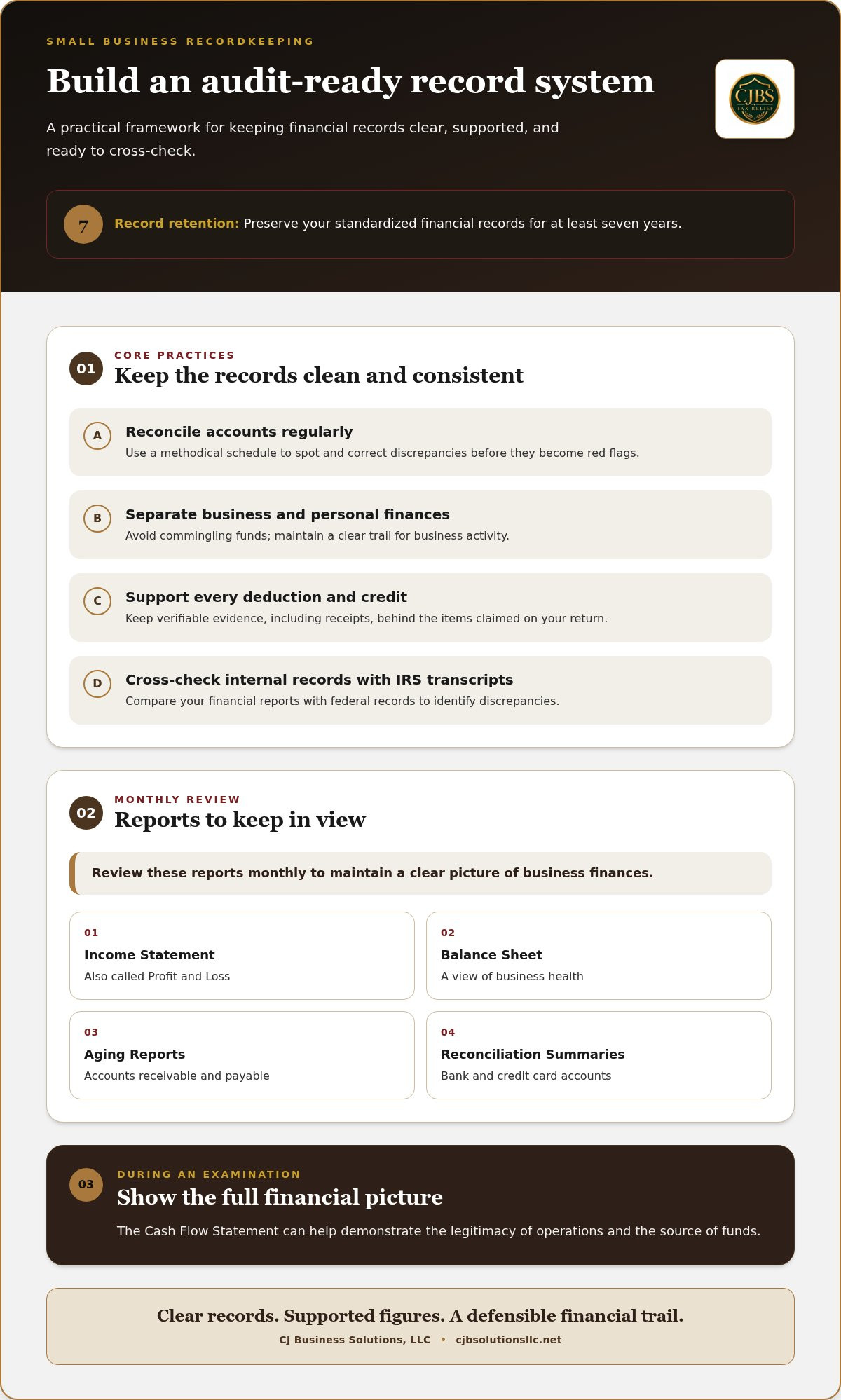
Establishing a methodical schedule for reconciling your accounts is a fundamental defense against federal scrutiny. This practice allows you to identify and correct discrepancies before they become red flags to automated IRS systems. Precision matters. Maintaining accurate accounting for small business operations requires a strict separation between your personal and business finances. Commingling funds is one of the most common triggers for deeper investigation, whereas a "clean" trail demonstrates a high standard of care. Utilizing a Small business bookkeeping guide can help you set up these boundaries effectively.
In 2026, the IRS is increasingly utilizing AI-powered data matching. This shift changes the rules for documentation. You should maintain a standardized system that preserves records for at least seven years. Don't let missing receipts compromise your defense. This ensures that every deduction and credit claimed on your return is supported by verifiable evidence, providing a stable foundation for accurate accounting for small business success.
Essential Financial Reports for Federal Compliance
Your Balance Sheet and Income Statement provide the narrative of your business health. These documents should be regularly cross-referenced with IRS transcripts to ensure your internal data aligns perfectly with federal records. Additionally, the Cash Flow Statement is essential during an examination to prove the legitimacy of your operations and the source of all funds. We recommend a monthly review of the following reports to maintain stability:
- Monthly Income Statement (Profit and Loss)
- Balance Sheet
- Accounts Receivable and Payable aging reports
- Bank and Credit Card Reconciliation summaries
If you find that your current record-keeping feels overwhelming, our tax and accounting services are designed to act as a steady partner in your compliance journey.
Safeguarding Your Business with Professional Tax Representation
While software provides a basic framework, it cannot replace the guidance of a seasoned mentor who understands the nuances of federal tax law. An Enrolled Agent possesses federal representation rights, allowing them to stand in your place before the IRS. This professional oversight ensures that your defense strategy is integrated into your daily operations. True protection begins long before an audit notice arrives. It's rooted in the consistent application of accurate accounting for small business principles, ensuring that every filing is defensible from the start.
Professional representation utilizes a soft-touch methodology to lower your stress levels. By acting as a steady intermediary, an expert can manage complex negotiations and clarify confusing regulatory requirements. This approach transforms a high-pressure situation into a methodical resolution process. It allows you to focus on running your company while a dedicated partner handles the intricacies of federal compliance. You'll find that having a reliable guide makes the complexities of the tax system much easier to manage.
Leveraging Transcript Analysis to Identify Hidden Issues
Specialized transcript analysis is a powerful tool for uncovering discrepancies within IRS records. Sometimes, federal data contains errors that lead to inflated or unfair tax liabilities. By decoding your tax history, an expert can identify these mistakes and develop a clear resolution path for back taxes. This proactive step ensures your business isn't penalized for administrative oversights or data entry errors. If you're concerned about your standing with federal authorities, you may consult with an Enrolled Agent to analyze your IRS transcripts and secure your financial future.
Building a Resilient Future Through Financial Clarity
Navigating federal compliance doesn't have to be a source of stress. By prioritizing accurate accounting for small business, you're constructing a strategic defense that protects your hard work. We've discussed how methodical record-keeping and the separation of finances create a stable foundation that withstands IRS scrutiny. When these practices are paired with expert oversight, the path toward long-term stability becomes much clearer.
Our firm, led by a qualified Enrolled Agent, acts as your seasoned mentor. We provide expert IRS audit strategy defense and specialized transcript analysis to ensure your business remains on solid ground. If you're ready to move forward with quiet confidence, you can secure your business's future with professional tax and accounting services from CJ Business Solutions, LLC. We look forward to helping you achieve lasting financial peace of mind.
Frequently Asked Questions
How can accurate accounting prevent an IRS audit?
Maintaining accurate accounting for small business operations prevents audits by ensuring that your reported data aligns perfectly with third-party forms like 1099s and W-2s. When your internal records are precise and reconciled monthly, you avoid common red flags such as disproportionate deductions or rounded figures. This transparency demonstrates a high standard of care, which makes your business a less likely target for automated IRS selection systems.
What is the difference between an Enrolled Agent and a standard bookkeeper for small businesses?
While a bookkeeper focuses on the daily recording of transactions, an Enrolled Agent is a tax professional authorized by the U.S. Department of the Treasury to represent taxpayers before the IRS. Enrolled Agents offer specialized services like transcript analysis and audit strategy defense. They act as a seasoned mentor, providing a deeper level of strategic oversight that goes far beyond basic data entry or routine record maintenance.
How long should a small business keep financial records for tax purposes in 2026?
For 2026, we recommend that small businesses maintain their financial records for at least seven years. This duration covers the typical statute of limitations for IRS audits and ensures you have documentation for any loss carryforwards or asset depreciation. Your retention policy should include bank statements, receipts, payroll records, and tax returns. Keeping organized digital copies helps you respond to any inquiries with stability and quiet confidence.
What are the most common accounting mistakes that trigger IRS scrutiny?
Common triggers for IRS scrutiny include commingling personal and business expenses, failing to report all forms of income, and inconsistent record-keeping. Errors in accurate accounting for small business often stem from misclassifying workers or claiming excessive deductions without supporting receipts. Avoiding these mistakes requires a methodical approach to financial management and a commitment to maintaining a clean audit trail throughout the entire fiscal year.

Article by
Crystal R. Johnson, MBA EA
Crystal Johnson founded CJ Business Solutions to give individuals and small-business owners something often missing from the tax and accounting process: clear explanations, practical solutions, and trusted support.
With more than 27 years of accounting and financial experience, Crystal helps clients understand complicated tax matters, restore compliance, respond to IRS concerns, and make stronger business decisions. As an Enrolled Agent, she is federally authorized to represent taxpayers before the Internal Revenue Service.


