

Recent data indicates that 81% of all IRS examinations are now conducted entirely through the mail, making correspondence audit representation a valuable consideration for modern taxpayers. While a letter may seem less formal than an in-person meeting, these inquiries carry significant financial weight. It's natural to feel anxious when a tax notice arrives, especially when you're uncertain about what the agency already knows. You likely want to resolve the matter correctly without paying more than necessary.
Professional guidance transforms this stressful experience into a strategic resolution. By utilizing specialized transcript analysis, which acts as an X-ray for your tax return, we can identify exactly what the IRS has flagged before you submit a response. This guide explains how expert support helps you minimize liability and avoid future audits through a methodical approach to IRS communication.
Key Takeaways
- Learn why 81% of IRS examinations are now conducted via mail and how to interpret these automated notices with confidence.
- Discover how professional correspondence audit representation uses transcript analysis to reveal the specific data discrepancies the IRS has already identified.
- Understand the unique role of an Enrolled Agent as a seasoned mentor who manages complex IRS communications on your behalf.
- Gain insights into strategic defense methods that aim to minimize tax liability while securing a predictable resolution for your federal tax matters.
Understanding the Risks of IRS Correspondence Audits
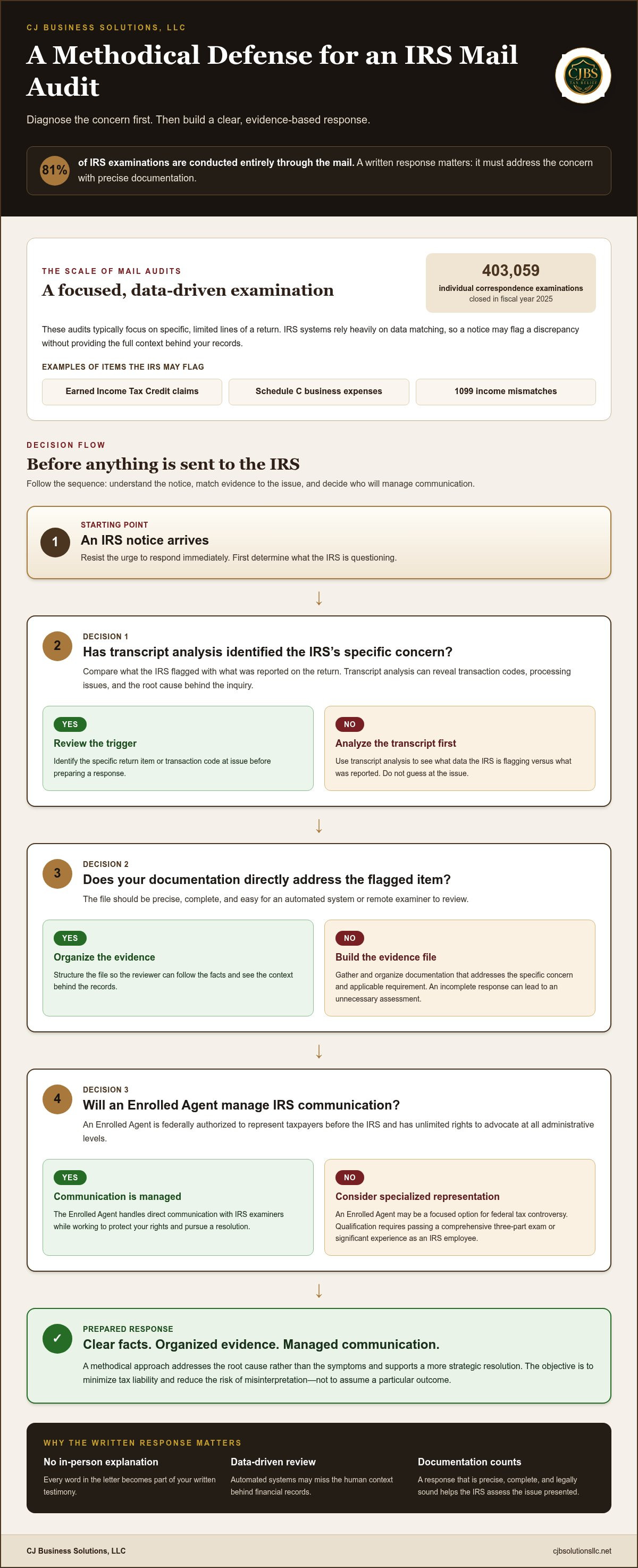
A correspondence audit is a federal tax examination conducted entirely through the mail, typically focusing on specific, limited line items on a return. While it may feel less intrusive than a face-to-face meeting, its prevalence is growing rapidly. The IRS closed 403,059 individual correspondence examinations in fiscal year 2025, accounting for the vast majority of all audits. This shift toward automation allows the agency to process a high volume of returns with minimal human intervention. It's a methodical process that relies heavily on data matching rather than personal interviews.
Many taxpayers fall into the trap of viewing these letters as minor clerical matters that they can handle alone. However, treating a mail audit as a simple task often leads to unnecessary tax assessments and daily compounded interest. The IRS typically flags items such as Earned Income Tax Credit (EITC) claims, Schedule C business expenses, or 1099 income mismatches. If your written response lacks precise documentation or fails to address the specific legal requirement, the automated system may default to a tax increase. This is why professional correspondence audit representation is often a necessary safeguard for your financial well-being.
Why Professional Representation Matters for Mail Audits
Engaging in Tax audit representation is a prudent step because the IRS relies on algorithms that often miss the human context behind your financial records. Since you don't have the chance to explain yourself in person, every word in your letter becomes a form of written testimony. Professional correspondence audit representation ensures that your responses are factually complete and legally sound from the first submission. A seasoned guide helps you present your case clearly, making sure the IRS receives exactly what it needs to reach a manageable resolution.
Strategic Steps for Correspondence Audit Representation
Many taxpayers feel a sense of urgency to mail a response the moment they receive an IRS notice. We recommend a more methodical, patient approach. We never respond to the IRS without first performing a detailed transcript analysis. This diagnostic phase allows us to see exactly what data the IRS is flagging versus what you reported on your return. It's a way to look behind the curtain of the IRS's automated systems to understand their specific concerns before making any official statement.
The Power of Transcript Analysis in Your Defense
Transcript analysis is a specialized tool used to identify IRS errors and internal processing codes before they become permanent tax assessments. By decoding your tax history, we can reveal the specific transaction codes the IRS is using to trigger an audit. This insight is essential to Survive a Dreaded IRS Audit because it removes the guesswork from your defense strategy. It allows us to address the root cause of the inquiry rather than just the symptoms.
Once we understand the "why" behind the audit, we focus on building a robust evidence file. Since an automated system or a remote examiner often reviews these cases, your documentation must be impeccably organized and easy to digest. A well-structured file reduces the risk of a reviewer missing key context or misinterpreting your data. Throughout this process, an Enrolled Agent handles all direct communication with IRS examiners. This level of correspondence audit representation ensures that your rights are protected while we work toward a favorable resolution. If you are currently facing an IRS inquiry, our transcript analysis services can provide the clarity you need to move forward with confidence.
Choosing an Enrolled Agent for IRS Audit Strategy Help
An Enrolled Agent is a federally authorized tax practitioner who has earned the privilege of representing taxpayers before the Internal Revenue Service. Unlike many general accounting professionals, Enrolled Agents focus their expertise specifically on federal tax controversy and resolution. This concentration makes them a strategic choice for correspondence audit representation, as they maintain unlimited rights to advocate for taxpayers at all administrative levels. This specialized path requires passing a comprehensive three-part examination or having significant experience as an IRS employee, ensuring a high standard of federal tax knowledge.
While many individuals consider a CPA for their annual filings, an Enrolled Agent often provides a more targeted advantage during an examination. At CJ Business Solutions, LLC, we embrace the role of a seasoned mentor rather than just a service provider. Our approach is methodical and patient, designed to lower your stress by managing the complex back-and-forth communication that these audits require. We focus on establishing long-term compliance, helping you understand the specific federal regulations that impact your unique situation.
What to Expect During the Representation Process
Throughout our partnership, you can expect a high level of transparency and proactive communication. You will be kept informed of every development in your case, allowing you to avoid the frustration of navigating the IRS phone systems yourself. By providing expert correspondence audit representation, we look beyond the immediate notice to ensure your entire tax account is in good standing. This comprehensive view helps prevent the recurrence of similar issues, giving you the quiet confidence that your federal tax obligations are fully addressed.
Securing Your Financial Peace of Mind
Receiving a notice in the mail doesn't have to be a source of ongoing anxiety. By understanding that most IRS examinations are now automated, you can take a methodical approach to your response. Expert correspondence audit representation provides the necessary buffer between you and the agency's data-driven systems. Through proprietary transcript analysis, we identify the specific triggers on your return and build a factually sound evidence file. This strategy doesn't just resolve the current inquiry; it stabilizes your tax history and helps you avoid future complications.
Our Enrolled Agent is here to act as your seasoned mentor, utilizing unlimited federal representation rights to handle every detail of the process. Please feel free to Schedule a consultation with our Enrolled Agent for expert audit defense. We look forward to helping you reach a steady and predictable resolution.
Frequently Asked Questions
What is a correspondence audit and how serious is it?
A correspondence audit is a federal tax examination conducted entirely through the mail, and it's just as legally significant as an in-person audit. While it typically addresses specific items like income mismatches or expense verification, it can lead to additional taxes and daily compounded interest if not handled correctly. It's a formal inquiry that requires a documented, accurate, and timely response.
How long do I have to respond to an IRS correspondence audit notice?
You generally have 30 days from the date printed on the notice to provide a written response or request an extension. It's important to realize that the 30-day clock starts on the letter's date, not the day it arrives in your mailbox. Missing this deadline often results in the IRS automatically assessing the proposed tax increase, plus daily interest at the 2026 rate of 7%.
Can I represent myself in a correspondence audit?
You have the legal right to represent yourself, though many taxpayers find the process of documenting specific line items for an automated reviewer to be quite complex. Professional correspondence audit representation ensures that your written testimony is legally sound and meets the IRS's evidentiary standards. Having a guide helps prevent accidental errors that could lead to further scrutiny or higher penalties.
What happens if I ignore a mail audit notice from the IRS?
Ignoring a notice allows the IRS to move forward with a "Notice of Deficiency," which gives the agency the power to assess additional taxes and penalties without your input. Once this happens, your options for appeal become much more limited and costly. Proactive engagement is the most effective way to maintain control over your tax situation and protect your legal rights.
How does transcript analysis help in an IRS audit defense?
Transcript analysis serves as a diagnostic tool that reveals the specific transaction codes the IRS has applied to your tax account. This "X-ray" view allows us to see exactly why the audit was triggered and what data the IRS is comparing against your return. It's a critical first step in correspondence audit representation that ensures we address the root cause of the inquiry.
Will hiring an Enrolled Agent make me look guilty to the IRS?
Hiring an Enrolled Agent is a standard professional practice that the IRS respects as a sign of a serious, organized taxpayer. The agency understands that tax law is complex and that many individuals prefer to have a federally authorized practitioner manage their communication. It doesn't suggest guilt; rather, it demonstrates that you're committed to providing accurate information and resolving the matter efficiently.

Article by
Crystal R. Johnson, MBA EA
Crystal Johnson founded CJ Business Solutions to give individuals and small-business owners something often missing from the tax and accounting process: clear explanations, practical solutions, and trusted support.
With more than 27 years of accounting and financial experience, Crystal helps clients understand complicated tax matters, restore compliance, respond to IRS concerns, and make stronger business decisions. As an Enrolled Agent, she is federally authorized to represent taxpayers before the Internal Revenue Service.


