

What if the most important document in your IRS audit defense isn't a receipt you've saved, but a transcript you haven't seen yet? It's natural to feel a sense of unease when a formal notice arrives, especially when you're looking at a disorganized collection of records and wondering if they'll satisfy a federal examiner. Understanding the precise IRS audit documentation requirements is the first step toward regaining your peace of mind. This guide will clarify the exact standards you must meet for 2026 to protect your financial stability and navigate the process with quiet confidence.
We'll explore the specific documentation the IRS demands, provide a methodical checklist for your records, and explain how a professional defense strategy can resolve the inquiry without the stress of direct confrontation. By the end, you'll have a clear, step by step path forward to minimize liability and secure your financial standing.
Key Takeaways
- Understand the "Proof of 3" rule and how it defines current IRS audit documentation requirements for substantiating every claim on your return.
- Discover how specialized transcript analysis allows you to see exactly what the IRS knows, helping you identify and resolve discrepancies early.
- Learn about your right to professional representation and how an Enrolled Agent can act as your dedicated liaison during all federal interactions.
- Explore the benefit of a methodical defense strategy that uses strategic communication to prevent the unnecessary expansion of an audit's scope.
Essential IRS Audit Documentation Requirements and the "Proof of 3" Rule
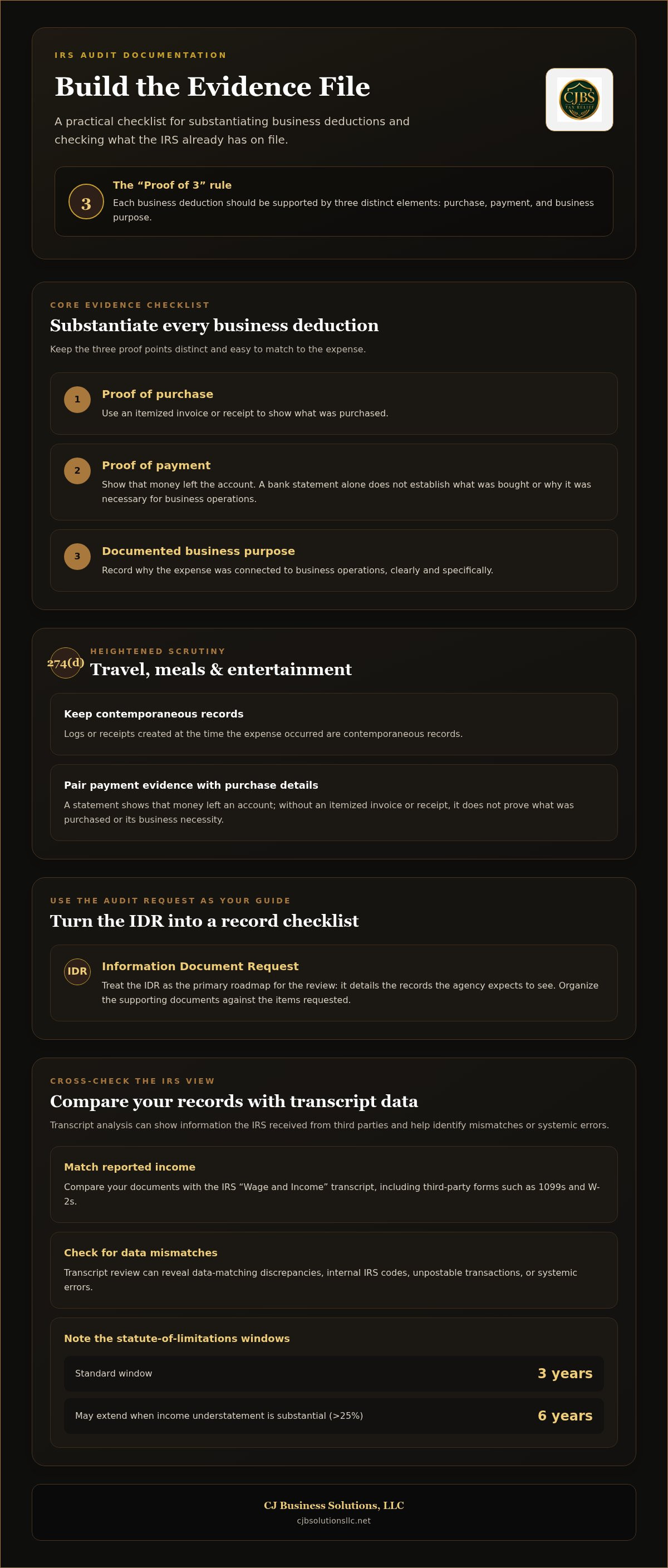
In any federal examination, the burden of proof rests entirely with the taxpayer to substantiate every deduction and credit claimed on a return. While many once relied on a "box of receipts," the modern IRS audit process has shifted toward a methodical, digital-first framework that prioritizes organization and forensic clarity. To meet the baseline IRS audit documentation requirements, one should follow the "Proof of 3" rule. This standard dictates that every business deduction must be supported by three distinct elements: proof of purchase, proof of payment, and a clearly documented business purpose. When an auditor issues an Information Document Request (IDR), it serves as your primary roadmap, detailing exactly which records the agency expects to see during the review. This document should be treated as a checklist for your defense.
Substantiating Business Expenses Under IRC Section 274(d)
The IRS applies heightened scrutiny to travel, meals, and entertainment expenses under Section 274(d) of the Internal Revenue Code. These categories often trigger the most significant adjustments if records are incomplete or vague. Precision is vital here. Contemporaneous records are defined as logs or receipts created at the time the expense occurred. It's a common misconception that a bank statement alone provides sufficient evidence for a deduction. Without an accompanying itemized invoice or receipt, a statement merely shows that money left an account; it doesn't prove what was purchased or why it was necessary for your business operations. Following these IRS audit documentation requirements diligently helps ensure that your records meet the high standard of care required to protect your financial interests. This methodical approach serves as a shield against unnecessary tax liabilities.
Leveraging IRS Transcript Analysis as a Proactive Defense Strategy
While many taxpayers focus exclusively on gathering physical receipts, a truly robust defense begins with a "look behind the curtain" through transcript analysis. This process reveals the exact data the IRS has already received from third parties, such as 1099s and W-2s, allowing you to see your tax profile from the agency's perspective. By matching this information with your internal documents, you can ensure your IRS audit documentation requirements are met and align perfectly with federal data. A specialized transcript analysis service allows an Enrolled Agent to identify "unpostable" transactions or systemic errors before an auditor even mentions them. This foresight enables the development of a methodical resolution path before the first formal consultation occurs, effectively serving as a "pre-audit" safety check that lowers stress and provides a clear roadmap.
Identifying Data Mismatches and Systemic IRS Errors
Performing a forensic match between your reported income and the IRS "Wage and Income" transcript is a critical step in modern audit defense. This review uncovers specific internal IRS codes that signal whether a return was flagged for data-matching discrepancies or other systemic issues. It's also an essential tool for verifying the status of the statute of limitations. While the standard window is three years, the IRS can extend this to six years if there's a substantial understatement of income exceeding 25%. Understanding these timelines and codes ensures your defense is rooted in the same data the government uses. This proactive approach helps satisfy IRS audit documentation requirements while protecting your rights from the very start of the process. Following IRS record-keeping guidelines ensures you have the documentation necessary to rebut any automated mismatches found during this analysis.
The Role of Professional Representation in Protecting Taxpayer Rights
Under the Taxpayer Bill of Rights, you possess the clear right to retain professional representation during any interaction with the agency. This protection is fundamental because it allows you to step back while an expert manages the complexities of your case. A key benefit of this arrangement is "Strategic Silence." A representative understands how to provide only the necessary records to meet IRS audit documentation requirements without offering extraneous information that might accidentally expand the audit's scope. By serving as a protective barrier, a practitioner ensures that the conversation remains focused on the specific issues identified in the initial notice.
An Enrolled Agent is a federally-authorized practitioner who has earned unlimited rights to represent taxpayers before the IRS. Unlike general accountants who may only handle seasonal filings, an Enrolled Agent specializes specifically in tax law and resolution. They handle all direct contact with the auditor, which significantly lowers the emotional burden on the taxpayer. This professional distance ensures that every response is calculated, methodical, and rooted in current tax regulations.
Why Enrolled Agents Provide a Stable Path to Audit Resolution
While many professionals offer accounting services, an Enrolled Agent's focus is rooted in federal tax defense. If your IRS audit documentation requirements reveal an unavoidable liability, an Enrolled Agent can proactively develop a resolution plan, such as an Installment Agreement. This methodical approach transforms a stressful situation into a manageable financial plan. We invite you to engage in a quiet, professional consultation to explore how a tailored defense strategy can protect your stability and secure your long-term interests.
Securing Your Financial Stability with Quiet Confidence
Navigating a federal inquiry doesn't have to be a journey taken alone. By adhering to the "Proof of 3" rule and understanding the current IRS audit documentation requirements, you've already laid the foundation for a successful defense. Specialized transcript analysis acts as a vital safety check, revealing the data the government holds before your first meeting. This methodical preparation, combined with the unlimited representation rights of an Enrolled Agent, ensures your rights are protected at every stage of the process.
If you're ready to lower your stress, we invite you to contact CJ Business Solutions, LLC for a professional transcript analysis and audit defense consultation. Our composed, methodical approach to federal tax debt provides the steady guidance you need to protect your financial future. You have the tools and the right to professional support; let's move forward together with peace of mind.
Frequently Asked Questions
What is the most important document to have for an IRS audit?
The most important document is the Information Document Request (IDR), as it outlines exactly what the auditor expects you to provide. Beyond this roadmap, satisfying IRS audit documentation requirements relies on the "Proof of 3" standard. You'll need to show proof of purchase, proof of payment, and a documented business purpose for every deduction to ensure your claims are fully substantiated.
Can the IRS audit me if I do not have all my original receipts?
Yes, the IRS can proceed with an audit even if your original receipts are missing. However, the burden of proof rests entirely on your shoulders. While bank statements show that funds were spent, they don't prove what was bought or why. Without itemized, contemporaneous records, the auditor may disallow your deductions, leading to increased tax liabilities and potential penalties.
How far back can the IRS go when requesting audit documentation?
The IRS generally looks back three years from the date you filed your return to request documentation. This window expands to six years if they identify a substantial understatement of income, which is defined as more than 25% of your total earnings. If fraud or a failure to file is suspected, there is no time limit on how far back the agency can go.
How does an IRS transcript analysis help me prepare for an audit?
A transcript analysis acts as a defensive safety check by revealing the specific third-party data the IRS has linked to your account. This process helps you meet IRS audit documentation requirements by identifying mismatches before an auditor finds them. It allows your representative to spot systemic errors or unposted transactions, ensuring you have a clear, methodical plan for resolution before any direct confrontation occurs.

Article by
Crystal R. Johnson, MBA EA
Crystal Johnson founded CJ Business Solutions to give individuals and small-business owners something often missing from the tax and accounting process: clear explanations, practical solutions, and trusted support.
With more than 27 years of accounting and financial experience, Crystal helps clients understand complicated tax matters, restore compliance, respond to IRS concerns, and make stronger business decisions. As an Enrolled Agent, she is federally authorized to represent taxpayers before the Internal Revenue Service.


