

What if the most significant threat to your financial peace of mind isn't a simple math error, but a hidden statistical score you've never seen? It's natural to feel a sense of unease when receiving an automated IRS notice or wondering if your 2026 filing will be the one that triggers an examination. We understand that the complexity of the tax code can feel overwhelming, especially with the IRS now using advanced artificial intelligence to flag even minor inconsistencies. This guide will show you how to perform a proactive IRS audit red flag analysis to identify and neutralize these triggers before they escalate. You'll learn how the DIF scoring system works and how methodical transcript analysis can reveal errors before the IRS does. We'll also discuss how a reliable partner can provide the steady guidance needed to navigate these technical waters with confidence.
Key Takeaways
- Gain clarity on how the IRS employs the Discriminant Inventory Function (DIF) to compare your financial data against statistical peer-group averages.
- Discover how a proactive IRS audit red flag analysis acts as a strategic health check by identifying potential triggers before they lead to formal inquiries.
- Learn why specialized transcript analysis is a vital tool for uncovering technical discrepancies that traditional tax preparation software often overlooks.
- Understand the strategic benefit of partnering with an Enrolled Agent who can interpret internal IRS communications and provide a steady path toward resolution.
Decoding the IRS Selection Process: What Constitutes a "Red Flag" Today?
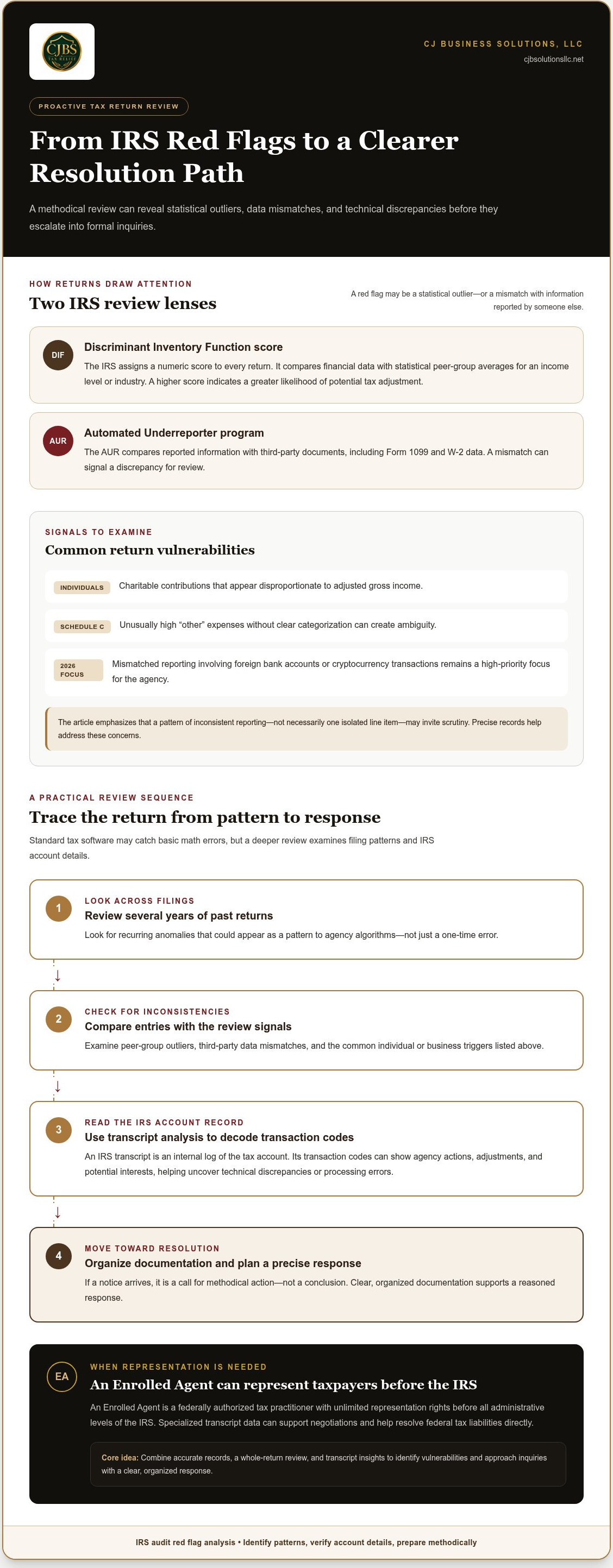
Understanding why a specific tax return is chosen for review begins with a look at the internal mechanisms of the IRS. During the initial stages of the IRS audit process, a "red flag" is essentially a statistical outlier. It represents a data point that deviates significantly from the established peer-group averages for your income level or industry. When we perform a professional IRS audit red flag analysis, we look at these deviations first to understand how the agency perceives your filing. The IRS utilizes a sophisticated scoring system known as the Discriminant Inventory Function, or DIF score. This algorithm assigns a numeric value to every return. The higher the score, the more likely the return contains a potential for tax adjustment.
While the DIF score focuses on statistical likelihood, the Automated Underreporter (AUR) program handles direct data matching. It compares the information you report against documentation provided by third parties, such as Form 1099 and W-2 data. Most often, it isn't a single isolated line item that triggers an inquiry, but rather a pattern of behavior that suggests a lack of consistency. This is why looking at the return as a whole is so vital for maintaining compliance.
Common Triggers for Individual and Business Filers
Certain entries naturally invite more scrutiny because they're prone to error or abuse. For instance, if charitable contributions appear disproportionate to your adjusted gross income, the system may flag it for a closer look. Small business owners should be particularly mindful of Schedule C filings. Reporting unusually high "other" expenses without clear categorization can create a sense of ambiguity that the IRS doesn't overlook. Additionally, mismatched reporting regarding foreign bank accounts or cryptocurrency transactions remains a high-priority focus for the agency in 2026. Maintaining precise records is the most effective way to address these concerns before they lead to a notice.
Strategic Red Flag Analysis: Identifying Vulnerabilities Proactively
Many filers rely on standard tax software to catch errors. While these tools are helpful for basic math, they often lack the technical depth required for a thorough review of IRS audit selection methods. A truly protective strategy involves a methodical examination of several years of past filings. This process helps identify recurring anomalies that might signal a pattern to agency algorithms. It's during this deep-dive IRS audit red flag analysis that we can differentiate between legitimate, aggressive tax planning and high-risk technical errors.
Once a vulnerability is identified, the focus naturally shifts toward developing a comprehensive resolution path. This transition is a vital step in moving from uncertainty to a state of readiness. If you're concerned about how past entries might be perceived, our transcript analysis services can provide the clarity needed to address potential issues before an official notice arrives. A thorough IRS audit red flag analysis provides the peace of mind that comes with knowing your filings are sound.
The Power of IRS Transcript Analysis Services
An IRS transcript is essentially a detailed internal log of your tax account. It contains specific transaction codes that reveal the agency's internal actions, adjustments, and potential interests. By reviewing these transcripts, we gain a clear perspective on the "IRS view" of your financial history. This proactive step allows us to spot technical discrepancies or processing errors before they escalate into formal examinations. Transcript analysis is a diagnostic tool that decodes internal IRS transaction codes. This methodical approach ensures that you're never surprised by the agency's findings, allowing for a calm and reasoned response to any inquiries.
Navigating an Audit Trigger: The Role of Expert Representation
Opening a letter from the IRS can be a stressful experience, yet it's helpful to remember that a notice is not a conclusion. Instead, it's a call for methodical action. While common audit red flags might have brought your return to the agency's attention, the resolution process is often a matter of providing clear, organized documentation. Having a representative who speaks the technical language of the IRS provides a strategic advantage. It ensures that your response is precise and that the agency adheres to its own procedural rules during the examination. A well-structured IRS audit red flag analysis doesn't just address the current inquiry; it provides the insights necessary to maintain long-term compliance and avoid similar issues in future years.
Why an Enrolled Agent is Your Best Audit Defense
An Enrolled Agent is a federally-authorized tax practitioner who has earned the privilege of representing taxpayers before all administrative levels of the IRS. Unlike standard software or basic preparers, an EA has unlimited representation rights. This status allows them to use specialized transcript data to negotiate favorable outcomes and resolve federal tax liabilities directly. By choosing a seasoned mentor who understands the internal transaction codes, you gain a partner who prioritizes transparency and quiet confidence. This methodical approach to IRS audit red flag analysis transforms a complex, intimidating process into a manageable path toward financial resolution. We believe in providing a steady hand that guides you through these technical requirements without the need for aggressive sales tactics.
Securing Your Financial Peace of Mind
Taking a proactive stance toward your tax compliance is a sign of financial maturity. By understanding how the IRS identifies statistical outliers and utilizing transcript data to spot errors, you can transform a source of stress into a manageable process. A methodical IRS audit red flag analysis provides the clarity needed to ensure your filings align with agency expectations. If you're looking for a reliable guide to navigate these complexities, CJ Business Solutions, LLC offers expert IRS audit strategy defense led by an Enrolled Agent. We provide national representation for federal tax resolution and comprehensive transcript analysis to identify hidden issues before they escalate. We invite you to Request a Professional Transcript Analysis from CJ Business Solutions, LLC today. It's our goal to help you move forward with quiet confidence and long-term stability.
Frequently Asked Questions
What is the most common IRS audit red flag for small businesses?
One of the most frequent triggers is reporting business expenses that appear disproportionate to your gross income. The IRS compares your Schedule C data against industry averages to spot statistical outliers. A professional IRS audit red flag analysis often reveals that high "other" expenses or recurring net losses are what draw agency attention. Maintaining precise records and clear categorizations is your best defense against these automated flags.
How long does the IRS have to audit a return once a red flag is identified?
Generally, the IRS has three years from the date you filed your return to initiate an audit. This window extends to six years if you understate your income by more than 25%. In cases where fraud is suspected, there is no time limit at all. This timeline is a reminder of why keeping thorough records for at least seven years is a standard best practice.
Can I request my own IRS transcripts to check for red flags?
Yes, you can request your own tax transcripts directly from the IRS website at no cost. While these documents provide a record of your account, they contain technical transaction codes that are difficult for most filers to interpret. A professional IRS audit red flag analysis goes beyond just viewing the data. It involves decoding those internal codes to understand exactly how the agency perceives your tax history.
What should I do immediately after identifying a potential error on my return?
If you discover a discrepancy, the first step is to remain calm and gather all supporting documentation related to that entry. It's helpful to consult with an Enrolled Agent who can perform a methodical review of the error's impact. Depending on the mistake, filing an amended return may be the most appropriate path to correct the record and demonstrate your commitment to long-term compliance.

Article by
Crystal R. Johnson, MBA EA
Crystal Johnson founded CJ Business Solutions to give individuals and small-business owners something often missing from the tax and accounting process: clear explanations, practical solutions, and trusted support.
With more than 27 years of accounting and financial experience, Crystal helps clients understand complicated tax matters, restore compliance, respond to IRS concerns, and make stronger business decisions. As an Enrolled Agent, she is federally authorized to represent taxpayers before the Internal Revenue Service.


