

In 2023, the IRS assessed over $25 billion in additional taxes for late-filed returns alone. This figure illustrates why a robust IRS audit strategy defense is essential for anyone facing a federal examination. It’s understandable if receiving an official notice causes a sense of unease or confusion regarding the complex requirements ahead. You're likely seeking a clear path forward that protects your assets without increasing your stress.
This professional guide explores how to safeguard your financial interests through strategic preparation and expert representation. By utilizing data-driven transcript analysis, you can identify potential issues early and manage the process with quiet confidence. We’ll outline a methodical roadmap to minimize liabilities and penalties. This approach moves beyond simple reaction, providing the steady guidance needed to achieve a favorable resolution and genuine peace of mind.
Key Takeaways
- Understand how a proactive, data-driven approach allows you to navigate federal examinations with clarity and professional composure.
- Learn to build a robust IRS audit strategy defense by aligning your documentation with the specific items highlighted in official notices.
- Discover the methodical steps required to provide precise information that addresses IRS inquiries without offering unnecessary data.
- Explore how specialized transcript analysis can uncover hidden processing codes and identify errors in your tax history early in the process.
The Foundations of an Effective IRS Audit Strategy Defense
Developing a successful IRS audit strategy defense begins with shifting your perspective from reaction to preparation. While many view an examination with apprehension, a proactive, data-driven approach allows you to stand on firm ground. Modern tax enforcement relies heavily on automated systems and targeted algorithms designed to identify discrepancies between your filings and third-party data. Understanding the nuances of the IRS audit process is the first step in moving from a defensive posture to an authoritative stance. Audit Strategy Defense is the systematic alignment of financial records with tax law to minimize liability.
This methodical framework ensures that every figure on your return is backed by verifiable evidence. Instead of feeling overwhelmed by procedural requirements, you can treat the audit as a professional verification of facts. It's about maintaining a steady, reliable record that reflects the reality of your financial life while respecting the IRS's mandate to ensure compliance. This preparation creates a calm environment where issues are resolved through data rather than conflict.
Identifying Common Audit Triggers and Risks
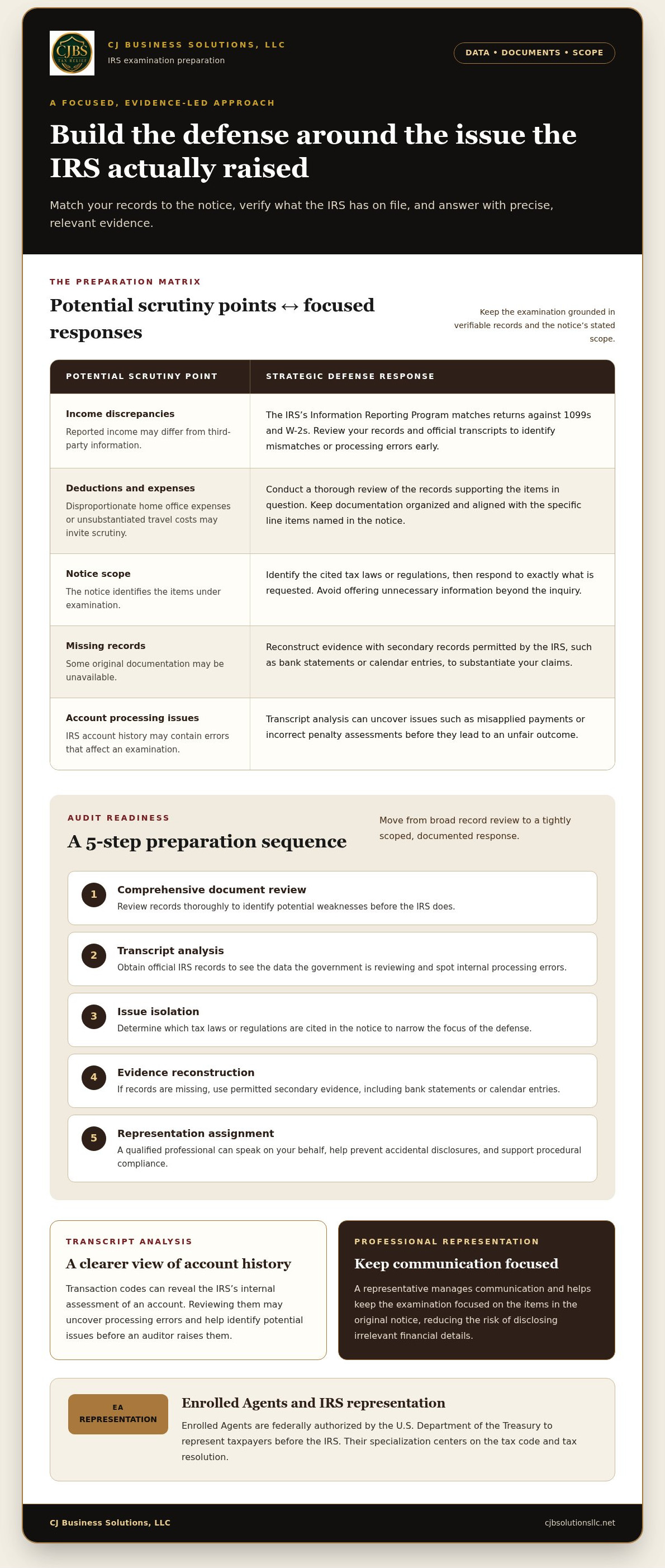
The IRS often flags returns where lifestyle-income discrepancies appear, such as reporting low income while maintaining high-value assets. Certain "red flag" deductions, like disproportionate home office expenses or unsubstantiated travel costs, also invite scrutiny. Modern examinations frequently involve the Information Reporting Program (IRP), which matches your return against 1099s and W-2s automatically. A professional review can identify these triggers early, allowing for corrections before a formal notice arrives. By addressing these risks methodically, you'll ensure that your IRS audit strategy defense is built on a foundation of accuracy and transparency.
Steps to Building a Strategic Defense Against IRS Examinations
A methodical response serves as the cornerstone of any effective IRS audit strategy defense. When you receive a notice, the natural instinct is to explain everything at once. However, it's vital to provide exactly what is requested and nothing more. Precision is your greatest ally. By organizing your documentation to match the specific line items questioned in the notice, you demonstrate a level of preparedness that sets a respectful tone for the entire examination.
Presenting a well-ordered case offers a distinct psychological advantage. It shows the examining agent that your records are reliable and that you take your obligations seriously. While you should remain professional and polite, it's equally important to maintain firm boundaries regarding the scope of the inquiry. If you feel uncertain about how to handle these interactions, engaging tax resolution services can help ensure your interests remain protected.
A 5-Step Process for Audit Readiness
To achieve a state of readiness, follow this structured approach:
- Comprehensive Document Review: Conduct a thorough internal audit of your records to identify potential weaknesses before the IRS does.
- Transcript Analysis: Obtain your official IRS records. This allows you to see exactly what data the government is looking at and identify any internal processing errors.
- Issue Isolation: Determine the specific tax laws or regulations cited in your notice to narrow the focus of your defense.
- Evidence Reconstruction: If records are missing, use secondary evidence permitted by the IRS, such as bank statements or calendar entries, to substantiate your claims.
- Representation Assignment: Have a qualified professional speak on your behalf to prevent accidental disclosures and ensure procedural compliance.
The Advantage of Professional Representation and Transcript Analysis
Transcript analysis services reveal the "hidden" codes in your tax history, providing a clear window into the IRS's internal assessment of your account. By meticulously analyzing specific transaction codes, transcript experts can predict IRS moves and identify potential issues before the auditor even mentions them. This level of insight allows for an IRS audit strategy defense that's proactive rather than reactive. It frequently uncovers processing errors, such as misapplied payments or incorrect penalty assessments, which could otherwise lead to an unfair audit outcome.
Beyond technical data, professional representation serves as a vital buffer that reduces the stress of federal examinations. By acting as a "Reliable Guide," your representative manages all communication. This prevents accidental self-incrimination or the disclosure of irrelevant financial details. Such a steady presence ensures that the examination remains strictly focused on the items questioned in the original notice, maintaining a calm and professional atmosphere.
Why an Enrolled Agent is Your Best Defense Partner
Enrolled Agents (EAs) hold a unique position, as they're federally authorized by the U.S. Department of the Treasury to represent taxpayers before the IRS. While some professionals handle broad litigation, EAs specialize specifically in the tax code and the nuances of tax resolution. CJ Business Solutions, LLC utilizes this specialized transcript expertise to develop a customized resolution path for every client. This methodical approach ensures your defense is built on data and procedural mastery, offering a dependable resource for those facing complex federal tax matters.
Securing Your Financial Future Through Strategic Preparation
Facing a federal examination doesn't have to be a source of constant anxiety. By adopting a proactive mindset, you can transform a stressful notice into a manageable, methodical process. The key lies in precise documentation and the strategic use of transcript analysis to identify potential issues early. A robust IRS audit strategy defense relies on these foundational steps, ensuring your financial interests are protected through every stage of the inquiry.
CJ Business Solutions, LLC provides national representation for federal tax matters, led by a federally authorized Enrolled Agent. Our specialists use deep-dive transcript analysis to build a resilient case on your behalf. We invite you to consult with an Enrolled Agent at CJ Business Solutions to secure your audit defense strategy today. This partnership offers the stability and quiet confidence needed to resolve your tax matters.
Frequently Asked Questions
What is an IRS audit strategy defense?
An IRS audit strategy defense is a proactive, data-driven methodology used to navigate federal examinations by aligning financial records with current tax law. It moves beyond simple compliance by identifying potential risks and reconstructing evidence before the IRS conducts its review. This approach minimizes liability and ensures that you provide only the specific information requested by the agency in a professional, well-organized manner.
Can an Enrolled Agent represent me in an IRS audit?
Yes, an Enrolled Agent is federally authorized by the U.S. Department of the Treasury to represent taxpayers in all matters before the IRS. They offer a national service scope, meaning they can represent you regardless of your location. Because they focus specifically on tax resolution, they provide the procedural expertise necessary to manage federal examinations with a level of care that prioritizes your long-term financial stability.
What is the first step I should take after receiving an IRS audit notice?
The first step is to carefully read the notice to identify the specific items or tax years being questioned while noting the typical 30-day response deadline. Avoid the urge to contact the IRS immediately to offer explanations. Instead, gather the relevant documents and consider professional guidance to ensure your initial response is precise and doesn't inadvertently expand the scope of the examination.
How does transcript analysis help in an audit defense?
Transcript analysis acts as a preemptive strike by revealing the internal transaction codes the IRS has assigned to your account. This specialized review allows experts to identify processing errors or misapplied payments that might have triggered the audit. By understanding exactly what the government knows, you can build a more effective IRS audit strategy defense and resolve discrepancies before they escalate into larger liabilities.
How long does a typical IRS audit process take?
The duration of an audit varies significantly based on the complexity of the issues and the type of examination conducted. Simple correspondence audits may conclude within a few months, while more detailed field audits can last a year or longer. Keep in mind that the IRS generally has three years from the filing date to initiate an audit, though this window extends to six years for substantial income omissions.

Article by
Crystal R. Johnson, MBA EA
Crystal Johnson founded CJ Business Solutions to give individuals and small-business owners something often missing from the tax and accounting process: clear explanations, practical solutions, and trusted support.
With more than 27 years of accounting and financial experience, Crystal helps clients understand complicated tax matters, restore compliance, respond to IRS concerns, and make stronger business decisions. As an Enrolled Agent, she is federally authorized to represent taxpayers before the Internal Revenue Service.


