

What if the most important aspect of your federal tax strategy isn't the actual filing, but the quiet confidence that comes afterward? It's natural to feel a sense of apprehension when an IRS notice arrives in the mail, especially when complex requirements like the 15.3% self-employment tax or shifting mileage rates feel like moving targets. You aren't alone in wishing for a clearer, more predictable path through the maze of federal regulations.
Professional IRS compliance services are designed to move beyond basic data entry to provide a methodical, strategic approach to your business health. By utilizing tools such as transcript analysis and expert representation, you can transform tax season from a source of stress into a foundation for long-term stability. This 2026 guide will walk you through essential updates, including the $16,100 standard deduction and new retirement contribution limits, while offering a reliable roadmap for maintaining your standing with the IRS.
Key Takeaways
- Understand how modern IRS compliance services provide a holistic framework for your business, moving beyond simple tax preparation to include active monitoring and strategic record-keeping.
- Learn to establish a methodical internal review process that ensures your financial records align perfectly with federal data before an inquiry ever occurs.
- Discover the specific standards for documentation that can protect your business from the stress of federal examinations and provide long-term financial stability.
- Gain insight into how professional representation by an Enrolled Agent can manage IRS interactions on your behalf, offering a calm path from compliance to resolution if issues arise.
Understanding the Modern Scope of IRS Compliance Services
True IRS compliance is often misunderstood as a simple annual deadline. Instead, it functions as a holistic system that integrates accurate reporting, timely filing, and strategic record-keeping. While basic tax preparation focuses on the past, professional IRS compliance services emphasize a forward-looking perspective. This approach ensures that your business remains in good standing throughout the year, rather than just during the April rush. It's a shift from reactive filing to proactive management.
Modern federal laws, such as the 21% flat corporate tax rate and the $184,500 Social Security wage base for 2026, demand a methodical approach. Relying solely on automated software can lead to oversights that trigger scrutiny. Understanding Tax Noncompliance is vital because even unintentional errors can result in significant penalties. Establishing "compliance health" serves as a signal of stability to investors and lenders who look for transparency in financial operations.
Beyond the Tax Return: The Three Pillars of Federal Compliance
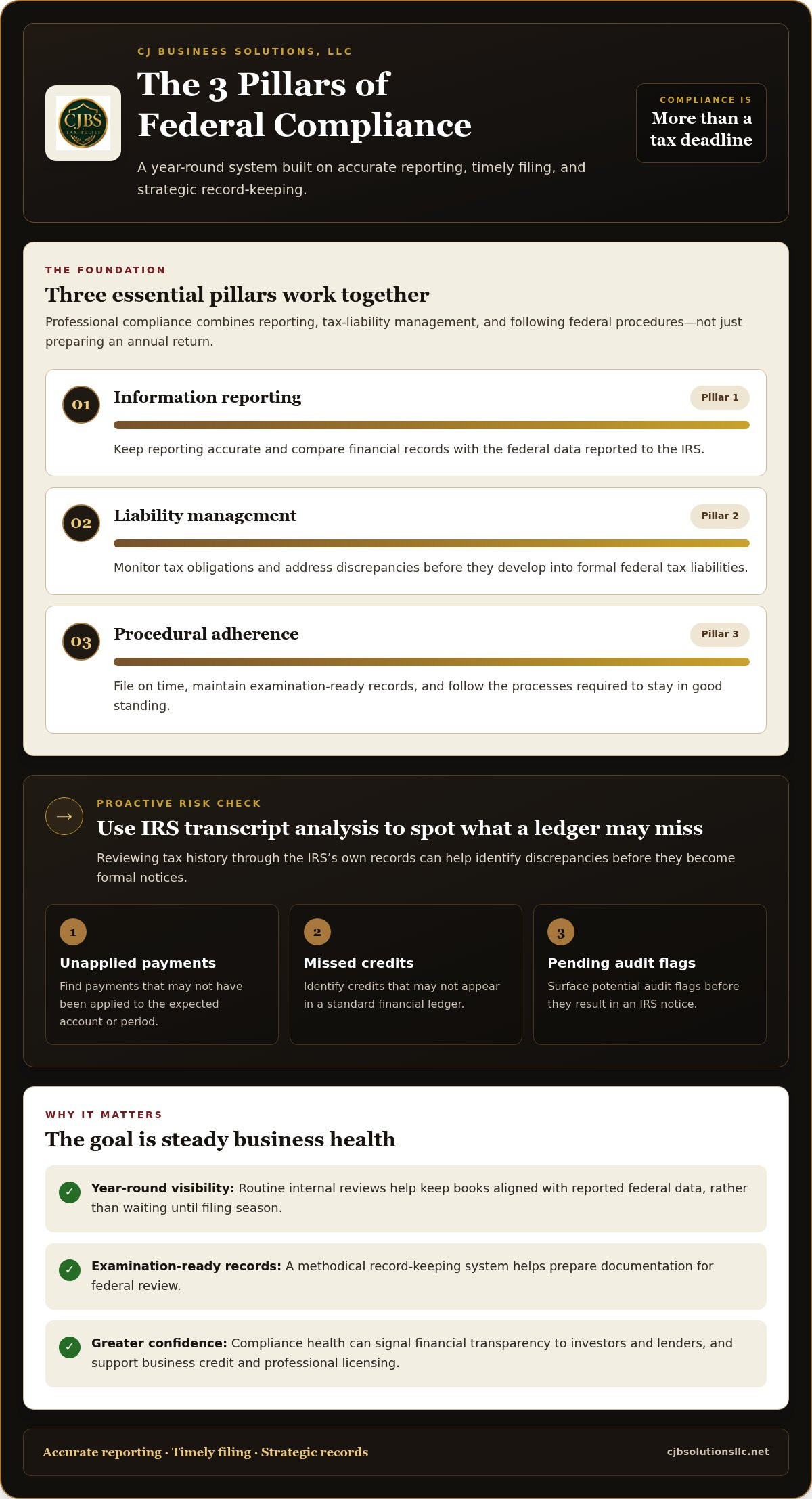
A comprehensive strategy rests on three essential pillars: information reporting, liability management, and procedural adherence. Engaging professional IRS compliance services helps identify potential red flags, such as discrepancies in transcript data, before the IRS issues an automated notice. Maintaining a clean record isn't just about avoiding audits; it's a prerequisite for securing business credit and maintaining professional licenses. This steady vigilance builds a foundation of long-term trust between your firm and federal authorities, allowing you to grow with confidence.
Proactive Strategies for Maintaining Long-Term IRS Compliance
Maintaining federal tax standing requires a shift in perspective. Many owners view April as the only critical window, but true stability comes from a year-round commitment. By establishing a routine for internal financial reviews, you ensure your books consistently align with reported federal data. This practice prevents the shock of discovering discrepancies during a high-stakes filing period. Comprehensive IRS compliance services offer the structured oversight needed to manage these reviews effectively. Resources like the IRS Small Business Tax Center provide helpful starting points for understanding these obligations. However, a methodical record-keeping system that meets federal examination standards remains the real key to lasting peace of mind.
Professional accounting acts as a vital bridge between your daily operations and complex federal requirements. It's about more than just numbers; it's about translating your hard work into a format the government respects. If you're looking for a steady partner to help manage these complexities, specialized IRS compliance services can provide the oversight needed to maintain your business's integrity. This steady rhythm of monitoring ensures that your documentation is always ready for review, regardless of the season.
Leveraging Transcript Analysis to Identify Hidden Compliance Risks
One of the most effective diagnostic tools available is transcript analysis. This process allows you to view your tax history through the IRS’s own lens, revealing details that a standard ledger might miss. By decoding these documents, a professional can identify unapplied payments, missed credits, or pending audit flags that haven't yet resulted in a notice. Transcript analysis allows business owners to resolve discrepancies before they evolve into formal federal tax liabilities. It's a proactive step that moves beyond simple reporting into active risk management.
Navigating IRS Challenges with Expert Representation
Receiving a letter from the IRS often triggers an immediate sense of unease. While the IRS Tax Guide for Small Business provides the rules for reporting, it doesn't always prepare you for the emotional weight of an inquiry. A composed, professional response is the first step in protecting your business's reputation and assets. When a routine review identifies a discrepancy, the focus shifts from monitoring to active tax resolution. Comprehensive IRS compliance services provide a methodical framework to handle these challenges without the panic that often accompanies federal correspondence. Expert representation acts as a calm port in a storm, ensuring that every interaction is handled with precision and quiet confidence. This soft-touch methodology aims to lower your stress while resolving the underlying issue.
Why an Enrolled Agent is Your Most Reliable Guide for Audit Defense
An Enrolled Agent holds a unique status as a federally-authorized tax practitioner. Unlike many other preparers, they possess unlimited representation rights before the IRS. This means they can manage all communications on your behalf, acting as a steady buffer between your business and the agency. When you face an inquiry, having a seasoned mentor who prioritizes long-term trust over a quick fix is invaluable. They follow methodical resolution paths that respect your autonomy while ensuring your federal standing is restored. By integrating these IRS compliance services into your broader strategy, you gain a partner who is deeply invested in your success. They don't just file forms; they stand beside you as a knowledgeable resource during every step of the audit defense process.
Securing Your Business’s Future Through Proactive Compliance
Achieving long-term financial stability requires more than just meeting a deadline. It's about building a foundation of "compliance health" through methodical record-keeping and a deep understanding of federal requirements. By integrating professional IRS compliance services into your operations, you ensure that your business is prepared for any inquiry before it manifests as a formal notice.
Our team offers expertise led by an Enrolled Agent with national tax resolution authority. We utilize specialized federal transcript analysis to identify potential risks with quiet precision. We invite you to request a professional consultation for IRS compliance and resolution to discuss your specific needs. We're here to help. It's our goal to provide the steady guidance you need to focus on your business with complete peace of mind.
Frequently Asked Questions
What is the difference between a tax preparer and an IRS compliance specialist?
A tax preparer generally focuses on the historical act of filing a return, while a specialist in IRS compliance services takes a holistic view of your ongoing tax health. While a preparer might only assist during the filing season, a compliance specialist provides year-round monitoring and strategic oversight. This proactive approach identifies potential discrepancies before they trigger a federal notice, ensuring long-term financial stability.
How does an IRS transcript analysis help me avoid an audit?
Transcript analysis functions as a diagnostic tool that allows a professional to view your account through the eyes of the IRS. By decoding these records, an Enrolled Agent can identify unapplied payments, missed credits, or internal flags that often precede a formal audit. Resolving these technical errors early prevents them from escalating into a full examination, allowing you to maintain a clean standing with federal authorities.
Can IRS compliance services help me resolve existing back taxes?
Yes, IRS compliance services frequently transition into active tax resolution when existing liabilities are identified. An Enrolled Agent can analyze your transcripts to determine the exact nature of the debt and develop a methodical path toward resolution. This process involves representing you before the IRS to address unpaid balances while implementing strategies to prevent future accruals and maintain your business's ongoing compliance.
What should I do if I receive a notice that I am out of compliance?
If you receive a notice, it is best to remain calm and avoid a rushed or defensive response. First, review the specific codes and dates mentioned in the correspondence. Seeking guidance from a seasoned professional can help you interpret the notice accurately. An Enrolled Agent can manage all communications with the IRS, providing a steady buffer and a clear roadmap to restore your business's federal standing.

Article by
Crystal R. Johnson, MBA EA
Crystal Johnson founded CJ Business Solutions to give individuals and small-business owners something often missing from the tax and accounting process: clear explanations, practical solutions, and trusted support.
With more than 27 years of accounting and financial experience, Crystal helps clients understand complicated tax matters, restore compliance, respond to IRS concerns, and make stronger business decisions. As an Enrolled Agent, she is federally authorized to represent taxpayers before the Internal Revenue Service.


