

A successful Offer in Compromise is not a gamble; it's a precise mathematical negotiation built on a deep analysis of your IRS transcripts. It's natural to feel a sense of constant anxiety when collection notices arrive or to worry about the potential for wage garnishments. If you've been searching for offer in compromise help, you likely know how overwhelming the disclosure forms can be. You're not alone in seeking a manageable settlement that finally puts these tax burdens behind you.
This guide provides the clarity you need to approach the 2026 IRS process with confidence. You'll discover how professional strategies and transcript analysis can lower your stress levels while identifying a viable resolution path. We will walk through the latest 2026 eligibility requirements, updated asset exemptions, and the methodical steps required to present a compelling case to the IRS for a lasting financial recovery.
Key Takeaways
- Gain a clear understanding of the three specific legal grounds the IRS recognizes for settling tax debt, which allows you to identify the most appropriate path for your unique financial situation.
- Learn why a detailed transcript analysis serves as the foundation for effective offer in compromise help, providing the precise data needed to negotiate from a position of clarity.
- Master the methodology behind calculating your Reasonable Collection Potential to ensure your proposed settlement amount is both manageable for you and acceptable to the IRS.
- Identify the critical differences between high-pressure tax relief firms and the steady, authoritative guidance provided by a qualified Enrolled Agent throughout the 2026 application process.
Understanding the IRS Offer in Compromise Program
The Offer in Compromise (OIC) program is a formal legal agreement between a taxpayer and the IRS that allows for the settlement of tax liabilities for less than the full amount owed. While it represents a significant opportunity for a fresh start, it isn't a simple "get out of jail free" card. The process requires absolute financial transparency and a willingness to provide detailed documentation of your assets and income. The IRS only approves an offer when the proposed amount represents the maximum they can reasonably expect to collect within a specific timeframe.
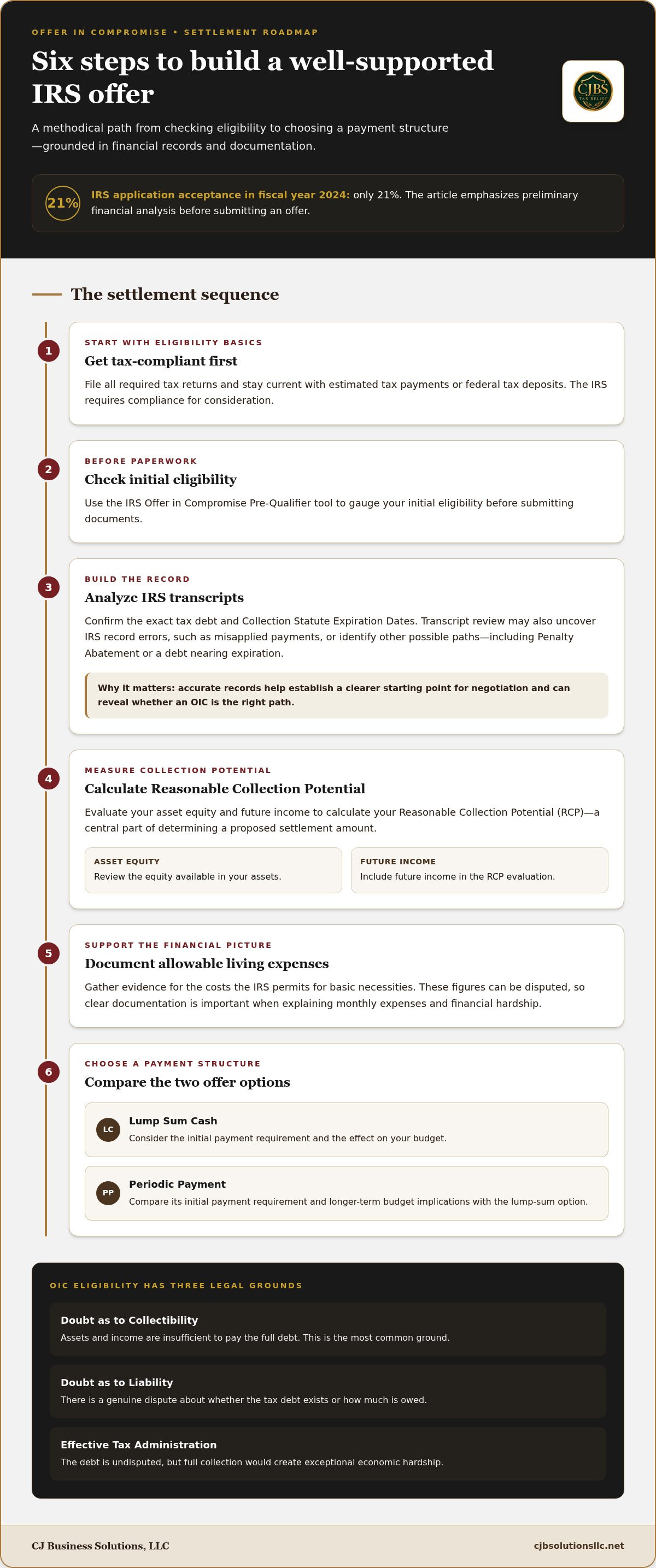
It's helpful to understand that acceptance generally rests on one of three specific legal grounds. Doubt as to Collectibility is the most common, occurring when a taxpayer's assets and income are insufficient to pay the full debt. Doubt as to Liability applies if there's a genuine dispute regarding the existence or amount of the tax debt. Finally, Effective Tax Administration may be used when the debt is undisputed, but full collection would create an exceptional economic hardship. Seeking professional offer in compromise help can assist in determining which of these paths aligns with your specific circumstances.
The Three Pillars of OIC Eligibility
If you're seeking to qualify for consideration in 2026, meeting strict compliance standards is the first requirement. This means all required tax returns must be filed, and you must stay current with any estimated tax payments or federal tax deposits. Beyond compliance, you'll need to demonstrate genuine financial hardship through a detailed disclosure of your monthly expenses and asset equity. Because the IRS accepted only 21% of applications in fiscal year 2024, utilizing a preliminary financial analysis is a vital step. Submitting an offer without this foundation often leads to avoidable rejections.
The Roadmap to a Successful Settlement Offer
A successful settlement isn't the result of luck. It's the outcome of a methodical approach that starts with a clear view of your financial standing. Before submitting any paperwork, it's wise to use the IRS Offer in Compromise Pre-Qualifier tool to gauge your initial eligibility. When you seek offer in compromise help, the roadmap begins with a comprehensive transcript analysis to identify your exact debt and Collection Statute Expiration Dates. Next, you must calculate your Reasonable Collection Potential (RCP) by evaluating asset equity and future income.
The third step involves strategic documentation. You must gather evidence for "allowable living expenses," which are the costs the IRS permits for basic necessities. These figures are often a point of dispute. Finally, you'll choose between a Lump Sum Cash offer or a Periodic Payment plan. Each option has different initial payment requirements and long-term implications for your budget. If you find these steps daunting, a steady partner can ensure your documentation meets the high standards required for acceptance.
Why Transcript Analysis is Your Secret Weapon
"A successful offer is built on data, not desperation; transcript analysis provides the blueprint for your negotiation." Utilizing specialized transcript analysis services often reveals errors in IRS records, such as misapplied payments, that can lower your starting balance. This deep dive also identifies "hidden" resolution paths like Penalty Abatement. Identifying when a debt is legally set to expire may offer a more favorable path than an OIC. Taking the time to review these records ensures you aren't overpaying for offer in compromise help or applying for an unsuitable program.
Choosing Professional Representation for Your OIC
Selecting the right representative is a critical decision that directly impacts the outcome of your application. While some organizations, often called "Tax Relief Mills," promise unrealistic results through high-pressure marketing, a professional Enrolled Agent offers a composed and realistic approach. The IRS recognizes Enrolled Agents as authorized representatives with the same standing as attorneys and CPAs, ensuring you have expert offer in compromise help that the government respects. This status allows your representative to speak directly with the IRS on your behalf, providing a much-needed buffer during stressful negotiations.
During the "investigation phase," the IRS frequently requests additional financial documentation to verify your claims. A seasoned mentor manages these requests methodically, ensuring every piece of evidence supports your case without creating unnecessary friction. This professional oversight significantly lowers your stress levels, as you aren't forced to deal with IRS revenue officers directly. By focusing on substance over flash, a reliable guide helps you present a transparent and accurate financial picture.
The Enrolled Agent Advantage in Tax Representation
The IRS Offer in Compromise program is complex, requiring specialized federal tax expertise that Enrolled Agents must maintain through rigorous continuing education. Choosing IRS representation by an enrolled agent means you have a partner who understands the nuances of the tax code and the internal procedures of the IRS. Beyond the initial acceptance, your representative helps you navigate post-settlement compliance. It's vital to remember that an OIC remains valid only if you stay current with all filing and payment obligations for the following five years. This long-term guidance ensures your fresh financial start remains permanent.
Securing Your Financial Future in 2026
Resolving a tax liability requires more than just filling out forms; it demands a methodical strategy rooted in precise data. By prioritizing a comprehensive transcript analysis, you can identify the most favorable resolution path and ensure your offer is built on a solid foundation. Navigating these requirements with the support of a federally authorized Enrolled Agent provides the stability and expertise needed to manage complex IRS audit strategy defense and long-term compliance. This steady approach ensures that every detail of your financial disclosure is handled with the highest standard of care.
If you're ready to move toward a fresh start, obtaining professional offer in compromise help is a vital step in lowering your stress and achieving a manageable settlement. You're invited to Request a Professional Transcript Analysis and OIC Evaluation to begin your partnership with a seasoned mentor. A brighter financial chapter is within reach when you have a reliable guide by your side.
Frequently Asked Questions
How long does the IRS take to process an Offer in Compromise in 2026?
The IRS typically takes between seven and twelve months to process an Offer in Compromise in 2026. If the IRS doesn't make a determination within 24 months of the date they receive your application, the offer is legally considered accepted. During this period, the IRS suspends most collection activities, though interest continues to accrue on the underlying debt.
Can I apply for an Offer in Compromise if I am currently in an installment agreement?
You can certainly apply for an Offer in Compromise while currently making payments under an installment agreement. Once you submit your application, you aren't required to continue making installment payments unless you choose to do so. It's often helpful to seek professional offer in compromise help to ensure your transition from an installment plan to a settlement is handled correctly.
What happens to my tax liens if the IRS accepts my Offer in Compromise?
The IRS will release any federal tax liens once you have met all the terms of your accepted Offer in Compromise and paid the settlement amount in full. This release provides a fresh financial start and is one of the primary benefits of the program. However, the liens remain in place while the offer is being investigated and while you are making your settlement payments.
What is the most common reason the IRS rejects an Offer in Compromise?
The most common reason for rejection is a dispute over the Reasonable Collection Potential (RCP) calculation. The IRS often disagrees with a taxpayer's valuation of assets or their claimed monthly living expenses. Providing detailed documentation and utilizing offer in compromise help can assist in presenting a financial picture that accurately reflects your ability to pay, reducing the risk of a rejection.

Article by
Crystal R. Johnson, MBA EA
Crystal Johnson founded CJ Business Solutions to give individuals and small-business owners something often missing from the tax and accounting process: clear explanations, practical solutions, and trusted support.
With more than 27 years of accounting and financial experience, Crystal helps clients understand complicated tax matters, restore compliance, respond to IRS concerns, and make stronger business decisions. As an Enrolled Agent, she is federally authorized to represent taxpayers before the Internal Revenue Service.


