

With the IRS recommending $26.8 billion in additional tax from audits in 2025, receiving a notice in the mail often feels like an insurmountable weight. It’s natural to feel a sense of unease when faced with complex terminology and an uncertain timeline. You likely want to protect your financial interests while ensuring that every detail is addressed with precision. Seeking federal tax examination help is a proactive step toward regaining control over a stressful situation.
This guide will provide you with a professional roadmap to lower your stress and minimize your liability through expert defense strategies. We’ll walk through the audit process, explain how to identify potential errors before they're flagged, and show you how a methodical approach can safeguard your future. By understanding the mechanics of an examination, you can move forward with quiet confidence and clarity.
Key Takeaways
- Gain a clear understanding of the IRS audit process to transform uncertainty into a structured, manageable plan.
- Discover how seeking professional federal tax examination help can protect your financial interests through methodical preparation and evidence substantiation.
- Learn why specialized transcript analysis is a critical first step in identifying potential tax issues before they escalate.
- Understand the technical advantages of working with an Enrolled Agent who possesses federal authority to represent you during an examination.
Understanding the Federal Tax Examination Process: Why Me?
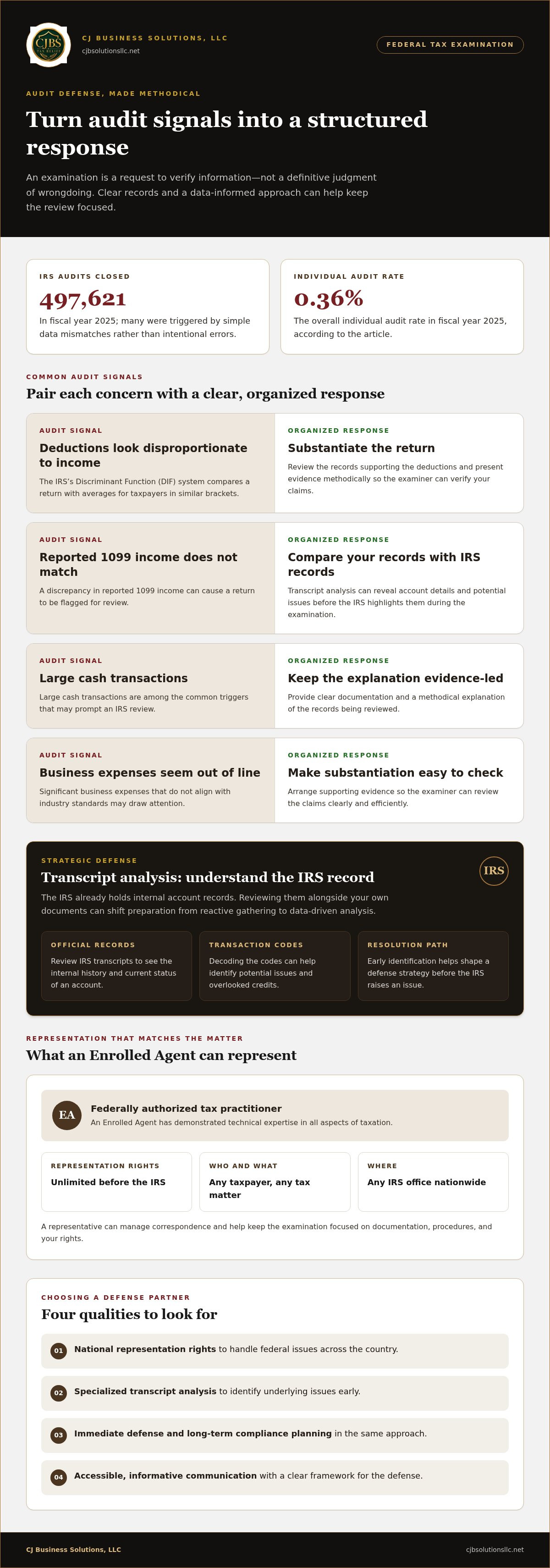
A federal tax examination is a methodical review of your financial records. Its primary purpose is to verify that your tax returns are accurate and compliant with current laws. While receiving an audit notice can be unsettling, it's helpful to remember that many reviews are routine. In fiscal year 2025, the IRS closed 497,621 audits, many of which were triggered by simple data mismatches rather than intentional errors. Understanding the Federal Tax Examination Process allows you to approach the situation with a sense of calm. If you find yourself in this position, securing professional federal tax examination help can ensure your response is both prompt and technically sound.
Common Triggers for a Federal Tax Audit
The IRS utilizes a sophisticated system known as the Discriminant Function (DIF) score to select returns for review. This system compares your return against healthy averages for taxpayers in similar brackets. If your deductions appear disproportionate to your income, or if there is a discrepancy in reported 1099 income, the system may flag the return. Other common triggers include large cash transactions or significant business expenses that don't align with industry standards. It's vital to recognize that an examination is a request for clarification, not a definitive judgment of wrongdoing. By providing clear documentation, you can often resolve these inquiries efficiently.
Maintaining your taxpayer rights requires a professional and organized approach from the very first correspondence. When you engage with the process early, you have the chance to address potential concerns before they become complex liabilities. Relying on professional federal tax examination help allows you to conduct a methodical review of your records. This structured defense strategy helps protect your financial interests and provides a reliable path toward a favorable resolution.
Strategic Audit Defense: The Power of Transcript Analysis
A successful defense begins with information parity. While many taxpayers focus solely on gathering old receipts, a truly strategic approach involves understanding the internal records the IRS already holds. Considering the overall individual audit rate was just 0.36% in fiscal year 2025, being selected often indicates a specific data mismatch. By reviewing the IRS audit selection process, you can see how these triggers function. Professional federal tax examination help shifts the focus from reactive document gathering to proactive, data-driven analysis.
How Transcript Analysis Identifies Resolution Paths
Transcript analysis services involve a deep dive into official IRS records to find hidden errors or overlooked credits. Each transcript contains specific transaction codes that reveal the internal history and current status of your account. Decoding these codes allows us to identify potential issues before the IRS highlights them. This early identification creates a more effective defense strategy, ensuring you aren't surprised during the examination. It's a methodical way to find a resolution path that prioritizes your financial stability.
Beyond decoding data, document substantiation is the cornerstone of a solid defense. You must present evidence methodically so the examiner can easily verify your claims. Professional representation acts as a vital buffer between you and the IRS, managing all correspondence and protecting your rights. This steady presence ensures that the process remains focused and fair. If you're seeking a reliable partner to manage this complexity, our IRS audit strategy defense can provide the professional support you deserve.
Professional Representation: The Enrolled Agent Advantage
An Enrolled Agent is a federally authorized tax practitioner who has demonstrated technical expertise in all aspects of taxation. Unlike many other tax professionals, an Enrolled agent has unlimited representation rights before the IRS. This allows them to represent any taxpayer regarding any tax matter before any IRS office nationwide. When you seek federal tax examination help, this specific credential ensures your representative possesses a deep understanding of the administrative procedures involved in a federal review. They act as a seasoned mentor, providing a calm port in the storm of complex tax controversy.
While many professionals prepare returns, an EA focuses heavily on Tax Resolution Services and IRS audit strategy defense. This approach is methodical and steady, ensuring that every thought leads naturally to the next during negotiations. By prioritizing long-term trust over immediate conversion, they help you maintain stability throughout the entire process. This professional support ensures that your defense is not just about the current examination, but about securing your financial future through accurate, methodical reporting.
Choosing Tax Resolution and Audit Defense Services
Selecting the right partner is a critical step in protecting your financial interests. It's helpful to look for a representative who follows a logical progression and prioritizes transparency. A reliable guide will offer a clear framework for your defense:
- Verification of national representation rights to handle federal issues across the country.
- A commitment to specialized Transcript analysis services to identify underlying issues early.
- A focus on both immediate defense and long-term compliance planning.
- A professional register that remains accessible and informative.
Seeking a partner who values substance over flash allows you to engage at your own pace. This methodical way of working ensures you feel fully informed before taking action, which naturally lowers the stress associated with federal tax examination help. By choosing a representative who acts as a knowledgeable resource, you can move forward with quiet confidence.
Securing Your Financial Future with Confidence
Approaching an audit requires a thoughtful transition from uncertainty to a structured, data-driven strategy. By understanding the IRS's methodical review process and utilizing specialized Transcript analysis services, you can identify clear resolution paths that protect your long-term interests. We have explored how an IRS audit strategy defense, grounded in technical expertise, provides a stable buffer between you and the examiner. Led by an Enrolled agent with national representation rights, we provide a professional, understated approach to Tax Resolution Services that prioritizes your success. It's our goal to help you move forward with quiet confidence. We invite you to request a professional consultation for federal tax examination help to begin reviewing your case today. With a seasoned mentor by your side, you can resolve these complexities and regain your peace of mind.
Frequently Asked Questions
What is the difference between a tax audit and a federal tax examination?
They are essentially the same thing. The IRS often uses the term "examination" to describe the process of reviewing accounts and financial information to ensure tax laws are being followed. Whether it's called an audit or an examination, the goal remains the same: verifying the accuracy of a return. Professional federal tax examination help can assist in navigating either term with clarity and quiet confidence.
How long does a typical federal tax examination take to resolve?
The timeline varies significantly based on the complexity of the issues and the specific type of audit conducted. While simple correspondence audits might conclude within a few months, more detailed field examinations can occasionally take a year or longer. Factors such as the availability of documentation and the promptness of communication are vital. Seeking federal tax examination help helps keep the process moving steadily toward a resolution.
Do I have to meet with the IRS auditor in person if I have representation?
Generally, you don't have to meet with the auditor in person. When you have professional representation, such as an Enrolled Agent, they can handle all interactions with the IRS on your behalf. This acts as a protective buffer, allowing your representative to manage technical discussions while you focus on your daily life. Your representative will coordinate information exchanges, ensuring your rights are protected throughout the entire process.
Can transcript analysis help if I have already received a notice of deficiency?
Yes, transcript analysis services remain a vital tool even after receiving a notice of deficiency. By decoding internal IRS transaction codes, a professional can identify exactly how the IRS calculated the deficiency and whether any credits were overlooked. This methodical review provides a clear roadmap for challenging the notice or negotiating a favorable resolution path based on verified internal data and historical records.

Article by
Crystal R. Johnson, MBA EA
Crystal Johnson founded CJ Business Solutions to give individuals and small-business owners something often missing from the tax and accounting process: clear explanations, practical solutions, and trusted support.
With more than 27 years of accounting and financial experience, Crystal helps clients understand complicated tax matters, restore compliance, respond to IRS concerns, and make stronger business decisions. As an Enrolled Agent, she is federally authorized to represent taxpayers before the Internal Revenue Service.


