

An unpaid tax bill can grow by nearly 50 percent in a single year because of compounding interest and penalties. It's completely understandable if receiving a notice from the IRS feels overwhelming or creates a sense of uncertainty about your financial future. You aren't alone in feeling this pressure, especially as interest rates on unpaid taxes have reached 7 percent in late 2026. Professional IRS tax resolution services provide a structured, calm approach to these complex challenges. This guide will help you address federal tax debt and audits while protecting your rights through proven strategies. We'll explore the diagnostic power of transcript analysis and the specific programs available to help you achieve a clear roadmap to compliance and long-term peace of mind.
Key Takeaways
- Discover how IRS tax resolution services provide a methodical, multi-step approach to managing federal debt while protecting your taxpayer rights.
- Explore strategic options such as an Offer in Compromise or Installment Agreements to help settle or structure your repayment in a manageable way.
- Understand the specialized role of an Enrolled Agent as a seasoned mentor who offers expert representation and audit strategy defense.
- Learn why starting with a professional transcript analysis is a critical first step in developing a clear, legal roadmap toward full tax compliance.
Understanding the Scope of IRS Tax Resolution Services
IRS tax resolution services represent a specialized field within tax administration that focuses on resolving federal tax liabilities and disputes. Unlike standard tax preparation, which is a seasonal recording of income and expenses, resolution is a strategic, multi-step journey. It begins with a thorough assessment of your current standing and moves toward negotiation and long-term compliance. This professional process is rooted in the broader field of tax controversy, where experts work to protect your rights while finding a sustainable path forward.
A seasoned mentor provides the stability needed during high-stress financial periods. While tax preparation looks backward at what happened, specialized IRS tax resolution services look forward to what's possible. We act as a reliable guide, offering clarity when the path seems obscured by complex IRS codes. This methodical approach ensures you aren't just reacting to notices but are following a professional roadmap designed to lower stress through transparency and quiet confidence.
Common Triggers for Federal Tax Disputes
Many disputes begin with simple, overlooked issues that eventually escalate into complex collection actions. Common triggers often include:
- Unfiled tax returns from previous years.
- Unpaid back taxes that have accumulated interest.
- Specific IRS audit notices questioning previous filings.
If a filing error isn't addressed promptly, the IRS may initiate levies or liens. Receiving these notices often carries a heavy emotional weight, but a composed, professional response is vital. It's possible to address these triggers before they become unmanageable financial burdens by shifting from a reactive stance to a proactive strategy. By addressing the root cause through professional transcript analysis, you can begin the process of returning to good standing with the federal government.
Strategic Pathways to Resolve Federal Tax Issues
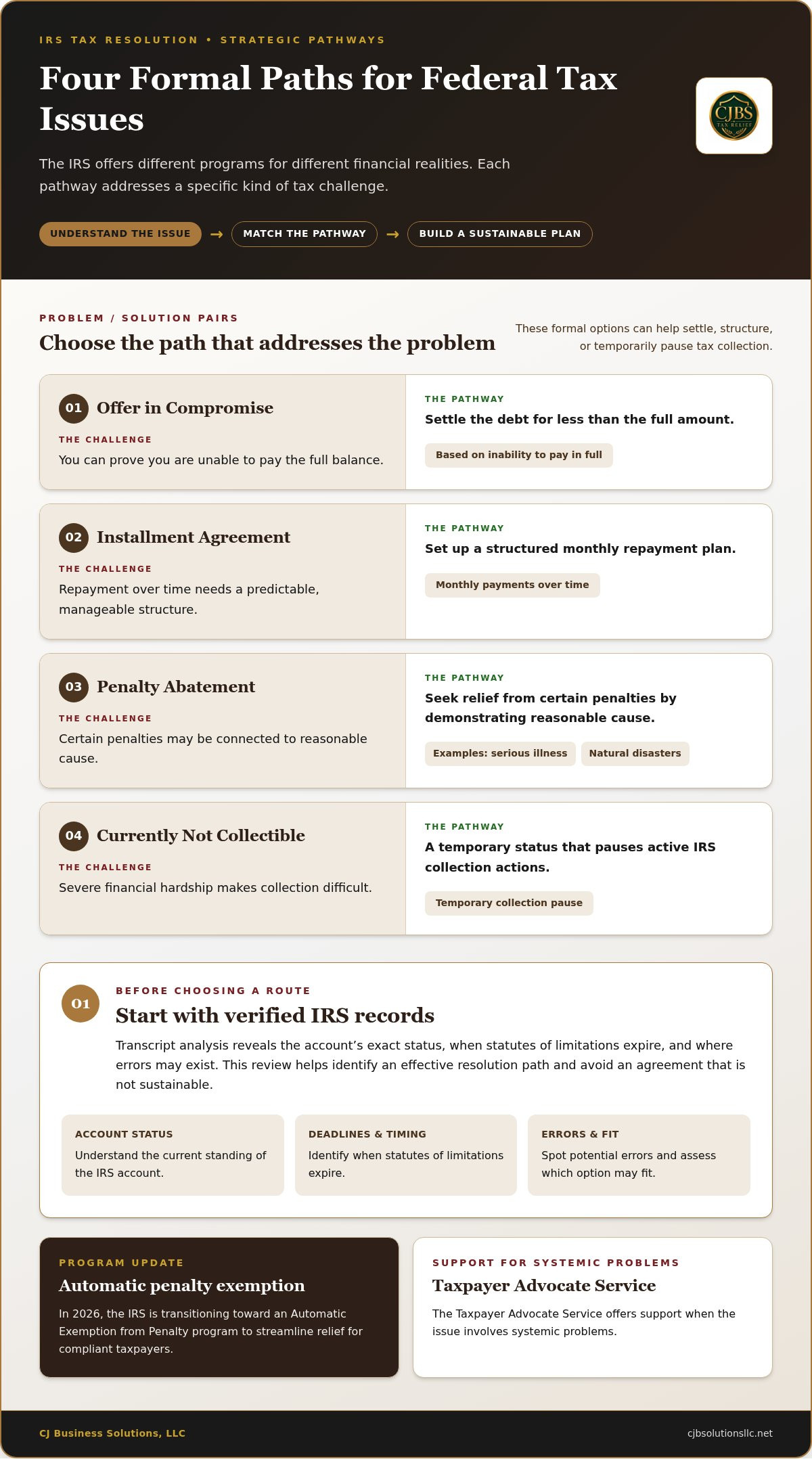
The IRS provides several formal programs to help taxpayers manage their liabilities in a steady, sustainable manner. These options are designed to accommodate different financial realities while ensuring the government eventually receives the taxes owed. Common resolution strategies include:
- Offer in Compromise (OIC): A path to settle debt for less than the full amount if you can prove an inability to pay the total balance.
- Installment Agreements: Structured monthly plans that provide a predictable and manageable structure for repayment over time.
- Penalty Abatement: Relief from certain penalties if you can demonstrate reasonable cause, such as serious illness or natural disasters.
- Currently Not Collectible: A temporary status for those in severe financial hardship that pauses active collection actions by the IRS.
In 2026, the IRS is also transitioning toward an Automatic Exemption from Penalty program to streamline relief for compliant taxpayers. While resources like the Taxpayer Advocate Service offer support for systemic problems, professional IRS tax resolution services focus on tailoring these programs to your unique situation.
The Role of IRS Transcript Analysis in Case Strategy
Success in any resolution effort depends on a clear understanding of your internal IRS records. Decoding IRS transcripts reveals the exact status of your account, including when statutes of limitations expire or where errors may exist. This diagnostic review identifies the most effective resolution path and prevents you from entering an agreement that isn't sustainable. Professional IRS tax resolution services often prioritize this analysis to protect your interests. It's often helpful to begin with transcript analysis services to ensure your roadmap is based on verified data rather than assumptions.
Navigating Representation with an Enrolled Agent
An Enrolled Agent (EA) is a federally authorized tax practitioner who has earned the privilege of representing taxpayers before the Internal Revenue Service. Unlike general accounting practitioners who may focus on broad business consulting, an EA specializes specifically in tax law and representation. This federal credential grants them unlimited representation rights, allowing them to handle audits, collections, and appeals across all IRS offices. This specific focus ensures that your case is managed by someone whose expertise is rooted in the technical complexities of the tax code.
Engaging an EA for IRS tax resolution services provides a protective layer between you and the federal government. They act as your representative, which means the IRS generally communicates with them instead of contacting you directly. This arrangement helps reduce stress because you don't have to handle the direct pressure of IRS phone calls. Since IRS notices often have a strict 30-day response window, having a professional advocate ensures that deadlines are met and your rights are preserved. The ultimate commitment is to your long-term compliance and financial health through steady, methodical guidance.
Protecting Your Interests During an IRS Audit
It's a strategic process to defend an audit, and it involves more than just submitting documents. It requires managing all communication and substantiating tax positions with technical accuracy. By utilizing transcript analysis during the preparation phase, an EA can identify exactly what the IRS is looking for before the examination begins. This diagnostic tool reveals the history of the account and flags potential errors. Having a seasoned mentor by your side ensures that you navigate procedural nuances without making common errors. This professional oversight is essential for maintaining stability and ensuring a fair outcome during a federal examination.
Establishing Your Path to Tax Compliance
Resolving federal tax issues is a methodical process that requires both technical expertise and a calm perspective. By leveraging professional IRS tax resolution services, you move from a state of uncertainty to a clear, actionable roadmap. Whether your situation requires an Offer in Compromise or a strategic defense during a federal audit, the focus remains on protecting your rights and achieving long-term financial stability. A specialized approach involving deep transcript analysis ensures that every decision is based on verified account data rather than guesswork. We invite you to contact CJ Business Solutions, LLC for a professional consultation to discuss your specific needs. Our firm is led by an Enrolled Agent with specialized federal representation rights, offering the expertise needed to navigate complex examinations. You don't have to face these challenges alone; a steady partner is available to help you reclaim your peace of mind.
Frequently Asked Questions
What is the difference between an Enrolled Agent and a CPA for tax resolution?
An Enrolled Agent is a federally authorized practitioner who specializes specifically in tax law and provides professional IRS tax resolution services. While CPAs are state-licensed and possess broad accounting expertise, an EA focuses their practice on tax controversy and representation. This specialization is particularly valuable when you require a seasoned mentor to navigate complex federal examinations or collection actions.
Can IRS tax resolution services help if I have several years of unfiled returns?
Professional IRS tax resolution services are designed to address multiple years of unfiled returns by establishing a clear path to compliance. We help you gather necessary documentation, reconstruct records if needed, and file accurate returns to stop the accumulation of failure-to-file penalties. Addressing these outstanding returns is often the first step in qualifying for settlement programs like an Offer in Compromise.
How does transcript analysis identify errors in my IRS account?
Transcript analysis identifies errors by providing a line-by-line history of your IRS account, including assessments, payments, and penalty applications. This diagnostic review can uncover misapplied payments or incorrect tax assessments that may have inflated your balance. By decoding these internal records, we can challenge inaccuracies and ensure your resolution strategy is based on the most current and verified government data.
What happens if I cannot pay the full amount of my federal tax debt?
If you cannot pay your full federal tax debt, the IRS provides several strategic pathways such as an Offer in Compromise or an Installment Agreement. These programs allow you to settle for a reduced amount or structure monthly payments that fit your financial reality. In cases of severe hardship, you may qualify for Currently Not Collectible status, which temporarily pauses active collection efforts.

Article by
Crystal R. Johnson, MBA EA
Crystal Johnson founded CJ Business Solutions to give individuals and small-business owners something often missing from the tax and accounting process: clear explanations, practical solutions, and trusted support.
With more than 27 years of accounting and financial experience, Crystal helps clients understand complicated tax matters, restore compliance, respond to IRS concerns, and make stronger business decisions. As an Enrolled Agent, she is federally authorized to represent taxpayers before the Internal Revenue Service.


