

What accounting support is actually useful when a tax issue needs resolution, rather than just another round of routine filing? When records are incomplete or difficult to follow, it can be hard to see what led to the issue or what information is needed next. Accounting services for tax resolution clients help organize financial records, while transcript analysis and tax representation inform the resolution work.
Accounting support can extend beyond preparing a return. Accounting and resolution work complement one another, both while a matter is under review and as you build more consistent records afterward. This guide explains how to identify useful accounting support, how it connects with tax resolution, and how ongoing recordkeeping can support clearer reporting and tax compliance.
Key Takeaways
- Sort financial records and filed returns to build a clearer picture of the tax matter and identify information gaps.
- Use a checklist to identify which records, returns, bookkeeping, and reporting needs require attention.
- Accounting services for tax resolution clients clarify records and compliance needs, while tax resolution support addresses representation.
- CJ Business Solutions connects record review and transcript analysis with relevant accounting or resolution support.
Accounting Services for Tax Resolution Clients: Why Accurate Records Matter
Accounting services for tax resolution clients organize financial information so it is easier to review and use. Depending on the situation, support can include organizing income and expense records, preparing tax returns, reviewing bookkeeping, and analyzing relevant documents. The goal is a clearer financial picture, not a promised resolution.
Accurate books and filed returns show what was reported, which records support the figures, and where information may be missing or inconsistent. For an individual, that might mean gathering income documents and records supporting reported expenses. For a business, it can mean organizing transaction records and reports. Sorting records by tax year and matching figures to supporting documents can help reveal what is complete and what needs further review.
Accounting organizes and explains the financial facts; IRS representation addresses the tax matter with the agency. The two forms of support are distinct but useful together. Clear records can inform resolution work, while representation does not replace the need for accurate financial information.
How accounting information supports a clearer tax-resolution picture
Reviewing available records alongside filed returns can reveal gaps, differences, or periods that need attention. IRS transcript analysis provides another source of information by clarifying what the IRS account reflects. Comparing the transcript with personal copies of returns and supporting records can help identify questions to address, such as missing documents, figures that do not match, or business records that need clarification.
Fact-finding is not the same as representation or negotiation. Accounting work organizes and assesses financial information; representation focuses on addressing the tax matter with the IRS. Coordinated support connects the two without guaranteeing an outcome. The work can begin with a focused review of the available records, then address the gaps or questions that review identifies.
How to Evaluate Accounting Services for a Tax Resolution Matter
Before deciding what support would be useful, identify which parts of your financial information are difficult to review or keep current. Accounting services for tax resolution clients can address several needs, but not every matter requires the same combination.
A practical checklist includes:
- Records to organize: Gather income and expense details, filed returns, and documents supporting reported figures. Group them by tax year and note missing or unclear periods.
- Returns to prepare: Identify whether returns need preparation or whether existing filings need review to understand the tax picture.
- Bookkeeping needs: If business activity is ongoing, consider whether transactions are recorded consistently and whether the books reflect current operations.
- Reporting requirements: Clarify which financial reports are needed for accurate reporting and ongoing tax compliance.
“Map the records, returns, bookkeeping, and reporting needs first; that gives accounting support a clear purpose.”
Accounting organizes financial facts and helps clarify compliance needs, but it does not replace representation. When a matter involves addressing the IRS, representation is a separate part of the work. Keeping that distinction clear sets appropriate expectations and shows where accounting and resolution support can complement each other.
Which accounting needs should you prioritize first?
If records are incomplete or hard to follow, start by organizing income, expenses, filed returns, and supporting documents. For a business with ongoing activity, consistent bookkeeping and accurate financial reporting help keep new records usable. If questions concern what appears on an IRS account, transcript analysis can identify account information for review. Start with the records and circumstances that relate most directly to the issue.
For support that connects tax and accounting needs with a resolution matter, explore tax and accounting support from CJ Business Solutions.
How CJ Business Solutions Connects Accounting and Tax Resolution Support
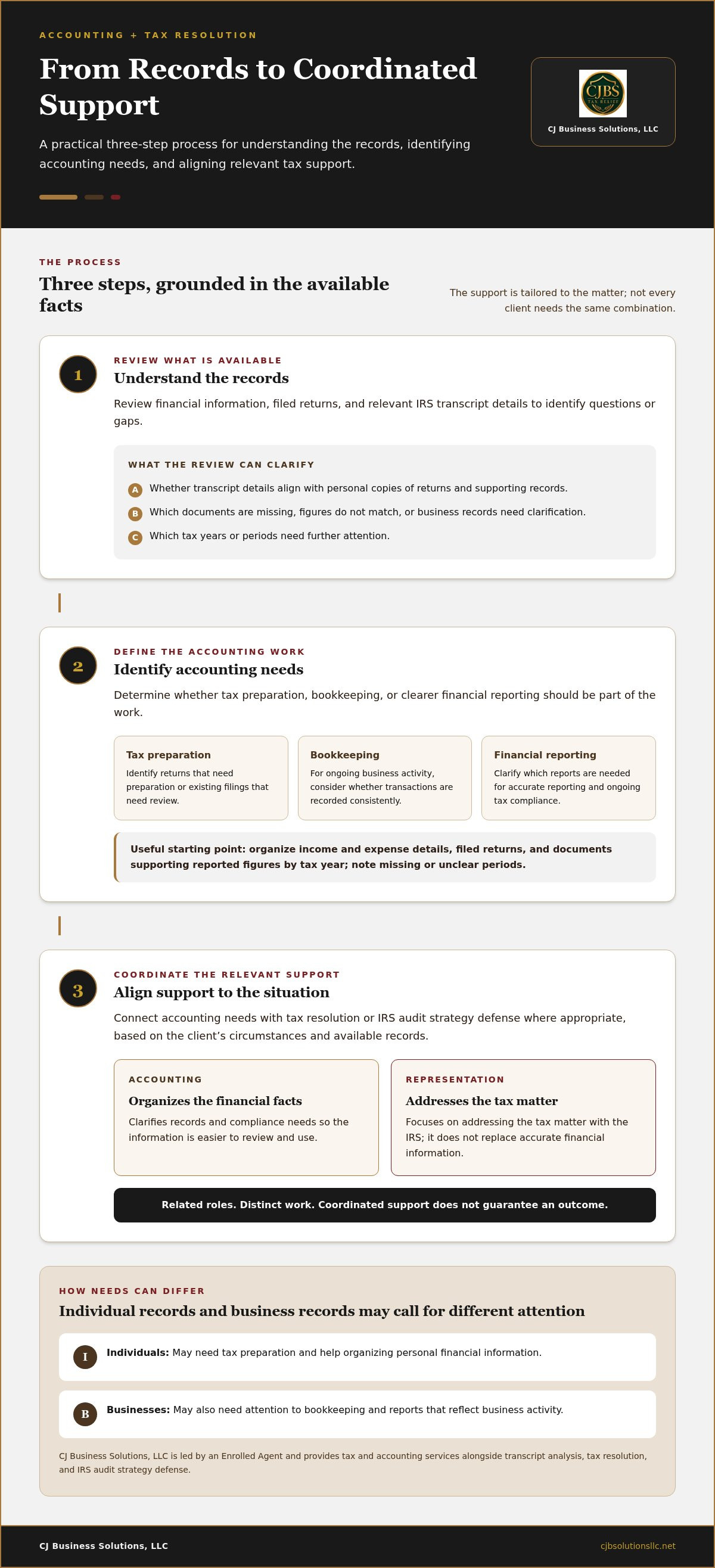
CJ Business Solutions, LLC provides tax and accounting services alongside transcript analysis, tax resolution, and IRS audit strategy defense. Led by an Enrolled Agent, the firm reviews how financial records and tax information relate to the issue, then aligns relevant support with the client’s circumstances. The process is practical:
- Understand the records. Review available financial information, returns, and relevant IRS transcript details to identify questions or gaps.
- Identify accounting needs. Determine whether tax preparation, bookkeeping, or clearer financial reporting should be part of the work.
- Align support to the situation. Connect accounting needs with tax resolution or audit strategy defense where appropriate.
This approach keeps the focus on the individual matter rather than assuming every client needs the same combination of services. Accounting services for tax resolution clients can clarify a current issue and support more consistent recordkeeping going forward.
What coordinated support can look like for individuals and businesses
An individual may need tax preparation and help organizing personal financial information. A business may also need attention to bookkeeping and reports that reflect its activity. In either case, accurate reporting and ongoing tax work support steadier practices for maintaining financial records and compliance. The work is tailored to the client’s needs and available records.
Accounting organizes financial information; representation addresses the tax matter, and the two roles can work together. They are related, but one does not replace the other.
To discuss how your records and tax concerns fit together, visit CJ Business Solutions’ tax and accounting team.
Build a Clearer Path Forward
A tax resolution matter is also an opportunity to strengthen how you maintain financial records. Identify which documents need attention now and what recordkeeping routines could make future reporting more consistent. A practical routine can keep financial information useful beyond the immediate concern and make it easier to prepare for future tax work.
Accounting services for tax resolution clients are most useful when they address a specific need, such as clarifying records, preparing returns, or supporting ongoing accounting. CJ Business Solutions brings these needs together with tax resolution, transcript analysis, tax preparation, and Enrolled Agent-led IRS audit strategy defense.
Ready to identify the right next step for your records and tax concerns? Contact CJ Business Solutions for tax and accounting support.
Frequently Asked Questions
Can accounting services help with an IRS tax resolution case?
Yes. Accounting support makes the financial details behind a tax issue easier to review. For example, comparing income records with a filed return may reveal figures or periods that need clarification. Accounting services for tax resolution clients organize and prepare that information, while IRS representation addresses the matter with the agency. The two forms of support can work together, but accounting alone does not provide representation.
What accounting records should I organize for tax resolution?
Start with filed returns, income documents, bank and credit card statements, receipts, and records supporting reported expenses. If you own a business, gather relevant bookkeeping reports and records of business income and costs. Group documents by tax year and label gaps rather than trying to fill them from memory. This makes it easier to distinguish available evidence from details that still need review.
Do tax resolution clients need bookkeeping after an IRS issue is addressed?
Not everyone needs ongoing bookkeeping, but it can help when financial activity continues and records have been difficult to maintain. Regularly categorizing income and expenses, keeping supporting documents together, and reviewing account activity can make future tax preparation more orderly. For a business, consistent bookkeeping can also support clearer financial reports. The appropriate routine depends on the person’s or business’s circumstances.
How does IRS transcript analysis relate to accounting services?
IRS transcript analysis reviews account information held by the IRS and can identify items or periods that merit closer attention. Comparing those details with copies of returns and financial records can help clarify where information differs or is incomplete. A transcript is one source for review, not a replacement for underlying documents such as receipts, statements, or bookkeeping records.

Article by
Crystal R. Johnson, MBA EA
Crystal Johnson founded CJ Business Solutions to give individuals and small-business owners something often missing from the tax and accounting process: clear explanations, practical solutions, and trusted support.
With more than 27 years of accounting and financial experience, Crystal helps clients understand complicated tax matters, restore compliance, respond to IRS concerns, and make stronger business decisions. As an Enrolled Agent, she is federally authorized to represent taxpayers before the Internal Revenue Service.


