

The notice, not assumptions, should set your first move. After receiving an IRS audit letter, it’s understandable to wonder whether it’s genuine, what the IRS is asking for, and how quickly you need to act. Responding to an IRS audit notice starts with reading the entire letter and following its specific instructions and deadline, rather than relying on a general timeline.
This guide explains how to verify the notice, identify the requested action, and gather records for a focused response. You’ll also learn how to keep your reply factual and organized. When the tax issues or records are complex, notice review and transcript analysis can help shape a response strategy. An Enrolled Agent can represent you during an examination.
Key Takeaways
- An audit notice alone doesn’t establish wrongdoing. Read it closely to understand the issue and the action requested.
- Responding to IRS audit notice is more manageable when you match each request with relevant records and organize them by issue.
- Submit copies unless the notice specifically asks for originals, and keep a complete copy of your response and supporting documents.
- Complex records, multiple issues, or uncertainty about your reply may make Enrolled Agent representation helpful during an IRS examination.
IRS Audit Notice: Meaning and Initial Steps
An IRS audit notice can feel unsettling, especially when it’s unclear what prompted it or what to do next. The notice alone does not establish that you did anything wrong. It means the IRS is asking about specific items on a tax return and expects you to take the action described in the letter.
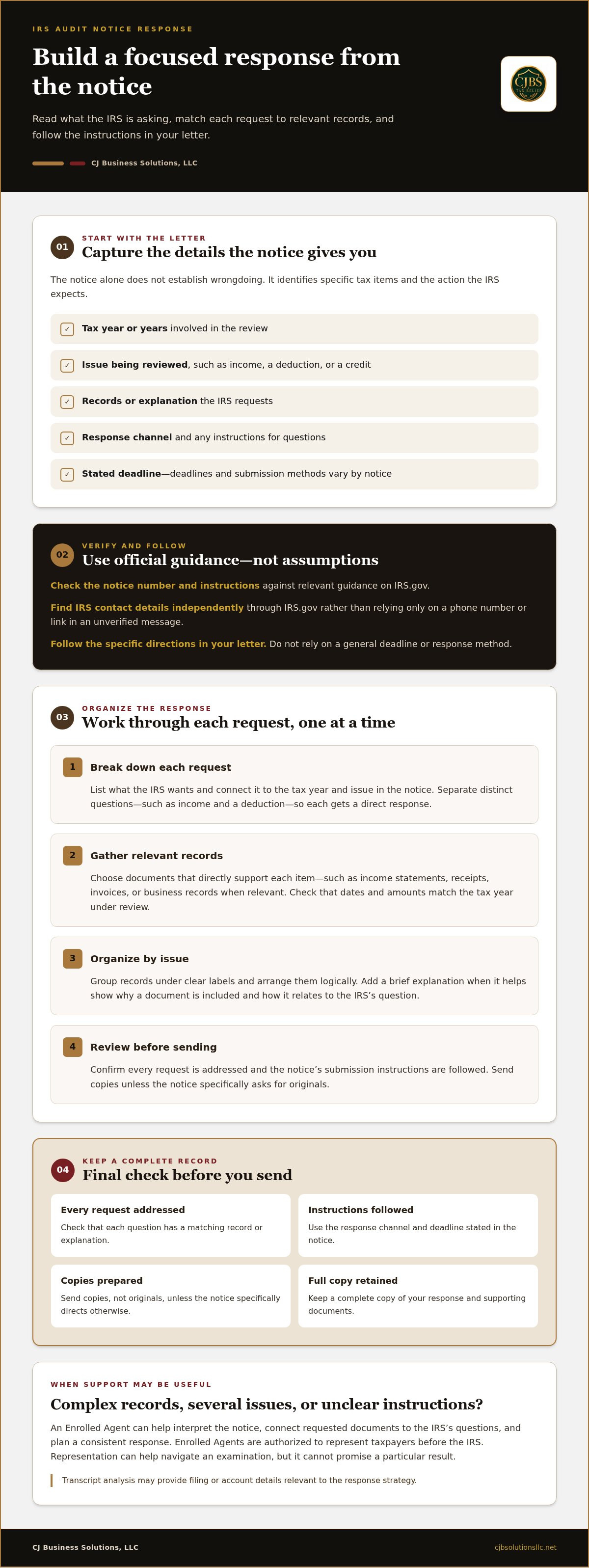
Use the notice to determine what the IRS requires. It should identify the tax issue under review, the records or explanation requested, how to respond, and the deadline. Details vary by notice, so don’t rely on a general deadline or response method.
Before preparing a reply, note the key details:
- The tax year or years involved
- The income, deduction, credit, or other issue being reviewed
- The documents or explanation requested
- The response channel, such as mail or another method specified in the notice
- The stated deadline and any instructions for questions
How can you tell what an IRS audit notice is asking you to do?
Compare the notice number and instructions with relevant guidance on IRS.gov. If you need to contact the IRS, find its contact information independently through IRS.gov rather than relying only on a phone number or link in a message you haven’t verified. Once you’ve confirmed the notice matches official guidance, follow its specific directions.
When responding to an IRS audit notice, focus on what the letter actually requests, not on what you assume an audit involves. If the issue or instructions remain unclear, an Enrolled Agent can help interpret the notice and plan a response. Enrolled Agents are tax professionals authorized to represent taxpayers before the IRS; the Enrolled Agent overview provides background on their qualifications and role.
Organizing Your IRS Audit Notice Response
A focused response makes it easier to show how each document addresses the IRS’s question. Work through the requests one by one rather than sending a large collection of records without explanation.
- Break down each request. List what the IRS wants and connect it to the tax year and issue identified in the notice. Separate distinct questions, such as income and a deduction, so each receives a direct response.
- Gather relevant records. Select documents that directly support each item, such as income statements, receipts, invoices, or business records, when relevant to the request. For business owners seeking to ensure their corporate documents and governance structures are properly maintained, jm.legal offers professional business law services. Check that dates and amounts correspond to the tax year under review.
- Organize by issue. Group records under clear labels and arrange them in a logical order. Add a brief explanation when it helps show why a document is included and how it relates to the IRS’s question.
- Review before sending. Confirm that you’ve addressed every request and followed the notice’s submission instructions. Send copies, not originals, unless the notice specifically directs otherwise, and keep a full copy of the response and attachments.
What records should you gather before sending an IRS audit response?
Start with the notice’s specific requests, then match each one to records for the stated tax year. For example, if the IRS asks about a deduction, organize the records that relate to that deduction rather than attaching unrelated paperwork. Transcript analysis can also help identify filing or account details relevant to the response strategy. A plain-language overview of responding to an IRS audit notice offers additional context as you prepare.
Deadlines and submission methods vary by notice. Follow the instructions in your letter and verify current IRS guidance before sending anything. CJ Business Solutions, LLC provides IRS audit strategy defense to help you organize a focused response when the records or issues are complex. Learn more about IRS audit strategy defense.
When IRS audit representation may help, and what an Enrolled Agent can do
Some examinations are manageable when the instructions are clear and the records are organized. Professional support can be useful if the notice raises several issues, your records are complex, or you’re unsure how to explain a discrepancy. An Enrolled Agent can help you understand how requested documents relate to the IRS’s questions and plan a consistent response.
Seeking representation is a practical decision, not an admission of wrongdoing. An Enrolled Agent can represent taxpayers before the IRS and help them navigate examination matters. Representation can clarify the process and inform your response, but it cannot promise a particular audit result.
How can an Enrolled Agent support an IRS audit response?
Support can begin with reviewing the notice and identifying the issues under examination. Audit strategy defense helps shape a focused response, while relevant transcript analysis can provide filing or account details to inform the approach. Together, these steps connect the IRS’s questions with the records and explanations being prepared. The work depends on the notice and the circumstances of the examination.
CJ Business Solutions, LLC provides tax resolution services through a firm led by an Enrolled Agent, including IRS audit strategy defense and transcript analysis. The firm provides professional tax support, not legal litigation, and does not guarantee a specific resolution. If you need guidance responding to an IRS audit notice, explore the firm’s audit defense and transcript analysis support.
Take Your Next Step With a Clear Plan
Responding to an IRS audit notice can feel more manageable when you focus on the next decision rather than trying to resolve every concern at once. Identify what remains uncertain: the meaning of a request, how records fit together, or how to address the examination directly. Clarifying that point can help you decide whether to prepare the response yourself or seek professional guidance.
CJ Business Solutions, LLC is led by an Enrolled Agent and provides IRS audit strategy defense and transcript analysis services. To discuss support for your audit response, learn how CJ Business Solutions, LLC can help you plan your next step.
Frequently Asked Questions
Does receiving an IRS audit notice mean I owe additional tax?
No. The notice may ask you to substantiate items on a return without stating that additional tax is due. For example, a request for records related to a charitable contribution is a request to review that claim, not by itself a bill. Read the notice carefully to distinguish an information request from a proposed change or assessment.
Can I request more time to respond to an IRS audit notice?
Possibly, but extra time isn’t automatic, and the option can depend on the notice and examination stage. If you need more time, contact the IRS promptly through a method verified on IRS.gov or stated in the notice, and explain what you need. Continue working toward the original deadline unless the IRS confirms an extension.
What happens if I miss the response deadline on an IRS audit notice?
The IRS may proceed using the information already available, which could lead to proposed changes if it can’t verify items on your return. The notice may also provide a time-limited opportunity to challenge a later determination. If the deadline has passed, review the letter for next steps and contact the IRS promptly; available options depend on the notice and case status.
Can an Enrolled Agent represent me in an IRS audit?
Yes. An Enrolled Agent can represent taxpayers before the IRS, subject to applicable authorization requirements. Representation may help if you’re unsure how to address an examiner’s questions or manage several tax issues at once. An Enrolled Agent can assist with IRS communications and tax matters, but representation does not guarantee a particular audit outcome.

Article by
Crystal R. Johnson, MBA EA
Crystal Johnson founded CJ Business Solutions to give individuals and small-business owners something often missing from the tax and accounting process: clear explanations, practical solutions, and trusted support.
With more than 27 years of accounting and financial experience, Crystal helps clients understand complicated tax matters, restore compliance, respond to IRS concerns, and make stronger business decisions. As an Enrolled Agent, she is federally authorized to represent taxpayers before the Internal Revenue Service.


