

What if the most effective way to halt an IRS collection action isn't through aggressive confrontation, but through the precise, methodical analysis of your federal tax history? It's entirely natural to feel a sense of dread when penalties mount and the threat of wage garnishment looms over your daily life. In these moments, seeking the guidance of an enrolled agent for tax debt can provide the stability you need to move forward. These complex notices often feel like a storm without a clear harbor, yet there is a dignified way to resolve your debt while keeping your assets secure.
Choosing a specialized professional provides you with a reliable guide who holds unlimited practice rights before the IRS and understands how to navigate these challenges with quiet confidence. This article will demonstrate how an expert can decode your IRS transcripts to identify errors and negotiate a sustainable path toward financial freedom. We will explore the strategic role of transcript analysis and the legal programs designed to help you stop collections, reduce what you owe, and finally reclaim your peace of mind.
Key Takeaways
- Understand the unique benefits of working with a federally-authorized practitioner who specializes exclusively in taxation and IRS representation.
- Learn why specialized knowledge of IRS procedural manuals often provides a more effective defense than general accounting expertise during debt negotiations.
- Discover how an enrolled agent for tax debt utilizes transcript analysis to decode transaction codes and identify potential errors in your tax history.
- Explore the specific criteria for resolution programs like Offers in Compromise and Installment Agreements to establish a manageable path forward.
- Gain insight into selecting a seasoned mentor who offers a methodical approach to audit strategy and prioritizes your long-term financial stability.
The Unique Role of an Enrolled Agent in Tax Debt Resolution
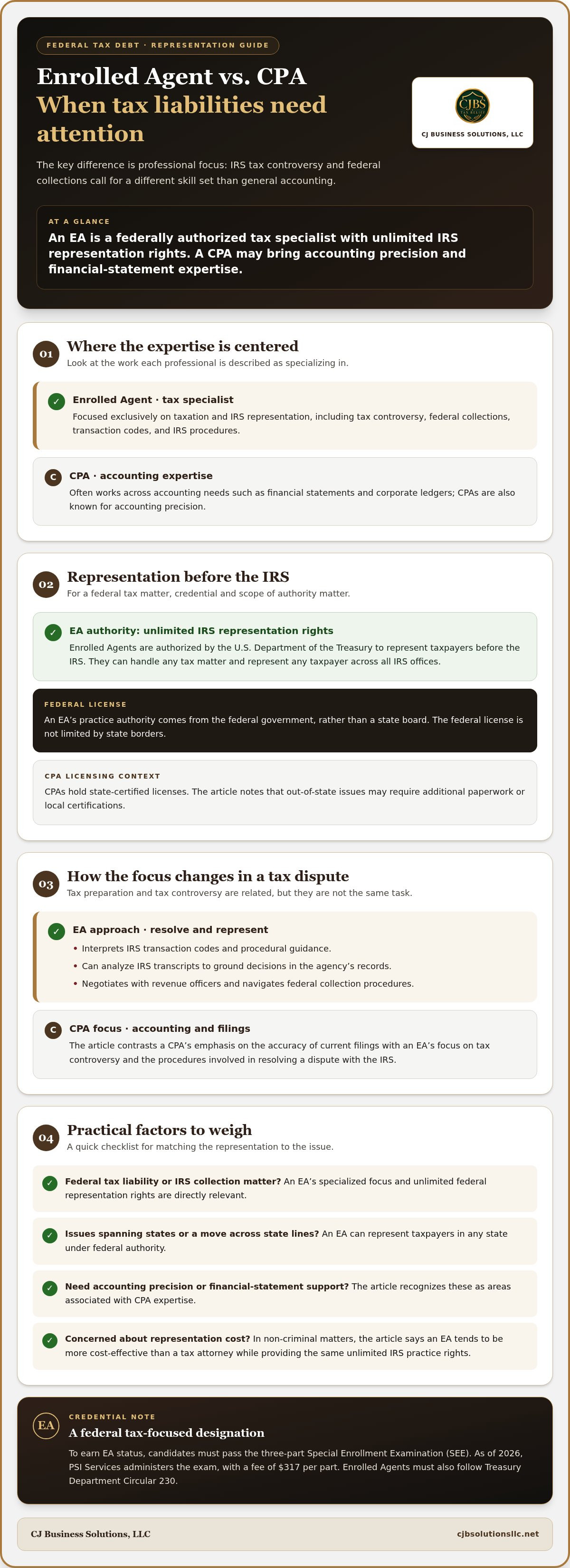
When you are facing the complexities of federal tax liabilities, understanding the specific qualifications of your representative is a vital first step toward clarity. An Enrolled Agent (EA) is a federally-authorized tax practitioner who is empowered by the U.S. Department of the Treasury to represent taxpayers before the Internal Revenue Service. While many professionals offer financial advice, an enrolled agent for tax debt specializes exclusively in the intricacies of taxation and IRS representation. This narrow focus allows them to develop a deep expertise that is often missing from more generalized accounting practices.
The most significant advantage of working with an EA is their possession of unlimited representation rights. This status, granted by the federal government, ensures that they can handle any tax matter and advocate for any taxpayer across all IRS offices. For those who may still be asking What is an Enrolled Agent?, it is helpful to recognize that they are the only tax professionals who receive their right to practice directly from the federal government rather than a state board. This distinction is particularly important when you are dealing with a federal agency like the IRS, as it requires a representative who speaks the specific language of federal collections and procedural manuals.
Federal Licensing vs. State Certification
It is common for taxpayers to assume that all tax professionals hold the same credentials, but the difference between federal and state licensing is substantial. Enrolled Agents are licensed at the federal level, which makes them an ideal choice for national representation. If your tax issues span multiple states or involve federal debt, an EA provides a consistent level of authority that is not bound by state borders. To earn this designation, candidates must pass the rigorous three-part Special Enrollment Examination (SEE). As of 2026, this exam is administered by PSI Services and requires a fee of $317 per part, ensuring that only those with a comprehensive grasp of the tax code achieve enrollment.
Why "America’s Tax Experts" Are Built for Debt Relief
The commitment to excellence for an enrolled agent for tax debt is maintained through strict ethical standards. These professionals must adhere to the regulations outlined in Treasury Department Circular 230, which governs the practice of representatives before the IRS. Their professional life is centered on the tax code itself, rather than general corporate auditing or ledger management. This specialization means they are uniquely equipped to identify errors in IRS records and propose solutions that align with the latest federal guidelines. The Enrolled Agent credential is the highest awarded by the IRS.
Strategic Advantages: Enrolled Agent vs. CPA for Tax Liabilities
Many individuals initially turn to a Certified Public Accountant (CPA) when financial troubles arise, which is a logical first step given their reputation for accounting precision. However, when you are specifically seeking an enrolled agent for tax debt, it is helpful to recognize the fundamental difference in their professional focus. While CPAs are often generalists who excel at managing financial statements and corporate ledgers, Enrolled Agents are dedicated specialists in the IRS tax code. This distinction is critical. Resolving a tax liability requires a deep understanding of the Internal Revenue Manual and the specific procedural guidelines that govern federal collections, rather than a focus on general business accounting.
Understanding the Specialization Gap
Representation during a tax dispute requires a different mindset than standard tax preparation. CPAs often prioritize the accuracy of current filings, whereas an EA focuses on tax controversy and navigating the complex friction between a taxpayer and the government. As IRS-credentialed tax professionals, Enrolled Agents spend their daily lives interpreting transaction codes and negotiating with revenue officers. This specialized experience allows them to serve as a steady partner who understands the nuances of IRS administrative law. If you find yourself overwhelmed by complex notices, a professional transcript analysis can often be the first step toward a calm and methodical resolution. This process ensures that every decision is based on the actual data held by the IRS rather than guesswork.
The Benefit of National Representation Rights
Since tax debt is a federal matter, the federal license held by an Enrolled Agent is a natural and efficient fit for the task at hand. Unlike state-certified licenses that may require additional paperwork or local certifications to handle out-of-state issues, an EA possesses the authority to represent you in any state. This provides significant peace of mind for taxpayers who may have moved or who own businesses with interests across several regions. The EA acts as a seasoned mentor who understands that your situation is unique. In non-criminal matters, an enrolled agent for tax debt also tends to be a more cost-effective choice than a tax attorney while providing the same unlimited practice rights before the IRS. By choosing a representative who views their role as a reliable guide, you ensure that your long-term financial stability remains the primary focus of every negotiation. This methodical approach lowers the stress of the situation and allows you to move forward with quiet confidence.
The EA Process: Using Transcript Analysis to Map a Path Forward
Before a resolution can be proposed, a clear understanding of your current standing with the IRS is essential. This clarity begins with transcript analysis, which serves as the fundamental first step in any professional resolution strategy. While the IRS provides a portal for taxpayers to view their records, the data remains largely technical and difficult to interpret without specialized training. An enrolled agent for tax debt uses these documents to build a comprehensive history of your account, identifying the specific transaction codes that reveal the exact status of your liability.
These codes act as a digital footprint of every action taken by the IRS on your account. By reviewing these entries, an expert can determine if the IRS has made procedural errors or if payments you've made were misapplied to the wrong tax year. This level of detail is necessary to decide which resolution path is most appropriate for your specific financial situation. Whether the goal is an Offer in Compromise, a manageable Installment Agreement, or Currently Not Collectible status, the data found in your history provides the evidence needed to move forward. This methodical approach is supported by the IRS definition of an Enrolled Agent, which highlights their specialized focus on tax matters and representation.
Decoding Your IRS History for Hidden Errors
Transcript analysis often uncovers opportunities for relief that aren't immediately obvious. For instance, an EA will prioritize the Account Transcript over the Tax Return Transcript when dealing with debt, as it shows the balance, penalties, and interest accrued over time. By examining these records, your representative can identify penalties that may be eligible for abatement due to reasonable cause or administrative errors. The EA's role is to translate this technical data into a clear roadmap, ensuring you understand every step of the process. This transparency helps lower the stress associated with complex IRS notices and provides a sense of quiet confidence in the resolution strategy.
Identifying Collection Statute Expiration Dates (CSED)
One of the most critical aspects of transcript analysis is identifying the Collection Statute Expiration Date (CSED). Generally, the IRS has a 10-year limit to collect a tax debt from the date it was assessed. However, certain actions can "toll" or extend this period, making the calculation of the exact expiration date quite complex. An enrolled agent for tax debt carefully calculates these dates to see if your debt is nearing its legal end. The IRS is not required to tell you when your debt expires. Having a seasoned mentor to track these dates ensures that you don't enter into unnecessary agreements for debt that may soon be legally uncollectible.
Proven Resolution Paths for Federal Tax Debt
Once the transcript analysis has provided a clear view of the situation, the next step involves selecting the most appropriate resolution program. For many, an enrolled agent for tax debt acts as a strategic architect, building a case based on the taxpayer's unique financial reality. There are several primary paths used to resolve federal liabilities:
- Offer in Compromise (OIC): This allows you to settle your debt for less than the full amount if you can demonstrate that the debt cannot be fully collected.
- Installment Agreements (IA): These are monthly payment plans tailored to your actual budget rather than an arbitrary IRS demand.
- Currently Not Collectible (CNC): This status pauses collection activities if the IRS determines that making payments would cause immediate economic hardship, providing much-needed breathing room.
- Penalty Abatement: A formal request to remove penalties if you have a "reasonable cause" for the delinquency, such as a serious illness or a natural disaster.
Negotiating Offers in Compromise and Payment Plans
Negotiating an Offer in Compromise requires a precise calculation of what the IRS calls "Reasonable Collection Potential" (RCP). This calculation accounts for your future income and equity in assets, such as the 2026 personal effects exemption of $11,980. While the OIC application fee is $205, the true cost of a self-filed application often comes in the form of a rejection. The IRS frequently denies these offers if they aren't presented with a methodical, logical progression of financial evidence. An enrolled agent for tax debt ensures that your proposal is realistic and compliant with the Internal Revenue Manual. For those who owe $50,000 or less, a streamlined installment agreement might be a more direct path to compliance without the need for extensive financial documentation.
Protecting Your Income from Levies and Garnishments
If you are already facing the threat of bank levies or wage garnishments, your representative serves as a calm port in a storm. They can file a Collection Due Process (CDP) appeal to halt involuntary collection actions while a formal resolution is negotiated. This protection is vital for maintaining your daily financial stability. It is often helpful to recognize that while the IRS generally avoids filing a tax lien for debts below $10,000, addressing the underlying issue early remains a prudent choice. By taking a proactive approach, you can explore tax resolution services that prioritize your well-being. Engaging with a mentor at your own pace allows you to regain control before the government takes action on your behalf.
Finding Your Reliable Guide for IRS Tax Resolution
Selecting a representative to manage your federal liabilities is a decision that extends far beyond a single tax season. It's a choice to find a partner who prioritizes long-term trust and stability over immediate, transactional results. When you search for an enrolled agent for tax debt, you're looking for more than just a preparer; you're seeking a seasoned mentor who can navigate the complex procedural landscape of the IRS with quiet confidence. A methodical and thorough approach to debt defense ensures that every legal avenue is explored, allowing you to move forward with a clear understanding of your rights and responsibilities.
The value of professional representation lies in the ability to transform a high-stress situation into a manageable process. By allowing a specialist to handle all IRS correspondence and negotiations on your behalf, you reclaim the time and mental energy previously consumed by financial worry. This steady, reliable partnership is designed to lower your stress through a soft-touch methodology, ensuring that you never feel rushed or pressured into a decision. Instead, you're invited to engage at your own pace, supported by a professional who is genuinely invested in your success and well-being.
The CJ Business Solutions, LLC Approach to Tax Debt
At CJ Business Solutions, LLC, the focus remains on providing a high standard of care that treats every individual as a valued partner rather than just a case number. Led by an Enrolled Agent with unlimited practice rights, the firm specializes in providing a calm port in the storm of IRS collections. We utilize specialized transcript analysis as the fundamental first step in every resolution roadmap, ensuring that no detail is overlooked and no error goes uncorrected. This meticulous attention to detail is paired with expertise in IRS audit strategy defense, providing a robust shield for your assets. By maintaining a professional and welcoming atmosphere, the firm acts as an authoritative expert that doesn't feel the need to shout to be heard, focusing instead on the substance of your resolution.
Moving from Financial Stress to Compliance
The ultimate goal of tax resolution is to reach a state of long-term financial health and compliance. While the immediate relief of stopping a levy or reducing a penalty is significant, the true value of working with an enrolled agent for tax debt is the peace of mind that comes from a sustainable path forward. This journey moves you from the confusion of complex IRS notices to a state of quiet confidence. You deserve a resolution that respects your autonomy and provides a clear, logical progression toward financial freedom. If you're ready to begin this methodical process, we invite you to Consult with an Enrolled Agent today and take the first step toward a more secure financial future.
Moving Toward a Resolved Future
Resolving a complex tax liability is a methodical journey that begins with a clear understanding of your unique standing before the federal government. By choosing an enrolled agent for tax debt, you gain a representative who specializes exclusively in the tax code and possesses the unlimited practice rights necessary to advocate for you at every level. This process isn't about aggressive confrontation, but rather about using specialized transcript analysis to uncover the truth of your account and mapping a path toward a sustainable resolution.
CJ Business Solutions, LLC provides the steady, professional guidance required to navigate these challenges with quiet confidence. Our firm is led by an Enrolled Agent with federal unlimited practice rights, focusing on expert audit strategy defense and thorough transcript analysis to protect your interests. We invite you to Secure your financial future with expert IRS representation from CJ Business Solutions, LLC. It's entirely possible to move beyond the stress of mounting penalties and find a lasting state of financial compliance and peace.
Frequently Asked Questions
What is the main difference between an Enrolled Agent and a tax attorney for debt?
The primary difference lies in their scope of practice; Enrolled Agents specialize exclusively in taxation and IRS procedural rules, while tax attorneys are trained in broader legal litigation. For non-criminal matters like tax debt resolution, an Enrolled Agent provides the same unlimited practice rights before the IRS. This specialization often makes an enrolled agent for tax debt a more focused and cost-effective choice for navigating administrative appeals and collection negotiations.
Can an Enrolled Agent represent me in any state for federal tax debt?
Yes, an Enrolled Agent can represent you in any state because their license is granted at the federal level by the U.S. Department of the Treasury. Unlike CPAs or attorneys who may be limited by state-specific certifications, an EA's authority is national. This ensures a consistent level of service and a steady, reliable partnership regardless of where you live or where your business interests are located across the country.
How does an Enrolled Agent help with IRS audit defense?
An Enrolled Agent helps by acting as your technical advocate and primary point of contact with the IRS throughout the examination process. They develop a methodical audit strategy defense by reviewing your records, identifying potential issues, and ensuring the IRS adheres to its own procedural manuals. This professional representation allows you to avoid direct interaction with auditors, lowering your stress while ensuring your rights are protected through every stage of the audit.
What is IRS transcript analysis and why is it necessary for tax resolution?
IRS transcript analysis is the process of decoding the technical "transaction codes" that document every action taken on your tax account. It is a necessary step for tax resolution because it reveals the exact status of your debt, identifies misapplied payments, and tracks the legal expiration dates for collections. By analyzing these records, a professional can identify hidden errors that may lead to penalty removals or lower the total amount you owe.
Will hiring an Enrolled Agent stop the IRS from garnishing my wages?
Hiring an Enrolled Agent can stop wage garnishment by initiating formal appeals or negotiating an immediate resolution plan with the IRS. By filing a Collection Due Process appeal, your representative can halt involuntary collection actions while a sustainable payment plan or settlement is established. This intervention provides a calm harbor, allowing you to resolve the underlying debt through legal programs without the immediate threat of losing your income.
How long does the tax debt resolution process typically take with an EA?
The timeline for tax debt resolution varies based on the complexity of your case and the specific program you pursue. While a simple installment agreement might be established in a few weeks, more complex paths like an Offer in Compromise often take seven to twelve months for the IRS to process. A seasoned mentor will provide a realistic roadmap and keep you informed of the logical progression at every stage of the process.
Is an Enrolled Agent more affordable than a CPA for tax debt help?
Enrolled Agents are often a more efficient and cost-effective choice for debt resolution because their entire practice is centered on the tax code. While CPAs are highly skilled generalists in accounting, an enrolled agent for tax debt focuses specifically on IRS controversy and procedural law. This specialization often results in a more direct and methodical path to resolution, as you aren't paying for generalized ledger expertise that isn't required for debt negotiations.
What should I look for when choosing the best tax relief services?
You should look for a firm that prioritizes transparency, long-term trust, and a methodical approach to your financial health. It is vital to choose a service led by an Enrolled Agent who offers specialized transcript analysis as the first step in their process. Avoid firms that make high-energy guarantees or pressure you into immediate transactions, opting instead for a reliable guide who offers a calm, professional consultation and a clear roadmap for success.

Article by
Crystal R. Johnson, MBA EA
Crystal Johnson founded CJ Business Solutions to give individuals and small-business owners something often missing from the tax and accounting process: clear explanations, practical solutions, and trusted support.
With more than 27 years of accounting and financial experience, Crystal helps clients understand complicated tax matters, restore compliance, respond to IRS concerns, and make stronger business decisions. As an Enrolled Agent, she is federally authorized to represent taxpayers before the Internal Revenue Service.


