

The IRS recently included "Offer in Compromise mills" on its 2026 Dirty Dozen list of tax scams, which suggests that the most aggressive advertisements often provide the least protection for your finances. If you're currently facing IRS collection letters or the fear of a lien, it's natural to feel a sense of urgency. We understand that the pressure to find a solution can make it difficult to distinguish between high-pressure sales tactics and legitimate professional representation. This evaluation guide is designed to help you identify the best tax relief services by looking past the slogans and focusing on methodical, ethical tax resolution strategies.
You'll learn how to verify professional credentials, understand the 2026 IRS installment agreement fees, and recognize why a thorough analysis of your tax transcripts is the first step toward a stable resolution. Our goal is to provide you with the clarity needed to choose a representative who prioritizes your long-term financial health over a quick transaction. By following this professional evaluation framework, you can move forward with the quiet confidence that your tax matters are in capable hands.
Key Takeaways
- Learn to distinguish between generic settlement products and professional representation to ensure your case is handled with a high standard of expertise.
- Discover the specific criteria, such as credential verification and fee transparency, used to identify the best tax relief services available in 2026.
- Understand how a professional transcript analysis serves as a vital diagnostic tool to uncover procedural errors and missed opportunities for debt reduction.
- Gain insights into the methodical process of preparing for a professional consultation and establishing a legitimate path toward long-term financial resolution.
Understanding the Tax Relief Industry: Professional Representation vs. Settlement Mills
Many people mistakenly view tax resolution as a financial product you can purchase off a shelf. In reality, it's a specialized professional service that requires deep technical knowledge of the internal revenue code. While aggressive marketing firms often promise a quick fix, the best tax relief services focus on building a sustainable, long-term resolution through methodical strategy. The IRS generally prefers working with qualified representatives because it streamlines the communication process and ensures that all submitted documentation meets federal standards. This distinction is vital when you're moving from simple tax filing to high-stakes controversy resolution.
The Reality of the Offer in Compromise (OIC)
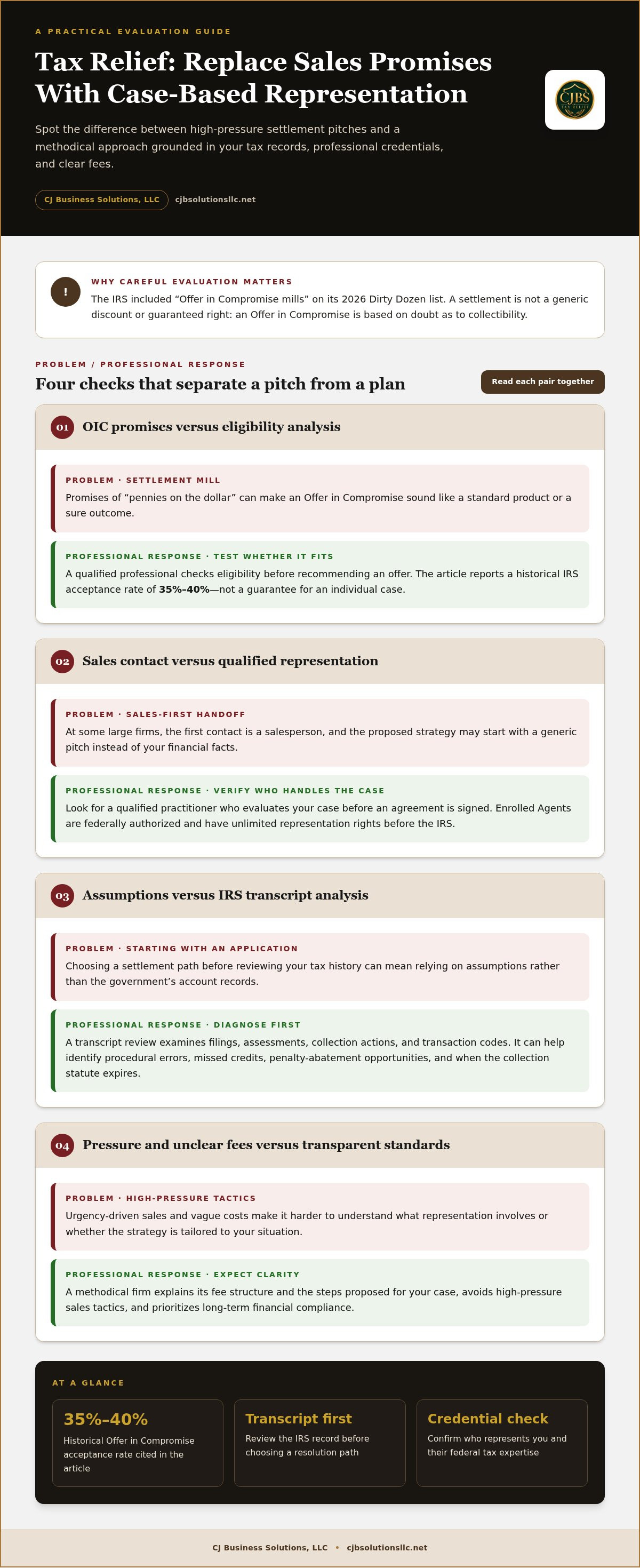
An Offer in Compromise is a legal agreement based on a "doubt as to collectibility," which means the taxpayer truly lacks the means to pay the full debt. It's not a generic discount or a guaranteed right. In 2026, the IRS continues to warn against "OIC mills" that charge high fees for applications that have little chance of approval. While these companies often promise settlements for "pennies on the dollar," the actual acceptance rate historically stays within the 35% to 40% range. A seasoned professional will conduct a thorough tax relief eligibility check before recommending this path, ensuring you don't waste resources on a strategy that isn't viable.
The Role of Federal Representation
Hiring an Enrolled Agent provides a necessary buffer between you and the taxing authorities. These professionals possess federal representation rights, allowing them to speak the complex language of the IRS on your behalf. Unlike simple tax preparation, controversy resolution involves defending your rights during audits or collection actions. Having a mentor to guide you through these high-pressure situations can lower your stress and prevent costly procedural errors. This professional distance helps keep the focus on the facts of the case rather than the emotions often associated with tax debt.
Key Criteria for Evaluating the Best Tax Relief Services
Identifying the best tax relief services requires looking beyond flashy marketing toward the specific credentials of the professionals who will manage your case. Many large firms operate as sales organizations where your initial contact is with a salesperson rather than a practitioner. A methodical approach favors specialized firms where you work directly with a qualified representative who performs a comprehensive case evaluation before any agreement is signed. This ensures the proposed strategy is grounded in your actual financial data rather than a generic sales pitch. Smaller firms often provide the personalized attention necessary to navigate complex IRS bureaucracy effectively.
Why Enrolled Agents Are the Gold Standard
Enrolled Agents (EAs) are tax practitioners who are federally authorized by the U.S. Department of the Treasury to represent taxpayers before the Internal Revenue Service. While CPAs are often generalists who focus on accounting or state-level audits, EAs specialize specifically in federal tax matters and controversy resolution. Enrolled Agents have unlimited representation rights before the IRS. This status means they can handle any matter involving any taxpayer at any IRS office, providing a level of specialization that is often the most effective choice for resolution.
Transparency and Ethical Standards
Ethical firms avoid high-pressure sales tactics and prioritize long-term financial compliance. You should expect a clear explanation of fee structures and a logical progression of steps tailored to your specific situation. It's helpful to review IRS tips for choosing a tax professional to ensure the firm you select meets federal expectations and maintains a high standard of care. Choosing a partner who values transparency helps lower your stress and creates a predictable path forward. If you're seeking a steady hand to guide you, choosing a firm led by an Enrolled Agent ensures your representation is rooted in federal expertise and a commitment to your well-being.
The Importance of IRS Transcript Analysis and Audit Defense
Many taxpayers believe that resolving a debt begins with filling out a settlement application. However, the best tax relief services prioritize a methodical review of your tax history before any paperwork is submitted. This diagnostic phase relies on a technical analysis of your IRS transcripts. These documents provide a comprehensive record of your filings, assessments, and collection actions from the government's perspective. By identifying procedural errors or missed credits early, a representative can develop a resolution path that's based on facts rather than assumptions.
Decoding Your IRS History
An IRS transcript is far more than a simple summary of your tax return. It contains specific transaction codes that reveal the exact status of your account, including when the statutes of limitation for collection will expire. A professional analysis of these codes can often uncover "hidden" opportunities for penalty abatement that aren't immediately obvious. This technical insight allows your representative to challenge incorrect assessments and ensure you only pay what's legally required. It's a vital step that prevents you from entering a resolution program that doesn't fit your actual needs.
Navigating the Audit Process
Federal examinations often stem from common red flags, such as disproportionate business expenses or inconsistencies in reported income. When you're facing an audit, having a professional strategy is essential to protecting your interests and minimizing potential liability. A seasoned representative acts as your primary point of contact, ensuring the IRS receives the necessary documentation without exposing you to unnecessary risk. If you're concerned about an upcoming examination or an existing debt, utilizing professional transcript analysis services is the first step toward a stable and accurate resolution. This proactive approach ensures your defense is built on a solid foundation of data rather than a generic template.
Taking the Next Step: How to Secure Effective Tax Resolution
Securing a resolution is a journey that begins with a single, well-prepared step. While the immediate goal is stopping collections, the ultimate objective is establishing a foundation for long-term tax health. The transition from resolving past liabilities to maintaining future compliance requires a shift in perspective. When evaluating the best tax relief services, look for a partner who values education and resource-provision. This ensures that you aren't just putting out a fire, but building a more resilient financial future through a steady and logical progression.
Preparing Your Documentation
Gathering the necessary records is often the most daunting part of the process. To facilitate a thorough case review, it's helpful to organize your documentation in a logical manner. Small business owners should pay particular attention to payroll records and 1099 filings, as these are common areas of IRS scrutiny. You should focus on compiling:
- Recent IRS notices and collection letters.
- Copies of tax returns from the last three to five years.
- Current financial statements, including bank records and asset valuations.
Starting with a clear checklist allows you to collect these items steadily without feeling overwhelmed by the volume of information. This organized approach helps your representative identify the best tax relief services and strategies suited to your specific situation.
Finding Your Reliable Guide
Choosing the right professional is the most critical decision you'll make in this process. CJ Business Solutions, LLC provides expert representation and transcript analysis led by an Enrolled Agent with federal representation rights. We prioritize substance over flash, focusing on the technical details that larger "mega-firms" often overlook. This methodical approach ensures that your resolution path is both legitimate and sustainable, offering a calm port in a storm of complex information. We invite you to reach out and engage at your own pace with a professional consultant who can provide the clarity you deserve.
Moving Toward a Sustainable Resolution
Choosing a path toward tax resolution is a significant step that requires a focus on professional substance over aggressive marketing. We've explored how the best tax relief services prioritize technical diagnostics, such as transcript analysis, to uncover the specific nuances of your IRS history. By moving past the high-pressure tactics of settlement mills and focusing on qualified representation, you can ensure that your financial health is managed with the care and expertise it deserves. This methodical approach not only addresses past liabilities but also establishes a clear roadmap for your future compliance.
CJ Business Solutions, LLC is led by a seasoned Enrolled Agent and features a team of specialized IRS transcript analysis experts. We're proud to offer national audit strategy defense. This service prioritizes your rights and long-term stability. If you're ready to transition from uncertainty to a structured plan, we invite you to Request a Professional Case Evaluation with CJ Business Solutions, LLC. Our goal is to serve as your reliable guide. We look forward to helping you resolve your tax matters with confidence.
Frequently Asked Questions
How much do professional tax relief services typically cost?
Professional fees are typically structured as either a flat fee or an hourly rate, depending on the complexity of the tax matter. It's important to look for providers who offer a clear, transparent engagement letter before any work begins. Identifying the best tax relief services involves prioritizing professional expertise over the lowest price point. This methodical approach ensures you receive a high standard of care throughout the resolution process.
What is the difference between an Enrolled Agent and a CPA for tax debt?
The primary difference is that an Enrolled Agent is federally authorized for IRS representation, whereas a CPA is state-licensed and often maintains a broader accounting focus. EAs specialize specifically in tax controversy and resolution, which is vital for negotiating debt settlements. While both can represent you, an EA's deep technical knowledge of federal tax codes provides a stable foundation for managing complex IRS interactions and audits.
Can tax relief services really stop an IRS wage garnishment?
Professional tax resolution can indeed stop an IRS wage garnishment by establishing a formal resolution plan or proving financial hardship. Once a representative negotiates an installment agreement or "Currently Not Collectible" status, the IRS generally releases the garnishment. This proactive strategy ensures that the underlying tax issues are resolved. It also prevents the government from resuming collection activities as long as you remain in compliance.
How do I know if a tax relief company is a scam?
You can identify potential scams by looking for high-pressure sales tactics or guarantees of specific debt reductions before a case evaluation is performed. The IRS frequently warns against firms that promise settlements for "pennies on the dollar" to taxpayers who don't qualify. The best tax relief services prioritize transparency and education. If a company makes hyperbolic claims or demands large upfront fees without reviewing your records, it's best to proceed cautiously.
Will an IRS transcript analysis help me if I am being audited?
An IRS transcript analysis is incredibly helpful during an audit because it identifies exactly what the IRS has recorded about your account. By reviewing transaction codes and assessment dates, a representative can see potential procedural errors or missed credits. This technical insight allows for the development of a defense strategy based on documented facts. It's a vital step that ensures your audit response is both accurate and methodical.

Article by
Crystal R. Johnson, MBA EA
Crystal Johnson founded CJ Business Solutions to give individuals and small-business owners something often missing from the tax and accounting process: clear explanations, practical solutions, and trusted support.
With more than 27 years of accounting and financial experience, Crystal helps clients understand complicated tax matters, restore compliance, respond to IRS concerns, and make stronger business decisions. As an Enrolled Agent, she is federally authorized to represent taxpayers before the Internal Revenue Service.


