

Last Tuesday, Sarah opened her mailbox to find a formal notice from the IRS, only to realize the technical jargon made it nearly impossible to understand what they were asking for. It's a moment that often brings a wave of anxiety, as the fear of financial loss or a looming audit can feel overwhelming. You aren't alone in feeling that the tax code is written in a language designed to be difficult to interpret. This is why seeking professional tax representation is often the most steady and reliable way to regain your peace of mind.
We recognize that addressing IRS concerns can feel like a daunting task, but it doesn't have to be a journey you take alone. This guide will show you how professional tax representation protects your rights and provides a methodical path to resolving complex debt or audit issues. We'll examine the specific roles of an Enrolled Agent, the importance of transcript analysis, and how to maintain long-term financial compliance with confidence.
Key Takeaways
- Understand your statutory right to representation, which ensures you have a qualified advocate to manage all formal communication with the IRS on your behalf.
- Learn why an Enrolled Agent is a unique, federally authorized practitioner who offers specialized expertise and unlimited representation rights in all tax matters.
- Explore how professional tax representation utilizes transcript analysis to build a methodical defense strategy and provide a clear path toward resolving tax debt.
- Discover the transition from managing a tax crisis to establishing long-term financial compliance through a transparent and supportive professional partnership.
What is Professional Tax Representation and Why Does it Matter?
At its core, professional tax representation is the formal process of authorizing a qualified expert to act on your behalf during interactions with the Internal Revenue Service. This isn't merely a convenience; it's a fundamental protection rooted in the Taxpayer Bill of Rights. By choosing to work with an Enrolled Agent or another authorized practitioner, you ensure that your interests are protected by someone who understands the nuances of tax law. The scope of this service is broad, addressing various administrative challenges such as:
- Clarifying complex IRS correspondence and notices.
- Managing strategic audit defense.
- Handling collection appeals and payment negotiations.
- Resolving transcript discrepancies.
Beyond the technical advantages, there's a significant psychological benefit to this arrangement. Engaging in professional tax representation provides a necessary buffer between you and the high-stress environment of IRS examinations. Instead of facing direct, often intimidating interactions with revenue officers, you can rely on your representative to manage the dialogue. This steady approach helps lower anxiety and allows you to focus on your daily life while a seasoned mentor handles the administrative complexities.
The Statutory Right to a Professional Advocate
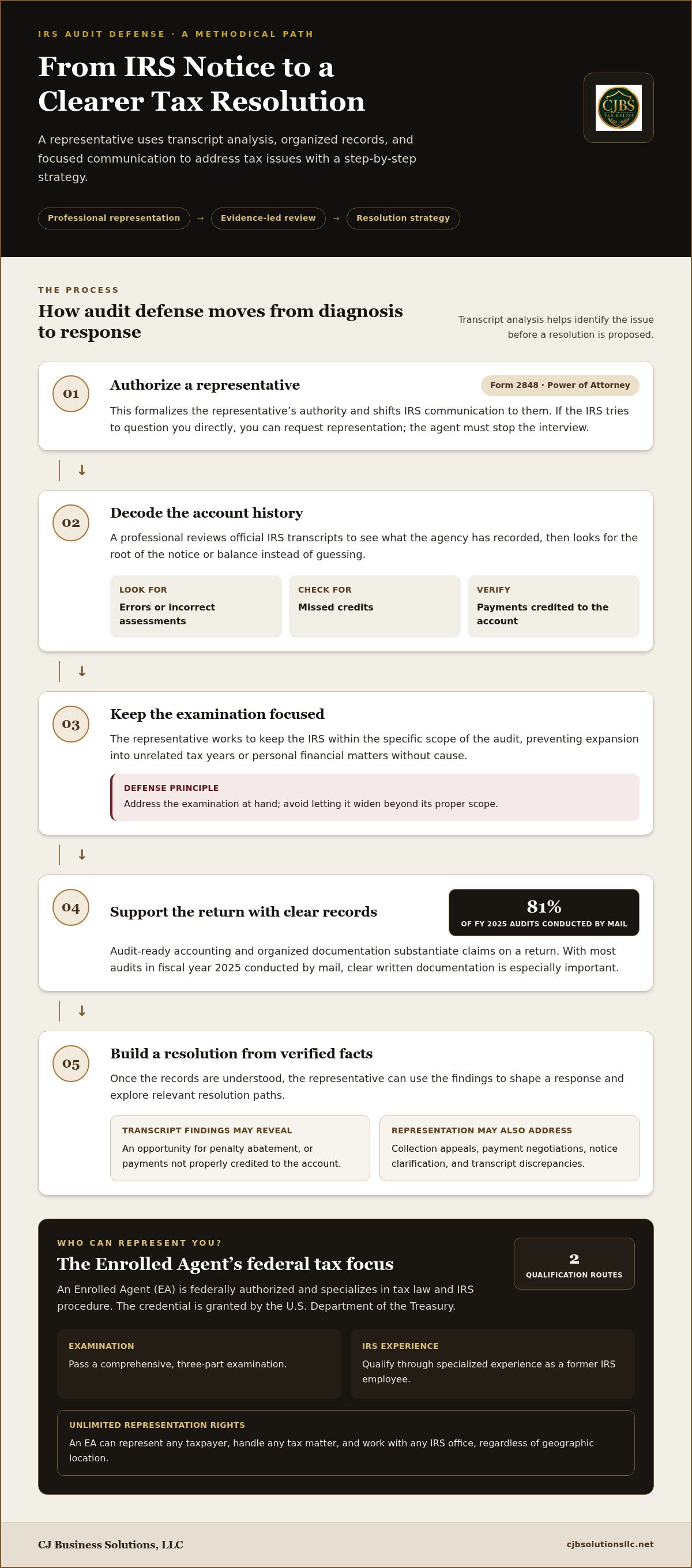
The transition of authority is made official through Form 2848, also known as a Power of Attorney. Once this document is in place, the communication burden shifts entirely to your representative. It's a powerful tool for maintaining your autonomy. For instance, should the IRS attempt to question you directly, you have the right to request representation, at which point the agent must stop the interview. This ensures that every response is carefully considered and legally sound, providing a methodical path toward a resolution.
The Enrolled Agent: A Federally Authorized Tax Practitioner
An Enrolled Agent (EA) is a federally-authorized tax practitioner who has earned the privilege of representing taxpayers before the Internal Revenue Service by either passing a three-part comprehensive examination or through specialized experience as a former IRS employee. This credential is quite distinct because it's granted directly by the U.S. Department of the Treasury rather than a state board of accountancy. Due to this federal status, an EA possesses unlimited representation rights. This means they can represent any taxpayer, handle any tax matter, and work with any IRS office regardless of geographic location.
While many financial professionals offer general services, the EA specializes specifically in tax law and IRS procedure. They function as a "Seasoned Mentor," translating complex technical requirements into a clear, manageable strategy. This deep specialization is particularly valuable when you require professional tax representation to resolve specific administrative disputes or transcript issues. If you're currently facing a complex notice, you may find it helpful to consult with an Enrolled Agent specializing in tax resolution to explore a methodical path forward.
Comparing EAs, CPAs, and Tax Attorneys
When choosing a tax professional, it's helpful to understand the distinctions between the groups authorized to represent you. Attorneys often handle legal litigation in court, while CPAs may focus on broad corporate accounting or auditing financial statements. EAs, however, are the only practitioners who derive their authority directly from the federal government specifically for tax matters. This focus allows for a precise approach to tax controversy, ensuring that your representative is well-versed in the specific statutes and internal manuals that govern IRS actions. This specialized expertise often provides the most direct path to achieving long-term financial compliance.
Strategic Audit Defense and the Role of Transcript Analysis
Audit defense is often misunderstood as a reactive scramble to find receipts once a notice arrives. In reality, effective professional tax representation involves a proactive strategy that begins long before an auditor asks their first question. A representative ensures that the IRS remains within the specific scope of the audit, preventing the examination from expanding into unrelated tax years or personal financial matters without cause. This methodical approach relies on "audit-ready" accounting and organized documentation to substantiate every claim on a return. It's about building a narrative of compliance that the IRS can easily verify. Since 81% of audits in fiscal year 2025 were conducted via mail, clear written documentation is more critical than ever. According to IRS guidelines on tax professional credentials, having a qualified practitioner manage this process is a key right for any taxpayer. Transcript analysis serves as the essential diagnostic tool in this phase, identifying the exact root of a tax issue before any resolution is proposed.
Decoding Your History Through Transcript Analysis
By accessing your official IRS transcripts, a professional can see exactly what the agency knows about your account history. This transparency allows for the identification of errors, missed credits, or incorrect assessments that may have triggered a notice. Instead of guessing why a balance exists, transcript decoding provides a data-driven path toward an effective resolution. This process often reveals opportunities for penalty abatement or identifies payments that weren't properly credited to your account. It's a thorough way to ensure the IRS's records match your reality. If you are concerned about an upcoming examination or an unexplained balance, you can request a transcript analysis and audit strategy defense to ensure your rights are fully protected through every step of the process.
Selecting a Representative for Long-term Financial Compliance
Choosing a representative is a decision that extends far beyond the immediate resolution of a single IRS notice. While it's tempting to seek out high-pressure promises or "quick fix" solutions, a truly reliable guide prioritizes transparency and a methodical approach to your unique situation. Seeking professional tax representation is, at its heart, an investment in your long-term peace of mind. It involves finding a seasoned mentor who values substance over flash and remains genuinely invested in your financial well-being. This partner should act as a steady resource who helps you handle the complexities of tax law with quiet confidence.
When you evaluate a potential representative, look for a thorough process that begins with a clear understanding of your specific history. A steady partner will focus on lowering your stress through composed, informative declarations rather than urgent sales language. This relationship serves as a calm port in the storm of complex administrative requirements, ensuring you feel fully informed before you're asked to take any action. By prioritizing long-term trust over immediate conversion, a qualified advocate ensures that the resolution process is as transparent and digestible as possible.
The Path From Resolution to Recovery
The transition from managing a tax crisis to achieving permanent financial stability is the ultimate goal of effective representation. Once an audit or debt issue is successfully resolved, a specialist helps you implement the necessary systems to remain compliant in all future years. This proactive approach ensures you avoid the anxiety of recurring issues. Having an ongoing relationship with an IRS representation specialist provides a consistent resource for any future questions that may arise. By maintaining a high standard of care and a methodical way of working, your representative ensures that you don't just recover from a past error but move forward with a sustainable, compliant financial strategy.
Moving Toward Long-Term Financial Stability
Navigating the complexities of the IRS doesn't have to be a source of constant anxiety. By understanding your statutory rights and the specialized role of an Enrolled Agent, you can transform a stressful administrative crisis into a manageable path toward recovery. Whether you're decoding your account history through transcript analysis or preparing a strategic audit defense, the right advocate ensures you're never navigating these challenges alone. Professional tax representation provides the methodical shield you need to protect your rights while establishing a foundation for permanent compliance.
At CJ Business Solutions, LLC, we pride ourselves on being a steady resource for those facing tax controversy. Led by a federally-authorized Enrolled Agent, our firm utilizes specialized transcript analysis and a professional approach to audit defense to lower your stress and restore your peace of mind. We invite you to explore professional tax representation with CJ Business Solutions, LLC to see how a seasoned mentor can help you achieve lasting financial confidence. It's time to move beyond the crisis and toward a more secure financial future.
Frequently Asked Questions
What is the difference between tax preparation and professional tax representation?
Tax preparation involves the annual reporting of income and credits on a return. In contrast, professional tax representation is a service where an authorized expert advocates for your rights during an IRS dispute or examination. While preparation is a compliance task, representation focuses on managing technical communications and administrative controversy. This service provides a steady buffer between you and the agency to ensure your interests are protected during every interaction.
Can an Enrolled Agent represent me in any state?
Yes, an Enrolled Agent can represent you in any state because their credential is federally authorized by the U.S. Department of the Treasury. Unlike other practitioners licensed by state boards, EAs have unlimited representation rights across the country. This allows them to handle matters with any IRS office regardless of your geographic location. It's an ideal solution for taxpayers who move or have business interests in multiple regions.
How does transcript analysis help in an IRS audit?
Transcript analysis acts as a diagnostic tool that reveals exactly what information the IRS has on your account history. By reviewing these official records, a representative can identify discrepancies, missed credits, or incorrect assessments before an audit progresses. This methodical step allows for a data-driven defense strategy. It ensures that the resolution path is based on verified facts rather than assumptions, leading to a more predictable and stable outcome.
What should I do if I receive an IRS notice but cannot pay the full amount?
If you receive a notice and cannot pay in full, it's essential to respond methodically. Seeking professional tax representation allows you to explore various resolution paths, such as installment agreements or an Offer in Compromise. A representative guides you through the technical eligibility requirements for these programs. This proactive approach helps prevent aggressive collection actions, such as levies or liens, while you work toward a sustainable financial solution.
Will hiring a tax representative make me look "guilty" to the IRS?
Hiring a representative does not imply guilt. The IRS actually views it as a sign that you're taking your obligations seriously. Revenue officers often prefer working with authorized practitioners because they understand the required procedures and the "IRS language." This professional partnership typically leads to a more efficient and accurate resolution. It simply ensures that the administrative process is handled correctly and that your statutory rights are respected.

Article by
Crystal R. Johnson, MBA EA
Crystal Johnson founded CJ Business Solutions to give individuals and small-business owners something often missing from the tax and accounting process: clear explanations, practical solutions, and trusted support.
With more than 27 years of accounting and financial experience, Crystal helps clients understand complicated tax matters, restore compliance, respond to IRS concerns, and make stronger business decisions. As an Enrolled Agent, she is federally authorized to represent taxpayers before the Internal Revenue Service.


