

Did you know that while the IRS audits less than 0.4% of individual returns, the use of advanced data analytics in 2026 has made these examinations more precise than ever? It's completely natural to feel a sense of unease when a federal notice arrives in your mailbox. You might worry about the complexity of the bureaucracy or the potential for significant interest charges, which have reached 7% for the final quarter of the year. This guide provides the clarity you need to navigate the IRS audit process with composure and confidence.
We'll walk through a clear roadmap of the examination cycle, from understanding your initial notice to utilizing transcript analysis for error detection. By following these methodical steps, you can work toward minimizing your tax liability and restoring your peace of mind through professional compliance. Our goal is to serve as a reliable guide, helping you move through this challenge at a steady and informed pace.
Key Takeaways
- Understand that an IRS audit is a methodical review of financial accuracy rather than an accusation, which helps you approach the initial notification with composure.
- Learn how to successfully navigate IRS audit process requirements by identifying the specific type of examination you are facing, whether it is conducted via mail or in person.
- Discover the strategic advantages of professional representation and how an Enrolled Agent can manage auditor interactions to protect your interests.
- Master the final steps of the resolution by utilizing transcript analysis to verify the Revenue Agent’s Report and ensure all findings are factually correct.
Understanding the IRS Audit Notification and Initial Steps
Receiving an official envelope from the Department of the Treasury can be unsettling. However, it's helpful to view this as a verification exercise rather than a legal accusation. By Understanding the IRS Audit Process, you'll see that the agency is simply reviewing your financial records to ensure they match third-party data. Most examinations are correspondence audits conducted through the mail, though more complex cases might result in an office or field audit at your home or business.
When you begin to navigate IRS audit process steps, the "30-Day Rule" becomes your most important timeline. This initial window allows you to gather documentation and establish your defense strategy before the IRS moves forward with proposed adjustments. Maintaining your composure is key. If you treat the notice as a formal request for information rather than a financial threat, you can manage the situation with quiet confidence. Responding promptly demonstrates your commitment to compliance and often leads to a more efficient resolution. It also allows you to clarify simple misunderstandings before the scope of the inquiry expands.
Deciphering Your Audit Notice: What the IRS is Actually Asking
Your letter's header contains the essential details, specifically identifying the tax years and forms under examination. In 2026, many audits are triggered by automated matching systems that flag income discrepancies or deductions that appear high relative to your total earnings. Learning how to navigate IRS audit process requirements early can prevent unnecessary stress. An Information Document Request (IDR) serves as the specific roadmap for your preparation by listing exactly which receipts and ledgers the auditor wishes to review. Having these documents organized ensures a methodical progression toward resolution.
Strategic Preparation and the Role of Professional Representation
As you begin to navigate IRS audit process requirements, you'll find that preparation is the bridge between uncertainty and resolution. One of the most significant protections you have is the right to professional representation. If you authorize a qualified representative, you aren't required to meet with the auditor personally. This layer of separation often reduces the emotional stress of the encounter. An Enrolled Agent (EA) is particularly well-suited for this role, as they hold federal licensure and specialize specifically in tax controversy. Their expertise allows them to manage the technical dialogue while you focus on your daily life.
Organizing your defense is equally vital. We recommend converting a disorganized collection of receipts into a categorized, audit-ready digital or physical file. This methodical approach demonstrates transparency and respect for the auditor's time. Adopting a "soft-touch" methodology, characterized by a professional and welcoming demeanor, can foster a more cooperative environment. If you're feeling overwhelmed by the paperwork, our tax resolution services can help streamline the preparation process.
Leveraging Transcript Analysis to Predict IRS Focus Areas
An IRS transcript often reveals more about your account history than the tax return itself. By utilizing specialized transcript analysis, we can identify specific "red flag" codes or potential errors in the government’s records before the first meeting. This provides a valuable "look behind the curtain," allowing you to anticipate auditor questions with precision. Understanding these data points ensures that your defense is proactive rather than reactive. It helps you navigate IRS audit process complexities with a clear, informed strategy that prioritizes long-term compliance and peace of mind.
Finalizing the Audit and Securing Long-Term Compliance
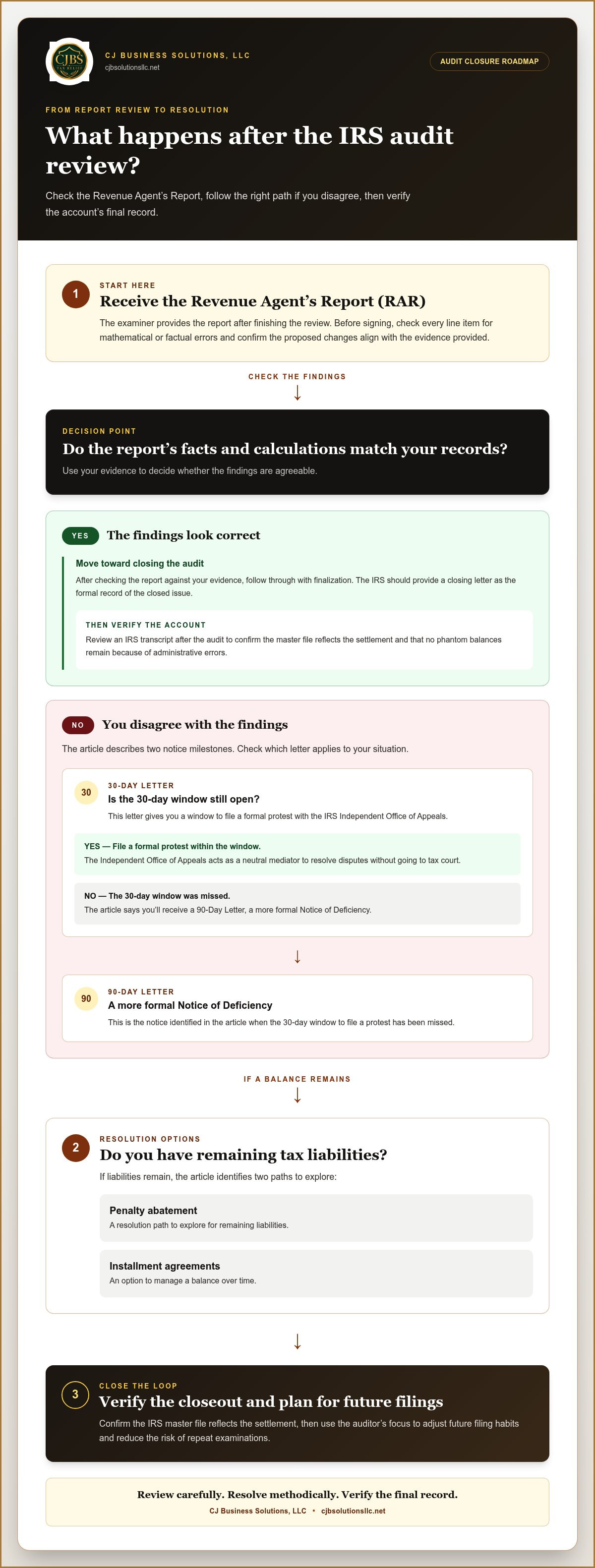
Once the examiner finishes their review, they'll provide the Revenue Agent’s Report (RAR). It's a standard document, but it requires a methodical eye to check for mathematical or factual errors. We recommend reviewing every line item before signing, as this ensures the proposed changes align with the evidence provided. Successfully helping you navigate IRS audit process steps means ensuring the file is closed properly. You should receive a final closing letter, which acts as a formal record that prevents the agency from reopening the same issue in the future.
Verification doesn't end when the meeting stops. A post-audit transcript review is a vital final step to ensure the IRS master file correctly reflects your settlement. Learning to navigate IRS audit process closure ensures no phantom balances remain due to administrative errors. Finally, we help you establish a compliance roadmap. By adjusting your future filing habits based on the auditor's focus, you can significantly reduce the risk of repeat examinations. This steady, forward-looking approach helps maintain your financial stability.
Navigating Appeals and Resolution Options if You Disagree
If the findings aren't agreeable, you have clear paths for recourse. The 30-Day Letter provides a window to file a formal protest with the IRS Independent Office of Appeals. This office acts as a neutral mediator to resolve disputes without going to tax court. If you miss this window, you'll receive a 90-Day Letter, which is a more formal Notice of Deficiency. For any remaining liabilities, we can explore resolution paths like penalty abatement or installment agreements to manage the balance at a pace that respects your financial health.
Moving Forward with Confidence and Clarity
While a federal notice can feel overwhelming, it represents a manageable procedural step when approached with the right information. By understanding your notification, securing professional representation, and verifying final reports, you can successfully navigate IRS audit process requirements. This methodical approach ensures that your rights are protected and that the final resolution is both accurate and fair. It's a steady path toward restoring your stability and peace of mind.
Our team, led by an Enrolled Agent, is dedicated to your long-term financial compliance and stability. We invite you to request a professional transcript analysis from CJ Business Solutions, LLC to start your audit defense today. This specialized service provides the clarity needed to identify potential issues early and resolve them with quiet confidence. You don't have to manage this journey alone. We're here to act as your reliable guide, helping you restore your confidence and secure a compliant future.
Frequently Asked Questions
How long does the average IRS audit process take from start to finish?
The duration of an examination depends largely on the audit type and the complexity of the issues involved. While a simple correspondence audit might conclude within a few months, more detailed field examinations can often take a year or longer. Providing organized documentation promptly helps you navigate IRS audit process timelines efficiently. We recommend maintaining a steady pace of communication to prevent unnecessary delays in reaching a final resolution.
Can I represent myself in an IRS audit, or do I need a professional?
You have the legal right to represent yourself during any federal tax examination. However, many taxpayers find that engaging a professional, such as an Enrolled Agent, provides a helpful layer of separation and technical expertise. A representative can manage all interactions with the auditor on your behalf. This approach often lowers personal stress and ensures that your rights are fully protected throughout the entire proceeding.
What happens if I lost my receipts for the year being audited?
If you've misplaced specific receipts, you may still be able to substantiate your expenses through alternative documentation. The IRS often accepts bank statements, canceled checks, or electronic payment records as secondary evidence of a transaction. In certain circumstances, tax professionals use established legal precedents to help you reconstruct records methodically. This ensures your deductions are supported even when original paper documents are no longer available.
Will the IRS audit my personal bank accounts if they are auditing my business?
The IRS typically begins its review by focusing on the records of the specific entity listed in the audit notice. If your business and personal finances are clearly separated, the examiner may not need to review your personal bank accounts. However, if they detect commingled funds or suspect that business income was deposited into personal accounts, they may expand the scope to ensure you accurately navigate IRS audit process compliance requirements.

Article by
Crystal R. Johnson, MBA EA
Crystal Johnson founded CJ Business Solutions to give individuals and small-business owners something often missing from the tax and accounting process: clear explanations, practical solutions, and trusted support.
With more than 27 years of accounting and financial experience, Crystal helps clients understand complicated tax matters, restore compliance, respond to IRS concerns, and make stronger business decisions. As an Enrolled Agent, she is federally authorized to represent taxpayers before the Internal Revenue Service.


