

What if the first step toward resolving an IRS balance isn’t choosing a payment plan, but confirming what the IRS says you owe? The amount, tax year, or collection status may be unclear, especially if notices were missed. The right IRS tax debt management solutions depend on accurate account information and your financial circumstances.
It’s understandable to feel concerned about penalties, collections, or which path to pursue. Start by identifying the tax periods involved and checking whether the balance, payments, and filing history match your records. This article explains how to review your tax account and compare payment plans, an Offer in Compromise, a temporary collection delay, and penalty relief without assuming you’ll qualify. You’ll also learn which records to gather and when transcript analysis or support from an Enrolled Agent may help you prepare a practical next step.
Key Takeaways
- Separate an IRS balance from missing returns, unposted payments, penalties, or account-record questions before deciding what to do.
- Compare IRS tax debt management solutions by purpose, while keeping in mind that eligibility depends on your financial details, filing status, tax periods, and IRS rules.
- Gather notices and tax records, list the periods involved, and review account transcripts to help clarify what remains unresolved.
- Use the account history and your ability to pay to prepare a next step. Transcript analysis or support from an Enrolled Agent may help inform the discussion.
What IRS Tax Debt Management Solutions Actually Address
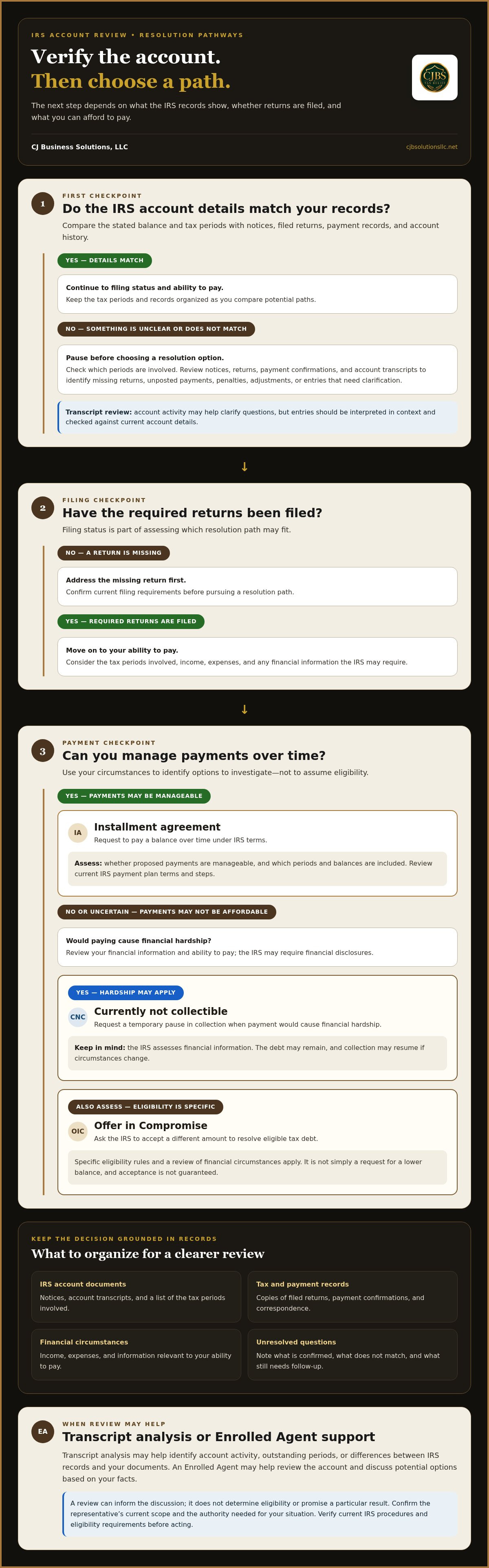
IRS tax debt management solutions begin with understanding the account, not selecting a remedy in advance. Review the stated balance, tax periods, account history, filing status, and any notices or adjustments. A balance due may not be the only issue. A return could be missing, a payment may not appear as expected, a penalty may need review, or an account entry may require clarification.
That distinction affects what action makes sense. Arranging payments, for example, may not resolve an unfiled return or explain a payment that has not been credited as expected. An installment agreement, currently-not-collectible status, and an Offer in Compromise program each serve a different purpose. None is a universal fit. Eligibility depends on the taxpayer’s facts, filing status, financial information, tax periods, and current IRS rules.
Why verify IRS account records before choosing a solution?
Notices, payments, and account adjustments can change how a balance is understood. Make a list of the tax periods shown on your notices, then compare the IRS information with the returns filed and payment records you have for each period. An IRS account transcript is one record a qualified professional may review to clarify account activity and identify questions that need follow-up.
A transcript is useful, but its entries should be interpreted in context and checked against current account details. Transcript analysis can help identify specific issues and inform a resolution discussion. Before pursuing an option, confirm the balance and status with the IRS, address any missing returns, and make sure the proposed next step responds to the issue shown in the records.
How to Compare IRS Tax Debt Management Options
The most suitable path depends on what you can pay, which tax periods are involved, and whether required returns have been filed. Financial disclosures may also be needed. Use this comparison to identify questions to investigate, not to determine eligibility. IRS procedures and eligibility details can change, so verify current requirements before applying.
| Option | Purpose | What to assess |
|---|---|---|
| Installment agreement | Request to pay a balance over time under IRS terms. | Whether proposed payments are manageable and which periods and balances are included. Review the IRS payment plan information for current steps and terms. |
| Offer in Compromise | Ask the IRS to accept a different amount to resolve eligible tax debt. | Specific eligibility rules and a review of financial circumstances apply. Acceptance isn’t guaranteed. |
| Currently not collectible | Request a temporary pause in collection when payment would cause financial hardship. | The IRS assesses financial information. The debt may remain, and collection may resume if circumstances change. |
Which IRS resolution path may fit your circumstances?
An installment agreement may be worth considering if you can make payments over time. An Offer in Compromise is not simply a request for a lower balance. Currently-not-collectible status may be relevant if you can’t afford payments, but it doesn’t necessarily erase what you owe. For each option, consider filing compliance, the tax periods involved, any required financial disclosures, and applicable IRS rules.
Before choosing among IRS tax debt management solutions, organize records by tax period and compare the IRS account details with your income, expenses, and ability to pay. An Enrolled Agent may help review the account and discuss potential options based on your facts. CJ Business Solutions, LLC provides tax resolution and representation services, including support with reviewing tax circumstances. Learn more about tax resolution options.
Build a Responsible IRS Tax Debt Action Plan
A measured process can make the next decision clearer. Gather IRS notices and relevant tax records, note the periods each document concerns, and review account transcripts. Keep copies of filed returns, payment confirmations, correspondence, and records that may explain a discrepancy. If a return is missing, address that issue and confirm current filing requirements before pursuing a resolution path.
Once you have organized the account information, compare your circumstances with the IRS tax debt options and verify current procedures directly with the agency. Use the review to note what is confirmed, what does not match your records, and what you still need to ask. This can help you avoid basing a decision on an incomplete balance or an outdated notice.
When can an Enrolled Agent or transcript review help?
An Enrolled Agent may represent taxpayers before the IRS on tax matters, subject to applicable authorization and procedures. Confirm the representative’s current scope and the authority needed for your situation. Transcript analysis may help identify account activity, outstanding periods, or differences between IRS records and your documents. Those findings can support a more informed discussion, but they don’t determine eligibility or promise a particular result.
CJ Business Solutions, LLC provides transcript analysis and tax resolution and representation services led by an Enrolled Agent. If the account history is difficult to interpret or you’re unsure which records to address first, the firm can help review your tax circumstances. A clear record set can help frame practical next steps for your individual facts.
Take a Clearer Next Step
Choosing among IRS tax debt management solutions starts with knowing which tax periods and account issues are involved. Review notices and transcripts, address missing returns, and compare potential paths with your financial circumstances rather than assuming one option will fit. Confirm current IRS requirements and eligibility before acting.
If the account history remains unclear, professional review may help you understand what needs attention and prepare questions about possible next steps. CJ Business Solutions, LLC provides tax resolution, representation, and transcript analysis services led by an Enrolled Agent. These services can help clarify account details, without promising a particular outcome.
Contact CJ Business Solutions to discuss reviewing your IRS tax situation. With reliable records and a considered plan, you can approach the next conversation with greater clarity.
Frequently Asked Questions
What are the main IRS tax debt management solutions?
The main IRS tax debt management solutions include paying the balance, requesting an installment agreement, applying for an Offer in Compromise, seeking currently-not-collectible status, or asking about penalty relief. Each serves a different purpose. An installment agreement spreads payments over time, while currently-not-collectible status may temporarily delay collection. Eligibility depends on your circumstances, filing compliance, tax periods, and current IRS rules.
Can the IRS reduce or settle tax debt?
Yes, the IRS may accept an Offer in Compromise to settle eligible tax debt for less than the full amount owed, but strict requirements apply. The IRS reviews financial information and other details to determine whether an offer qualifies under its rules. Applying doesn’t guarantee acceptance, so confirm current criteria and assess your full account before deciding whether this path may suit your situation.
How do I know how much tax debt I owe the IRS?
Review IRS notices and account records for the balance and tax periods listed, then compare them with your filed returns and payment records. IRS account transcripts can show account activity, such as payments or adjustments. If a payment appears missing or a notice differs from your records, confirm the details with the IRS before choosing a resolution option. Keep copies of relevant correspondence.
Should I hire an Enrolled Agent for IRS tax debt?
An Enrolled Agent may be helpful if you need representation in an IRS matter or assistance understanding account records. Transcript review can help identify tax periods, account activity, or discrepancies that may affect a resolution discussion. The value depends on your circumstances, and professional support can’t guarantee a particular result. Confirm the representative’s scope and authorization for your matter before proceeding.

Article by
Crystal R. Johnson, MBA EA
Crystal Johnson founded CJ Business Solutions to give individuals and small-business owners something often missing from the tax and accounting process: clear explanations, practical solutions, and trusted support.
With more than 27 years of accounting and financial experience, Crystal helps clients understand complicated tax matters, restore compliance, respond to IRS concerns, and make stronger business decisions. As an Enrolled Agent, she is federally authorized to represent taxpayers before the Internal Revenue Service.


