

What if the best sign of a trustworthy tax debt resolution specialist is that they review your IRS records before recommending a solution? When a balance or notice is unclear, it’s reasonable to want answers before committing to a professional or a proposed approach. A review of your account records can help clarify what the IRS shows, identify issues that need attention, and shape a discussion of possible next steps.
You don’t need to know the right resolution before speaking with a specialist. This guide explains what a professional should review, how to assess credentials and representation experience, and what clear communication about the process looks like. You’ll be better prepared to compare your options and decide whether a specialist’s approach fits your circumstances, without expecting any particular IRS outcome to be guaranteed.
Key Takeaways
- Before discussing solutions, ask what records and facts the professional needs to understand your IRS matter.
- When comparing a Tax debt resolution specialist with other professionals, confirm their relevant credentials and representation authority.
- Look for a clear explanation of how options are assessed, what information you need to provide, and how you’ll receive updates.
- Use the initial discussion to clarify responsibilities, timing dependencies, and unanswered questions before agreeing on next steps.
What a Tax Debt Resolution Specialist Should Do Before Recommending a Strategy
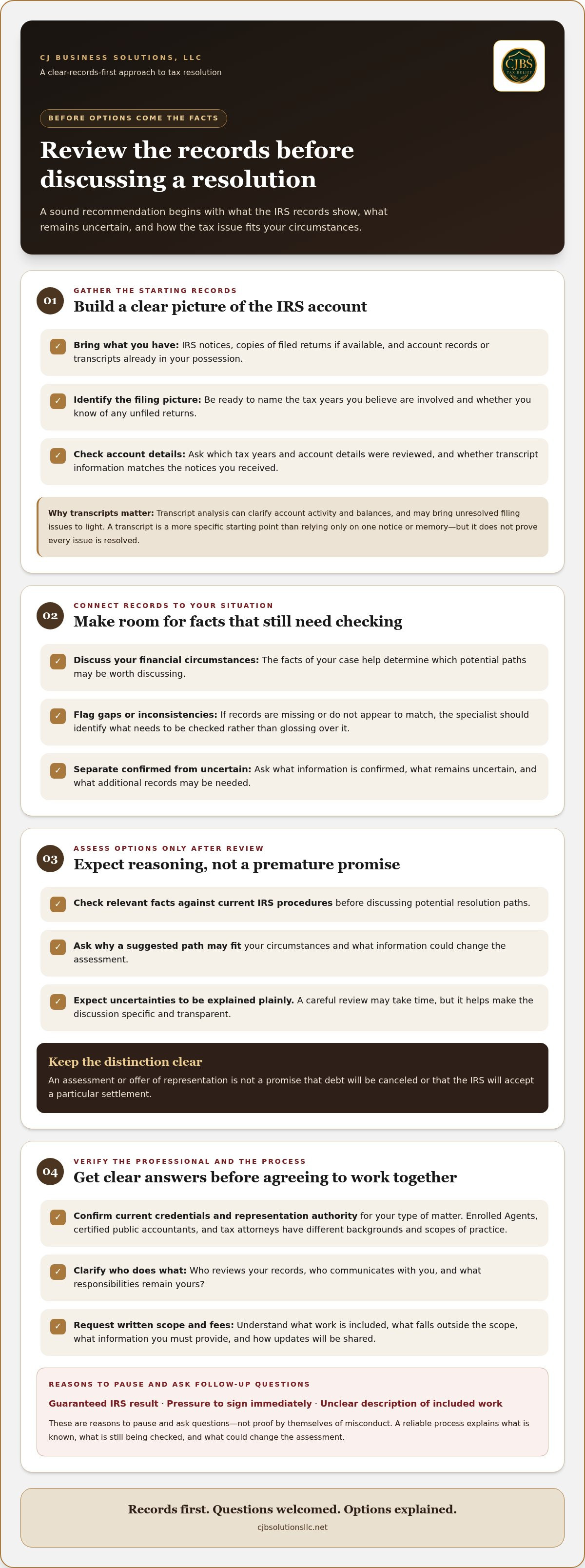
A Tax debt resolution specialist should first establish what the IRS records show and how the tax issue fits your circumstances. The professional should review the available facts, explain potential resolution paths, and, when properly authorized, represent you in dealings with the Internal Revenue Service (IRS). An assessment or offer of representation is not a promise that debt will be canceled or that the IRS will accept a particular settlement.
A sound recommendation should follow a review of IRS records and your circumstances, not precede it.
What should a specialist review before discussing options?
Bring relevant IRS notices, copies of filed returns if available, and any account records or transcripts you already have. Be ready to identify which tax years you believe are involved and whether you know of any unfiled returns. The specialist should ask about your financial circumstances because the facts of your case help determine which potential paths may be worth discussing. If records are missing or appear inconsistent, the professional should identify what needs to be checked rather than glossing over the gap.
Transcript analysis can help clarify account activity and balances, and may bring unresolved filing issues to light before you discuss a resolution. Ask which tax years and account details have been reviewed, and whether the transcript information matches the notices you received. A transcript offers a more specific starting point than relying only on one notice or your recollection, but it is one part of the review, not proof that every issue has been resolved.
Potential options should be considered only after the relevant facts have been checked against current IRS procedures. Ask what information is confirmed, what remains uncertain, what additional records may be needed, and why a suggested path may fit your situation. A careful review may take time, but it helps make the discussion specific and transparent.
How to Evaluate a Tax Debt Resolution Specialist’s Credentials and Process
Credentials matter, but a title alone won’t tell you who can represent you or what work they’re prepared to handle. Enrolled Agents, certified public accountants, and tax attorneys have different backgrounds and scopes of practice. Ask about the professional’s current credentials and representation authority for your type of matter, then verify any requirements using the IRS’s tips for choosing a tax professional. Also ask how the professional obtains and reviews account records, how potential options are assessed, and how you’ll receive updates. A useful answer should describe the steps involved, not just name a possible outcome.
Be cautious if someone guarantees a specific IRS result, pressures you to sign immediately, or can’t clearly describe the work included. These are reasons to pause and ask follow-up questions, not proof by themselves of misconduct. A reliable process should leave room for questions and explain what is known, what is still being checked, and what could change the assessment.
Questions to ask before hiring a tax debt specialist
Before you agree to work together, ask who will review your records, who will communicate with you, and what responsibilities remain yours. Request a written explanation of the engagement scope and fees, including what work is included and how you’ll be kept informed. Ask what documents you should gather first, which facts could change the recommended approach, and how the specialist will explain new information or unresolved questions.
- Who will review my records and communicate with me?
- What work is included in the engagement, and what falls outside its scope?
- How will I receive updates, and what information must I provide?
- What could change the assessment, and how will uncertainties be addressed?
Clear answers help you compare professionals on more than promises. If you’d like to understand whether tax resolution services may fit your circumstances, you can learn about discussing your IRS matter.
What to Expect When You Engage a Tax Debt Resolution Specialist
Working with a Tax debt resolution specialist should proceed in clear stages, with time to understand what is known and what still needs verification. An initial discussion establishes your concerns and the records available. The professional then reviews the information, identifies issues that may need attention, discusses potential options, and agrees with you on next steps. Ask what the review covers and what would prompt a closer look. This sequence is a guide, not a promise of a particular IRS outcome.
Before work moves forward, clarify who is responsible for gathering each record, what information you need to provide, and how you’ll receive updates. Some steps may depend on obtaining complete records or resolving filing questions, so ask what could affect timing and what you can do while those details are being checked. The professional should explain uncertainties plainly rather than treating an early assessment as final. The IRS tips for choosing a tax professional offer further guidance as you consider whom to trust.
How to decide whether CJ Business Solutions, LLC may be a fit
CJ Business Solutions, LLC is led by an Enrolled Agent and provides tax resolution services and transcript analysis. Transcript review may be relevant if you need help understanding account activity or identifying which tax issues require attention. If you’re considering representation, ask which work is within the firm’s scope and who would handle it. You can discuss your records and circumstances before deciding whether the services fit your needs.
A thoughtful conversation can help you understand the process and identify questions that remain, without assuming any specific resolution is assured. Discuss your tax resolution needs with CJ Business Solutions, LLC.
Choose Your Next Step With Care
A sound choice starts with verified records, relevant credentials, and a clear explanation of the work involved. A Tax debt resolution specialist should assess your circumstances before discussing potential paths, explain what remains uncertain, and avoid promising a particular IRS result. Confirm who will handle your matter, what information you need to supply, and how communication will work before deciding whether the professional is a good fit.
CJ Business Solutions, LLC is led by an Enrolled Agent and offers specialized transcript analysis to help identify tax issues. These services may be relevant if you’re seeking a clearer picture of your IRS account and possible next steps. Discussing your records and circumstances can help you determine whether the firm’s services align with your needs.
Discuss your tax resolution needs with CJ Business Solutions to talk through your records and possible next steps.
Frequently Asked Questions
What does a tax debt resolution specialist do?
A tax debt resolution specialist reviews IRS account information and your circumstances to identify tax issues and explain potential resolution paths. Depending on their credentials, authority, and your authorization, they may also represent you in dealings with the IRS. Their role is to assess and explain your situation, not to promise that the debt will be canceled or a particular option accepted.
How do I know if a tax debt resolution specialist is legitimate?
Ask the professional to explain their current credentials, representation authority, and experience with matters like yours. Confirm those details with the relevant credentialing body or the IRS, and request a written description of the work, fees, and communication process. Be cautious if someone guarantees a result, pressures you to sign immediately, or can’t clearly explain who will handle your case.
Can an Enrolled Agent represent me before the IRS for tax debt?
Yes, Enrolled Agents can represent taxpayers before the IRS, including in tax debt matters, subject to current credential status, applicable requirements, and proper authorization. Before engaging one, confirm that their credential is active and ask whether their authority covers your specific matter. You can also clarify who will communicate with the IRS and what steps require your participation.
What documents should I prepare before speaking with a tax debt specialist?
Gather IRS notices, copies of relevant tax returns, and any account records or transcripts you already have. It can also help to note which returns you believe are filed or outstanding and prepare a clear summary of your current financial circumstances. If you don’t have every record, bring what’s available and ask what else the specialist needs to review.

Article by
Crystal R. Johnson, MBA EA
Crystal Johnson founded CJ Business Solutions to give individuals and small-business owners something often missing from the tax and accounting process: clear explanations, practical solutions, and trusted support.
With more than 27 years of accounting and financial experience, Crystal helps clients understand complicated tax matters, restore compliance, respond to IRS concerns, and make stronger business decisions. As an Enrolled Agent, she is federally authorized to represent taxpayers before the Internal Revenue Service.


