

What if the right IRS help depends less on the size of your balance than on what the notice asks you to do? An IRS notice, balance question, examination request, or confusing account history can leave you unsure where to begin. When choosing an IRS tax problem resolution specialist, start by checking whether their credentials and experience fit your specific issue, not whether they promise a particular outcome.
It’s reasonable to want clarity about representation, likely next steps, and whether a provider can address your situation. This guide explains what a specialist may do, how to assess qualifications and communication practices, and what records to gather before reaching out. You’ll also learn how IRS audit defense differs from tax resolution representation, what to ask about an Enrolled Agent’s role, and how transcript analysis can help clarify account information without guaranteeing a particular result.
Key Takeaways
- Match the help you seek to the issue at hand. A balance question, IRS notice, examination, or transcript discrepancy may call for different expertise.
- When evaluating an IRS tax problem resolution specialist, check credentials, relevant experience, service scope, and how they explain next steps.
- Ask how the professional reviews IRS account transcripts and checks the information against your notices and records before discussing possible options.
- Gather your IRS notices and relevant tax records so you can discuss whether transcript analysis, audit defense, or tax resolution services fit your circumstances.
When an IRS Tax Problem Resolution Specialist May Be Worth Considering
An IRS tax problem resolution specialist helps assess IRS matters and identify steps that may fit the taxpayer’s records and circumstances. The work may involve clarifying a notice, reviewing a balance, responding to an examination, or investigating a discrepancy in account transcripts. These issues are not interchangeable. The appropriate response and any outcome depend on the facts of the individual case.
A notice may request information or describe an IRS action. A balance question may require checking how payments, penalties, or other account entries were recorded. An examination raises questions about reported tax information and may call for audit focused support. If a transcript shows activity you don’t recognize, verify the account history before assuming what happened or deciding how to respond.
Which IRS situations call for a closer professional review?
Consider seeking a closer review if a notice is difficult to understand, your account shows unfamiliar activity, or the IRS has opened an examination. A qualified professional can help assess what the correspondence or account information indicates and whether their experience matches the issue. For example, audit defense and tax resolution representation address different IRS situations, so ask which service applies before agreeing to a course of action.
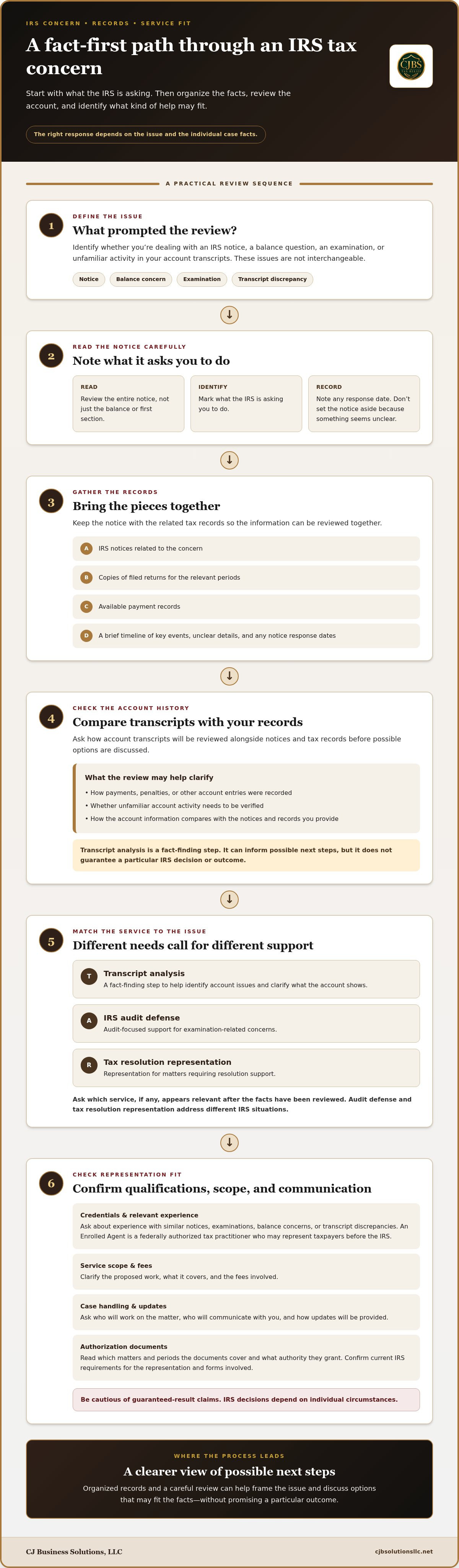
Read the entire notice, identify what it asks you to do, and note any response date. Don’t set it aside because the balance seems incorrect or the request is unclear. Keep the notice with related tax records so the information can be reviewed together. If you’re assessing credentials, an Enrolled Agent is a federally authorized tax practitioner who may represent taxpayers before the IRS. Confirm that the professional’s representation authority and experience fit your matter.
How to Evaluate an IRS Tax Problem Resolution Specialist
Start by matching the professional’s credentials and experience to the matter you need addressed. Ask whether they have handled similar issues, such as an IRS examination, a balance concern, or a discrepancy in tax transcripts. Then clarify the scope of the proposed work. Audit defense and tax resolution representation serve different needs, while transcript analysis is a fact finding step, not a promise of a particular resolution.
A careful review should explain what account transcripts can show and how the specialist will compare those details with your notices and tax records before discussing possible options. Pay attention to whether answers are clear, who will communicate with you, and how updates will be provided. A professional should be willing to discuss uncertainty and explain why a proposed next step may fit the facts. Be cautious of guaranteed result claims because IRS decisions depend on individual circumstances.
Use this checklist: verify credentials and issue specific experience, clarify services and fees, ask how records will be checked, confirm who will handle the matter, and understand how updates will be provided. You can also review the IRS Taxpayer Bill of Rights to understand the principles that apply when dealing with the agency.
What should you ask before authorizing representation?
Ask who will work on your case, what notices and records they need, how they’ll review account transcripts, and how they’ll keep you informed. Read authorization documents carefully, including which matters and periods they cover and what authority they grant. IRS requirements can vary with the representation and forms involved, so confirm current requirements with the IRS and make sure you understand the scope before signing.
To assess whether the firm’s services may fit your circumstances, learn about tax resolution services and consider discussing your issue with CJ Business Solutions.
What to Expect When Working With CJ Business Solutions
A useful first step is to describe the IRS concern and share the correspondence or account details that prompted you to seek help. Gather relevant records and review IRS account transcripts to help clarify what the account shows. This is fact finding: it can inform possible next steps, but it does not guarantee a particular IRS decision or outcome.
The service that fits depends on the issue. CJ Business Solutions, LLC provides tax resolution representation for matters requiring resolution support, IRS audit strategy defense for examination related concerns, and transcript analysis to help identify account issues. These services address different needs, so ask which one, if any, appears relevant after the facts have been reviewed. The firm is led by an Enrolled Agent.
If you’re comparing providers, the IRS offers guidance on choosing a tax professional. You can also learn about tax resolution services and review whether the firm’s services appear relevant to your circumstances. A discussion can help clarify fit and possible next steps, but it cannot promise a specific result.
How can you prepare for an initial conversation?
Gather the IRS notices related to your concern, copies of filed returns for the relevant periods, available payment records, and a brief timeline of key events. Note what you understand, what seems unclear, and any response dates shown on the notices. You don’t need to resolve every discrepancy before asking for help. Organized records can make the initial discussion more focused.
Before proceeding, ask whether your matter fits the firm’s services, what additional records may be useful, and how transcript review could help clarify the account. That gives you a practical basis for deciding what to do next.
Choose a Clear, Fact Based Next Step
Choosing an IRS tax problem resolution specialist is less about finding someone who promises a particular result and more about finding a professional whose credentials, experience, and services fit the issue. Clear communication and a careful review of notices, account transcripts, and supporting records can help establish what is known before you consider options.
CJ Business Solutions is led by an Enrolled Agent and offers transcript analysis, tax resolution, and IRS audit defense. Each serves a different purpose: transcript analysis helps clarify account information, while tax resolution and audit defense address distinct IRS concerns. The appropriate path depends on your circumstances, and no review can guarantee how the IRS will respond.
To discuss whether the firm’s services may fit your situation, contact CJ Business Solutions about your IRS tax concern. Bring your records and questions so you can have a focused conversation about possible next steps.
Frequently Asked Questions
What does an IRS tax problem resolution specialist do?
An IRS tax problem resolution specialist helps assess a tax issue and determine what steps may be appropriate based on the taxpayer’s records. Depending on the matter, their work may involve reviewing notices or account information, assisting with tax resolution representation, or providing audit defense. The specialist should explain the scope of their work and avoid promising a particular IRS outcome.
Can an Enrolled Agent represent me before the IRS?
Yes. Enrolled Agents are federally authorized tax practitioners who can represent taxpayers before the IRS, subject to applicable rules and limits. The scope of representation can depend on the professional’s current status and the matter involved, so confirm that directly before authorizing representation. Ask who will handle your case and review authorization documents carefully so you understand what they cover.
How can IRS transcript analysis help with a tax problem?
IRS transcript analysis can help clarify account activity, such as how the IRS has recorded certain filings, payments, or adjustments. Comparing transcript details with your returns, payment records, and notices may help identify questions that need follow up. It is a fact finding step, not a resolution by itself, and it cannot guarantee that the IRS will change an account entry.
When should I contact an IRS tax problem resolution specialist?
Consider contacting an IRS tax problem resolution specialist if you receive a notice you don’t understand, see account activity you can’t identify, have a balance question, or face an examination. Review the notice for requested actions and response dates, and keep it with relevant records. A discussion can help you understand what information to gather and whether the professional’s services fit your issue.

Article by
Crystal R. Johnson, MBA EA
Crystal Johnson founded CJ Business Solutions to give individuals and small-business owners something often missing from the tax and accounting process: clear explanations, practical solutions, and trusted support.
With more than 27 years of accounting and financial experience, Crystal helps clients understand complicated tax matters, restore compliance, respond to IRS concerns, and make stronger business decisions. As an Enrolled Agent, she is federally authorized to represent taxpayers before the Internal Revenue Service.


