

While an IRS audit notice often brings a sense of uncertainty, the most effective defense might already be waiting in your files. What if you could see exactly what the IRS sees before your first formal meeting? By performing a professional IRS transcript analysis for audits, you can gain a clear understanding of your account history and identify the specific issues the government is monitoring. It is natural to feel anxious when facing complex transaction codes; you're not alone in feeling that the federal tax system is difficult to navigate without a clear map.
This guide shows you how to decode internal records to identify red flags and correct errors before they lead to penalties. We'll explore how to transform these transcripts into a proactive strategy to resolve disputes; ensuring you can face the audit process with a sense of stability and quiet confidence.
Key Takeaways
- Viewing your tax history through official IRS records provides a clear foundation for understanding how the government perceives your account.
- A methodical IRS transcript analysis for audits allows you to pinpoint potential red flags and income mismatches before they become central issues.
- By identifying specific transaction codes, you can gather the necessary documentation to preemptively address an auditor's concerns with confidence.
- Early discovery of errors through transcript review offers a path toward self-correction, which may help resolve tax disputes in a more favorable manner.
Understanding IRS Transcripts as Your Audit Defense Foundation
An IRS transcript serves as the official internal record of your tax account, providing a detailed history of filings, payments, and adjustments. While many taxpayers view their returns as final documents, the IRS sees them through a specialized system of codes and data points. Gaining insight into this "IRS lens" is a vital step in Understanding the IRS Audit Process. By utilizing IRS transcript analysis for audits, you can see the same data an agent reviews before a formal inquiry ever begins.
These documents often reveal what the IRS system has flagged for review long before a human auditor makes contact. This early insight allows for a more composed response rather than a reactive one. Because these are federal records, IRS transcript analysis for audits is a national service available to any taxpayer. Whether you're in a small town or a major city, the strategy remains consistent and reliable.
Essential Transcript Types for Audit Preparation
To build a stable defense, you should understand the three primary documents used in this process:
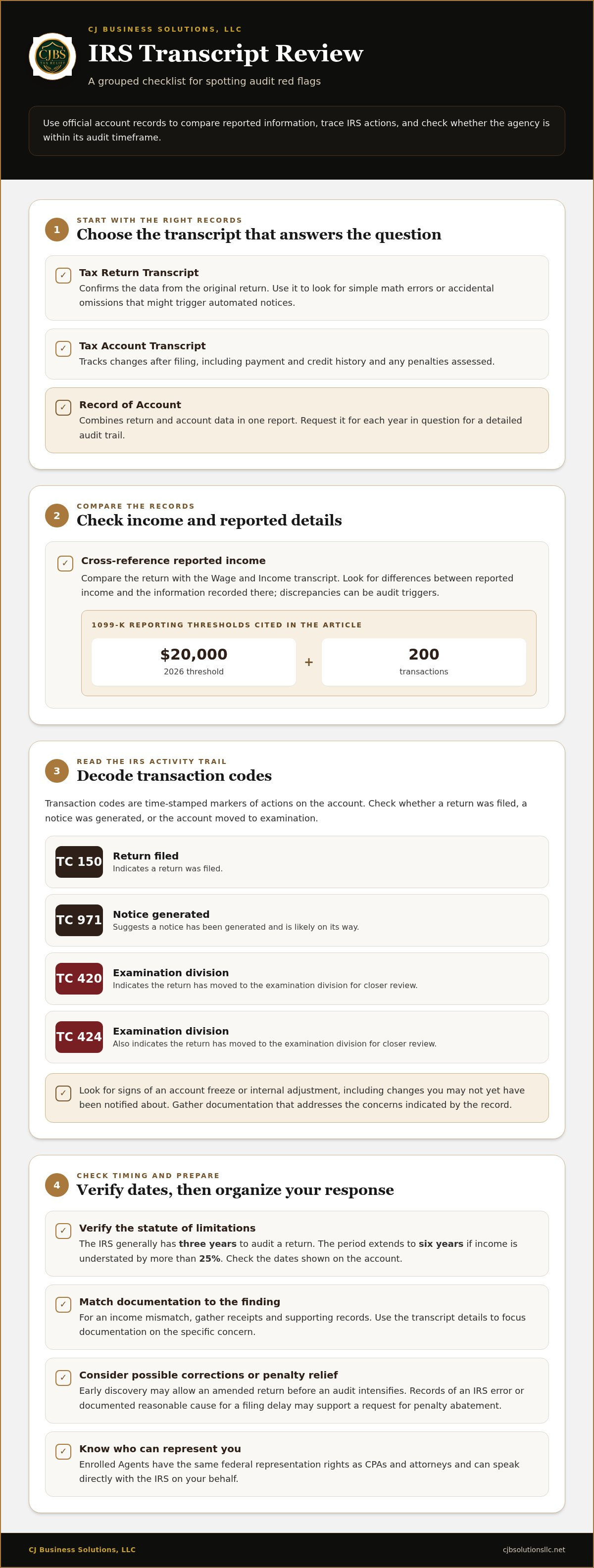
- Tax Return Transcript: This document confirms the data from your original return. It's particularly useful for identifying simple math errors or accidental omissions that might trigger automated notices.
- Tax Account Transcript: This record tracks any changes made after your initial filing. It includes a history of payments, credits, and any penalties assessed by the agency.
- Record of Account: This is the most comprehensive option available. It combines the return and account data into a single report, offering a complete audit trail of your tax history.
Step-by-Step Guide to Analyzing Transcripts for Red Flags
To begin your review, you'll first need to Get your tax records, specifically requesting the Record of Account for each year in question. This document provides the most granular view of your filings, combining return data with a history of any subsequent changes. It's the essential starting point for a thorough defense strategy.
Once you have these documents, cross-reference your reported income with the Wage and Income transcript. Discrepancies here are common audit triggers, especially with the 2026 reporting thresholds for 1099-K forms set at $20,000 and 200 transactions. Performing a methodical IRS transcript analysis for audits helps you spot these income mismatches before an agent does.
Analyzing Transaction Codes (TC) is where the process becomes truly strategic. These codes reveal if the IRS has already placed a freeze on your account or made internal adjustments you haven't been notified of yet. Identifying these markers early allows you to prepare documentation that addresses the agency's specific concerns before they escalate.
Finally, it's helpful to verify the Statute of Limitations dates on your account. The IRS generally has three years to audit a return, though this window extends to six years if income is understated by more than 25%. Confirming these dates ensures the agency is acting within its legal timeframe, providing you with a clearer perspective on your potential liabilities.
Decoding Common Transaction Codes and Audit Triggers
Understanding the sequence of codes helps you anticipate the next steps in a federal inquiry. For instance, TC 150 indicates a return was filed, whereas TC 971 suggests a notice has been generated and is likely en route. If you see TC 420 or TC 424, it means your return has been moved to the examination division for a closer look. These transaction codes act as a time-stamped diary of every action the IRS takes on your account. If these codes feel overwhelming, you might consider reaching out for a professional transcript analysis service to clarify your standing.
Leveraging Transcript Insights to Build a Winning Audit Strategy
Identifying red flags is only the beginning of a sound defense. Once you Understand transcript types, applying IRS transcript analysis for audits allows you to use that data to prepare documentation that preempts an auditor's inquiry. If a transcript shows a mismatch in 1099 income, gathering your receipts now creates a shield of preparedness. You'll find that this approach often leads to a process of self-correction, enabling you to file an amended return before the audit intensifies.
This proactive approach also opens the door to penalty abatement. If the records reveal an IRS error or if you can document reasonable cause for a filing delay, these insights provide the evidence needed to negotiate a reduction in liabilities. It's about turning raw data into a narrative that protects your interests. A methodical IRS transcript analysis for audits ensures you aren't simply reacting to the agency's demands but are instead leading the conversation with facts.
The Enrolled Agent Advantage in Transcript Representation
While taxpayers can certainly access their own records, interpreting the complex strings of transaction codes requires a seasoned mentor. Enrolled Agents possess the same federal representation rights as CPAs and attorneys, which allows them to speak directly with the IRS on your behalf. A professional transcript decoding service lowers stress by replacing confusion with a clear, methodical roadmap for your case. We invite you to Consult with an Enrolled Agent for a professional transcript review to ensure your defense is built on accurate, expert-led insights. You don't have to face the IRS alone; steady guidance helps maintain your autonomy while providing the technical expertise necessary for a favorable outcome.
Moving Forward with Confidence and Clarity
Facing an IRS audit doesn't have to be a journey into the unknown. By shifting your focus toward the internal data the government uses, you replace anxiety with a structured plan. We've explored how identifying specific transaction codes and cross-referencing income records can reveal a path toward self-correction or penalty abatement. A methodical IRS transcript analysis for audits serves as the foundation of this proactive approach, ensuring that every step you take is informed by facts rather than fear.
As an Enrolled Agent led firm with national representation rights, we specialize in complex tax resolution and transcript decoding. Our goal is to provide a calm, professional environment where you can resolve your tax matters with stability. You are invited to secure your professional IRS transcript analysis and audit defense today. Taking this step allows you to regain control of your tax history and move forward with peace of mind.
Frequently Asked Questions
What is the most important transcript to get for an IRS audit?
The Record of Account is the most valuable document to obtain when preparing for an examination. It provides a holistic view by merging data from your original return with your account history. This comprehensive report allows for a more thorough IRS transcript analysis for audits, helping you see the full sequence of events the agency has recorded on your file.
How far back can the IRS go when requesting transcripts for an audit?
The IRS generally limits its review to returns filed within the last three years. However, if a return contains a substantial understatement of income exceeding 25%, the agency may look back up to six years. In situations involving suspected fraud or a failure to file, there is no expiration on the time the government may take to initiate an audit.
Can I find out if I am being audited by looking at my IRS transcript?
You can often detect an upcoming examination by identifying specific markers on your account history before receiving a formal letter. Transaction codes 420 and 424 are primary indicators that a return has been pulled for review by the examination division. Recognizing these codes early provides a helpful window of time to organize your records and seek professional guidance.
What do transaction codes like 420 or 424 mean on my tax record?
Transaction codes 420 and 424 signify that your tax return has been moved into the IRS examination system. While TC 420 indicates that an audit is officially underway, TC 424 often suggests that a return is being screened for potential review. These codes act as internal signals that allow you to anticipate the agency's next steps and build a proactive strategy.

Article by
Crystal R. Johnson, MBA EA
Crystal Johnson founded CJ Business Solutions to give individuals and small-business owners something often missing from the tax and accounting process: clear explanations, practical solutions, and trusted support.
With more than 27 years of accounting and financial experience, Crystal helps clients understand complicated tax matters, restore compliance, respond to IRS concerns, and make stronger business decisions. As an Enrolled Agent, she is federally authorized to represent taxpayers before the Internal Revenue Service.


