

What should you do first when an IRS audit notice arrives: gather every tax record you can find, or focus on what the IRS actually asked for? Preparing for an IRS tax audit starts with understanding the notice, including the tax year, issues under review, requested documents, and response deadline. It’s understandable to feel unsure about what matters and concerned that a rushed or incomplete reply could complicate things.
A careful response begins with the notice’s stated scope. This guide explains how to read the request, organize relevant records, and prepare a clear response by the deadline. You’ll also learn when professional representation may help. An Enrolled Agent can assist with IRS audit strategy and defense, while transcript analysis can help review tax history and identify issues that may need attention.
Key Takeaways
- Preparing for an IRS tax audit is easier when you match each document to the specific item the notice questions.
- Create a request checklist, group supporting records by issue, and review them for consistency before responding.
- Use relevant records, such as income statements, receipts, invoices, or deduction documentation, to support the issues under review.
- When records are complex or the request is unclear, an Enrolled Agent-led review and transcript analysis can help you assess your response.
Preparing for an IRS Tax Audit Starts with Understanding the Notice
An IRS audit is a review of information reported on a tax return. The IRS may request records or explanations to check particular items, but receiving a notice does not, by itself, mean the agency has concluded that you did something wrong. A general overview of a Tax audit can provide background, but the notice is your guide to the specific review.
Your audit response should address the issues and documents identified in the notice. This keeps preparation focused. A request about one deduction, for example, does not automatically mean every part of your return is under examination. Read the entire notice before gathering records or drafting a reply, and keep the original notice with your tax files.
What should you identify in an IRS audit notice?
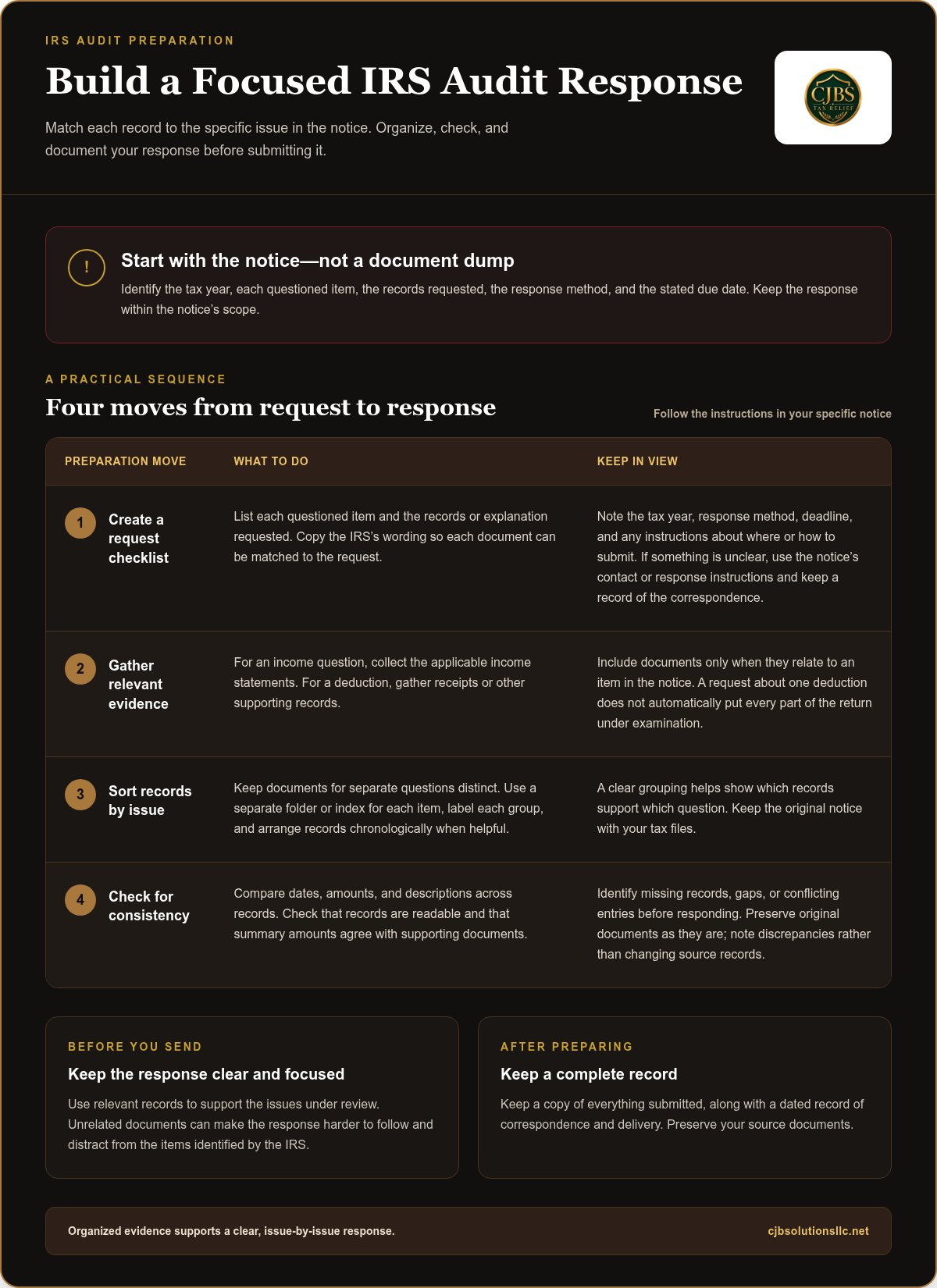
Mark the tax year and each questioned item. Then note the records requested, the response method, and the stated due date. Turn these details into a checklist, and copy the IRS’s wording for each item so you can match your documents to the request. Keep track of any instructions about where or how to submit your response.
The examination format and instructions can vary. Some notices request a response by mail, while others provide a different method or additional directions. Follow the instructions in your specific notice rather than relying on someone else’s experience. If a request or deadline is unclear, use the contact or response instructions in the notice to address the question promptly, and keep a record of the correspondence.
Keep the scope in view. Before including a record, ask whether it supports one of the items listed in the notice. Sending unrelated documents can make your response harder to follow and distract from the issues the IRS identified. For Preparing for an IRS tax audit, begin with the notice, not a search for every document you’ve ever kept.
How to Prepare Records and Build a Focused IRS Audit Response
Once you understand what the notice asks about, build your response around those items. This sequence can make the work more manageable:
- Create a request checklist. List each questioned item and the records or explanation requested for it.
- Gather relevant evidence. For an income question, collect the applicable income statements. For a deduction, gather receipts or other supporting records. Include documents only when they relate to the notice.
- Sort records by issue. Keep documents for separate questions distinct, and label them so it’s clear which item each group supports.
- Check for consistency. Compare dates, amounts, and descriptions across records. Note any gaps or differences before preparing your response.
Complete, organized evidence supports a clear response; an indiscriminate document dump can obscure the records that matter. The IRS’s IRS Audit Techniques Guides provide background on how examiners approach certain industries and issues. Use them for general context, while following the specific records and instructions in your notice.
How can you organize evidence for each audit issue?
Use a separate folder or index for each questioned item, with documents arranged chronologically when that makes the sequence easier to follow. Check that records are readable and that the amounts in your summary agree with the supporting documents. Identify missing records or conflicting entries before responding. Preserve original documents as they are, and note discrepancies rather than changing source records.
Keep a complete copy of everything you submit, along with a dated record of correspondence and delivery. This gives you a reliable reference if you need to review what was sent or when. CJ Business Solutions, LLC provides IRS audit strategy support to help review the issues and supporting records.
IRS Audit Response: When to Hire a Professional
Professional support can be useful if the notice raises several questions, the records involve complex transactions, or you’re unsure how to explain a discrepancy. These situations can make it harder to see how documents relate to one another or what the IRS is asking you to address. Representation can help you assess the request and prepare a considered response.
During Preparing for an IRS tax audit, consider professional guidance if you’re uncertain about the scope of a request, have difficulty reconciling tax records, or are concerned that your explanation may not address the issue clearly. The goal is to understand the questions and prepare a response that speaks to them, rather than make assumptions about the outcome.
What can an Enrolled Agent contribute during audit preparation?
An Enrolled Agent can help review the notice, assess the tax information connected to the questioned items, and plan a response based on the request. This can be especially helpful when several records need to be considered together or when a gap in your documentation needs careful review before you reply.
CJ Business Solutions provides Enrolled Agent-led IRS audit strategy and defense, along with transcript analysis. Reviewing tax history through transcript analysis can help identify issues for further consideration as you prepare. This support can help you understand the matter and organize your response, without promising a particular result.
To learn more about this support, Explore IRS audit representation.
Choose a Clear Next Step
An IRS notice can feel like a disruption, but it doesn’t have to define what happens next. Start by identifying the response deadline and the items under review, then organize the records that speak to each question. Preparing for an IRS tax audit can feel more manageable when you have a clear plan for interpreting the request and preparing your response.
CJ Business Solutions provides IRS audit strategy defense and representation through an Enrolled Agent-led firm. Tax transcript analysis can also help review tax history and identify issues for further consideration. For guidance with your audit response, Explore IRS audit representation.
A thoughtful plan can help you approach the process with greater clarity and keep your response focused on the questions in the notice.
Frequently Asked Questions
Does receiving an IRS audit notice mean I did something wrong?
No. An audit notice is a request to review or clarify tax information, not a conclusion that you acted improperly. The IRS may ask about an item that needs documentation or reconciliation. Before responding, confirm the notice is legitimate by using contact information on IRS.gov rather than relying on unexpected calls, texts, or emails claiming to be from the agency.
Can I ask the IRS for more time to respond to an audit notice?
Yes, you can ask, but an extension isn’t automatic. If Preparing for an IRS tax audit shows you need more time to obtain records, contact the examiner using the details on your notice as soon as possible. Explain what you’re waiting for and ask whether the due date can be extended. Continue to treat the original deadline as applicable unless you receive confirmation otherwise.
How long should I keep records after an IRS audit?
There isn’t one retention period that applies to every audit simply because it has ended. Keep the filed return, supporting records, correspondence, submitted materials, and the audit’s final documents together. How long to retain them can depend on your tax situation and applicable recordkeeping periods. Review IRS guidance for your circumstances before discarding records.
Can an IRS audit be handled by mail?
Yes. Some audits are conducted by correspondence, with questions and document requests handled through the mail. Others may involve a meeting, so follow the format described in your notice. For a mail audit, keep copies of everything you send and evidence of delivery. Check your mail regularly for follow-up requests so you can respond within the stated timeframe.

Article by
Crystal R. Johnson, MBA EA
Crystal Johnson founded CJ Business Solutions to give individuals and small-business owners something often missing from the tax and accounting process: clear explanations, practical solutions, and trusted support.
With more than 27 years of accounting and financial experience, Crystal helps clients understand complicated tax matters, restore compliance, respond to IRS concerns, and make stronger business decisions. As an Enrolled Agent, she is federally authorized to represent taxpayers before the Internal Revenue Service.


