

An IRS notice is not a final judgment, but rather the beginning of a structured negotiation that you have the power to influence. If you've felt the weight of mounting interest rates or the confusion of complex tax transcripts, you're certainly not alone in your concern. With the IRS interest rate on underpayments reaching 7 percent in early 2026, the financial pressure of accounting for unresolved tax liabilities can feel like a heavy burden on your daily life and business operations.
It's natural to feel uncertain about the best path toward resolution, especially when choosing between different professional credentials or trying to decode historical errors in your filings. We believe that this process doesn't have to be a source of constant anxiety. By shifting your perspective, you can transform these challenges into a managed strategic workstream that prioritizes your long-term financial health. This guide provides a clear roadmap to becoming IRS-compliant through expert representation and transcript analysis. You'll learn how to reduce penalties through professional negotiation and establish a protective strategy that guards against future audits, allowing you to move forward with quiet confidence and a steady plan for the future.
Key Takeaways
- Understand how viewing tax debt as a strategic workstream can preserve business cash flow while accounting for unresolved tax liabilities.
- Learn how specialized transcript analysis acts as a financial diagnostic to uncover the internal IRS perspective on your tax history.
- Discover the specific advantages of working with an Enrolled Agent who provides unlimited representation rights and expert audit strategy defense.
- Identify the qualities of a reliable resolution partner by prioritizing methodical, educational guidance over high-pressure sales tactics.
- Follow a steady roadmap that transforms the stress of receiving an IRS notice into a clear, managed path toward a formal resolution agreement.
The Scope of Accounting for Unresolved Tax Liabilities
Unresolved tax liabilities represent unpaid federal balances that have progressed beyond the standard filing deadline. While many see these as a static debt, they're actually dynamic financial obligations that grow daily. In the current economic climate of 2026, treating these liabilities as a strategic workstream is essential for protecting a company's cash flow. When the IRS interest rate for underpayments sits at 7 percent, as it did in early 2026, passive avoidance becomes a significant expense. Professional accounting for unresolved tax liabilities requires moving beyond simple record-keeping to a proactive defense of your business assets.
A significant part of this process involves understanding tax noncompliance and identifying where historical errors may have inflated your balance. Relying on potentially flawed internal records when communicating with federal authorities can be a costly mistake. Instead, a methodical review ensures that the debt you're addressing is accurate and verified. This diagnostic approach allows you to engage with the IRS from a position of clarity rather than confusion.
Compliance vs. Resolution: Knowing the Difference
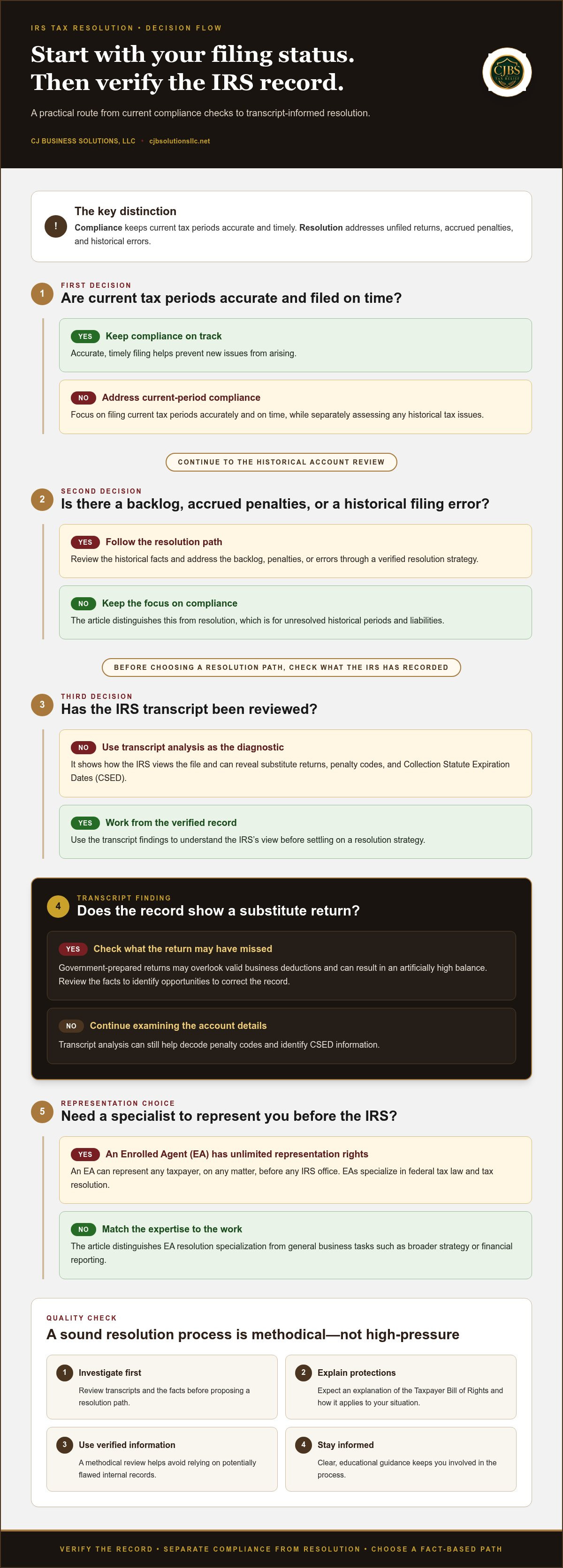
It's helpful to distinguish between tax compliance and tax resolution. Compliance focuses on the accuracy and timely filing of current tax periods to prevent new issues from arising. In contrast, resolution addresses the backlog of unfiled returns, accrued penalties, and historical errors. While compliance keeps you in good standing today, resolution provides the path to clearing the shadows of the past through professional negotiation.
The Fiduciary Risk of Unresolved Federal Debt
Unresolved debt carries weight far beyond a balance sheet. It often prevents a company from securing necessary financing or successfully navigating a business sale, as lenders and buyers prioritize clean tax records. Perhaps most importantly, business owners face personal liability risks regarding trust fund taxes. Addressing these liabilities isn't just a financial necessity; it's a step toward long-term protection for your professional legacy and personal peace of mind.
Strategic Tools: Enrolled Agents and Transcript Analysis
Effective management of tax debt requires specialized tools that go beyond basic bookkeeping. When a business is focused on accounting for unresolved tax liabilities, the most critical asset is often the expertise of an Enrolled Agent. These professionals are unique because they are IRS-credentialed Enrolled Agents who specialize specifically in federal tax law. Unlike generalist accountants who may handle a wide variety of business tasks, an EA focuses their energy on the complexities of the Internal Revenue Code and the nuances of tax resolution.
The Enrolled Agent Advantage in Federal Representation
EAs hold unlimited representation rights. This status allows them to represent any taxpayer on any matter before any IRS office. While a CPA might be excellent for general business strategy or financial reporting, an EA is a dedicated specialist for resolution cases. They act as a seasoned mentor, providing a steady presence during interactions with federal authorities. This specialized focus is vital when developing an audit strategy defense that prioritizes your long-term stability and protects your interests against aggressive collection efforts.
Decoding Your Tax History with Transcript Analysis
Transcript analysis serves as a financial diagnostic that provides a transparent view of your standing. It reveals exactly how the IRS views your file, including any "substitute returns" they may have filed on your behalf. Since these government-prepared returns often overlook valid business deductions, they frequently result in an artificially high balance. By decoding specific penalty codes and identifying the Collection Statute Expiration Dates (CSED), an EA can pinpoint where the IRS has made assumptions. This methodical approach to accounting for unresolved tax liabilities often uncovers opportunities to correct the record and reduce the total amount owed. If you're ready to see your tax history clearly, you might consider how a professional transcript review can illuminate the path forward.
How to Evaluate Professional Accounting and Tax Services
Selecting a partner to assist with your federal tax debt is a decision that impacts your business's future stability. When evaluating potential firms, it's wise to prioritize those that offer a methodical, educational approach rather than high-pressure sales pitches. A reliable guide will take the time to explain the Taxpayer Bill of Rights and how these protections apply to your specific situation. This transparency ensures you remain in control of the process while receiving the support you need.
A key distinction to look for is a firm’s specialization in IRS audit strategy defense. While many providers offer general bookkeeping, professional accounting for unresolved tax liabilities requires a much deeper understanding of procedural law. You should expect a clear explanation of how the firm utilizes transcript reviews before they propose a resolution path. A firm's approach to accounting for unresolved tax liabilities should always begin with a thorough investigation of the facts. This diagnostic phase is essential because it prevents the adoption of a strategy that may not align with the actual data held by the IRS.
Questions to Ask a Potential Tax Resolution Partner
- Do you perform a detailed transcript analysis before recommending an Offer in Compromise or an Installment Agreement?
- Will an Enrolled Agent be personally handling my representation during federal examinations?
Identifying Red Flags in Tax Relief Marketing
It's important to be cautious of firms that guarantee specific results or offer "pennies on the dollar" settlements before they've even reviewed your IRS transcripts. These promises often ignore individual financial realities and the strict criteria the IRS uses for debt adjustment. The IRS included aggressive "OIC mills" on its 2026 Dirty Dozen list of tax scams for a reason. Instead, look for a partner committed to long-term compliance and preventing future disputes. If you're seeking a firm that values substance over flash, you can learn more about our methodical approach to tax resolution today.
The Path to Resolution: From Anxiety to Compliance
The journey toward IRS compliance often begins with the arrival of a stressful notice, yet this moment can serve as the catalyst for a more stable financial future. When a business owner embraces professional accounting for unresolved tax liabilities, the process moves through a logical progression: a diagnostic review, strategic negotiation, and finally, a formal resolution agreement. Throughout this transition, a professional firm acts as a steady partner, managing the direct interactions with federal authorities so you can focus on your daily operations.
Once a resolution is achieved, the focus shifts toward maintaining that standing. Post-resolution monitoring is essential to ensure that your business adheres to the terms of the agreement and remains compliant with federal laws. This long-term perspective prevents the recurrence of past errors and protects your cash flow from the 5 percent monthly failure-to-file penalties that can quickly accumulate. Having a seasoned mentor to navigate these complex regulations provides a level of peace of mind that is invaluable for any business owner.
The CJ Business Solutions, LLC Methodology
Our approach is rooted in a deep respect for your autonomy and a commitment to transparency. We believe that informed clients make the best decisions, which is why we prioritize information-sharing at every stage of the process. By utilizing a methodical transcript review, we build a custom defense tailored specifically to your unique tax history. This diagnostic strategy ensures that every resolution path we propose is supported by the actual data held by the IRS, providing a secure foundation for your defense.
Taking the First Step Toward Financial Clarity
We encourage business owners to view transcript analysis as a vital preventative measure. Even if you haven't received a recent notice, a professional review can identify potential discrepancies before they escalate into formal audits or levies. Our consultations are designed to mirror a calm, face-to-face professional meeting, offering a stable environment to discuss national tax issues. Taking this step toward accounting for unresolved tax liabilities allows you to move from a state of uncertainty to one of managed, strategic clarity.
Establishing a Secure Financial Future
We have explored how shifting from passive anxiety to proactive management can fundamentally change the trajectory of your business. By utilizing transcript analysis to uncover the IRS's internal view and engaging an Enrolled Agent for unlimited representation, you gain the clarity needed to resolve complex disputes. Effective accounting for unresolved tax liabilities is not just about addressing a balance; it's about verifying the accuracy of that debt and protecting your rights as a taxpayer through every stage of the process.
As you consider the next steps for your business, we invite you to Connect with CJ Business Solutions, LLC for Strategic Tax Resolution. Our firm is led by an Enrolled Agent with unlimited IRS representation rights, specializing in federal IRS audit strategy defense for clients nationwide. We pride ourselves on acting as a seasoned mentor, helping you transform historical tax issues into a managed and predictable workstream.
You don't have to navigate these complex regulations alone. With a steady partner and a methodical roadmap, you can achieve lasting compliance and return your focus to growing your enterprise with quiet confidence. We look forward to supporting your path toward financial clarity and stability.
Common Questions Regarding Federal Tax Resolution
What is the difference between an Enrolled Agent and a CPA for tax resolution?
An Enrolled Agent is a federal tax specialist licensed directly by the Internal Revenue Service with unlimited representation rights for all taxpayers. While a CPA is a state-licensed generalist who may focus on various financial tasks, an EA's expertise is specifically rooted in the complexities of the Internal Revenue Code. This specialization is particularly beneficial when you're managing the nuances of federal disputes, as it ensures your representative is deeply familiar with the specific procedural rules and audit strategies of the IRS.
How can transcript analysis reduce my unresolved tax liability?
Transcript analysis reduces liabilities by revealing the specific data the IRS uses to calculate your balance, allowing a professional to identify errors or omissions. For instance, if the IRS filed a substitute return on your behalf, they likely didn't include valid business deductions. By decoding these records, we can correct the record and potentially lower the total amount. This methodical approach is a cornerstone of professional accounting for unresolved tax liabilities, providing a diagnostic view of your historical filings.
What happens if I ignore an IRS audit notice or a federal tax lien?
Ignoring an IRS notice or lien typically triggers aggressive collection actions, such as bank levies or the seizure of business assets. A federal tax lien is a public claim against your property that protects the government's interest, which can severely damage your credit and ability to secure financing. These issues don't resolve themselves; instead, they accrue interest and penalties daily. Addressing these notices early with a seasoned mentor allows you to establish a managed path toward resolution before your assets are compromised.
Can professional accounting services help with IRS wage garnishment?
Professional tax resolution services can assist with wage garnishment by negotiating a release with the IRS and establishing a formal repayment plan. To stop a garnishment, you generally need to demonstrate that you're taking active steps toward compliance or that the levy creates a significant financial hardship. A representative can facilitate this communication, ensuring that the IRS receives the necessary documentation to evaluate your case fairly. This intervention helps restore your cash flow while you work toward a long-term settlement agreement.
Is it possible to settle back taxes for less than the full amount owed?
It's possible to settle back taxes for less than the full amount through an Offer in Compromise, provided you meet the IRS's strict eligibility requirements. The IRS evaluates your ability to pay based on your income, expenses, and asset equity. While aggressive marketing often overpromises results, a legitimate settlement is a valid path for those who truly cannot pay their full liability. We use professional accounting for unresolved tax liabilities to determine if your financial situation aligns with the criteria for these federal programs.

Article by
Crystal R. Johnson, MBA EA
Crystal Johnson founded CJ Business Solutions to give individuals and small-business owners something often missing from the tax and accounting process: clear explanations, practical solutions, and trusted support.
With more than 27 years of accounting and financial experience, Crystal helps clients understand complicated tax matters, restore compliance, respond to IRS concerns, and make stronger business decisions. As an Enrolled Agent, she is federally authorized to represent taxpayers before the Internal Revenue Service.


