

What if the hardest part of an IRS examination isn’t calculating the tax, but finding the records that explain the numbers? It’s easy to lose time when receipts, reconciliations, or clear explanations are missing. Tax accounting for audit readiness is a year-round practice, not a last-minute document search.
This practical 2026 checklist covers records to maintain, recurring accounting checks, and ways to spot documentation gaps while there’s time to address them. You’ll also learn how to organize records for retrieval and how tax-aware accounting differs from audit defense. If an IRS matter arises, transcript analysis and Enrolled Agent representation can help address the account information and examination. The support you need depends on whether you’re organizing records, reviewing a tax position, or responding to an examination.
Key Takeaways
- Tax accounting for audit readiness helps organize records that support reported income, deductions, credits, and tax positions, but it cannot prevent an examination.
- Use recurring reviews to catch missing source documents, unreconciled accounts, and unexplained differences between bookkeeping records and tax return figures.
- Keep payroll and asset records connected to the transactions they support so relevant documentation is easier to retrieve.
- Ongoing accounting and IRS representation address different needs. Transcript analysis may help clarify tax account information when an IRS matter arises.
Tax Accounting for Audit Readiness: What It Means, and What It Cannot Guarantee
Tax accounting for audit readiness means keeping organized, retrievable records that show how reported income, deductions, credits, and other tax positions were calculated. The goal is to connect each material tax return amount to supporting evidence and a clear accounting trail, rather than having to reconstruct the explanation after questions arise.
Well-organized records can make it easier to review an entry and respond to an information request, but they cannot prevent an IRS examination or guarantee a particular result. Readiness means being prepared to explain the return with relevant support, not controlling whether a return is examined.
Which accounting records help support a business tax return?
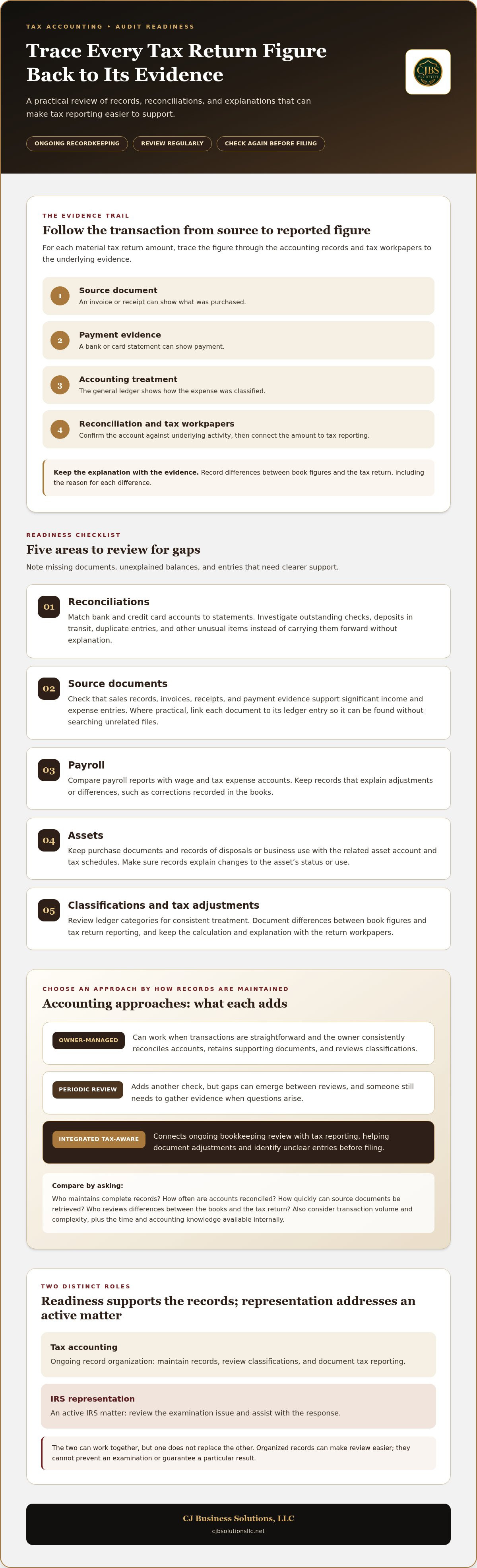
Think of records as connected evidence. For a business expense, an invoice or receipt can show what was purchased, a bank or card statement can show payment, and the general ledger can show how the expense was classified. A reconciliation helps confirm that the account agrees with the underlying activity. Together, these records make it easier to follow the transaction from purchase to reported figure.
Contemporaneous records, created or maintained close to the time of a transaction, help substantiate business tax return entries by documenting the transaction and its accounting treatment. The records needed depend on the transaction, its tax treatment, and applicable IRS guidance. Retention needs can also vary, so do not assume one period applies to every record. Check current IRS recordkeeping guidance for the relevant circumstances.
Tax accounting and representation serve related but distinct purposes. If an IRS matter arises, Tax Audit Representation describes the separate role of representing a taxpayer during an examination. Strong, well-organized accounting gives that review a clearer documentary foundation, while representation addresses the active matter.
Use This Tax Accounting Checklist to Find Readiness Gaps
Use this review regularly and again before filing. Note missing documents, unexplained balances, and entries that need clearer support. For each material tax return amount, trace the figure back through the tax workpapers and accounting records to the underlying evidence. Record any difference between the books and the return, along with the reason for it.
- Reconciliations: Match bank and credit card accounts to statements. Investigate outstanding checks, deposits in transit, duplicate entries, and other unusual items instead of carrying them forward without explanation.
- Source documents: Check that sales records, invoices, receipts, and payment evidence support significant income and expense entries. Where practical, link each document to its ledger entry so it can be found without searching through unrelated files.
- Payroll: Compare payroll reports with wage and tax expense accounts. Keep records that explain adjustments or differences, such as corrections recorded in the books.
- Assets: Keep purchase documents and records of disposals or business use with the related asset account and tax schedules. Make sure the records explain changes to the asset’s status or use.
- Classifications and tax adjustments: Review ledger categories for consistent treatment, then document differences between book figures and tax return reporting. Keep the calculation and explanation together with the return workpapers.
How can businesses compare accounting approaches for audit readiness?
Owner-managed records can work when transactions are straightforward and the owner consistently reconciles accounts, retains supporting documents, and reviews classifications. Periodic bookkeeping review adds another check, but gaps can emerge between reviews, and someone still needs to gather the evidence when questions arise. Integrated tax-aware accounting connects ongoing bookkeeping review with tax reporting, helping document adjustments and identify unclear entries before filing.
Compare approaches by asking who maintains complete records, how often reconciliations happen, how quickly source documents can be retrieved, and who reviews differences between the books and the tax return. Consider the transaction volume and complexity, as well as the time and accounting knowledge available internally. CJ Business Solutions, LLC tax and accounting support can help organize records and review tax-related accounting.
When Tax Accounting and IRS Audit Representation Work Together
Tax accounting and IRS representation address different needs, often at different stages. Ongoing accounting helps keep financial records organized and tax reporting supported. If the IRS opens an examination, representation focuses on understanding the matter, preparing a response, and communicating with the agency. One supports readiness; the other addresses an active examination.
| Support | Primary focus | Typical role |
|---|---|---|
| Tax accounting | Ongoing record organization | Maintain records, review classifications, and document tax reporting. |
| IRS representation | An active IRS matter | Review the examination issue and assist with the response. |
Recordkeeping readiness means having organized support for tax return entries; representation means assisting a taxpayer during an IRS examination. The two can work together, but one does not replace the other. Tax accounting for audit readiness creates a clearer record trail for review, while representation addresses questions raised in an active matter.
What professional support may look like when an IRS examination begins
An Enrolled Agent may represent taxpayers before the IRS in matters within the agent’s authorization, subject to current IRS rules and applicable requirements. Support can begin with reviewing the notice and identifying the issues and information requested. Transcript analysis can help examine tax account information and flag items that may need further attention. Consider it alongside the notice and the taxpayer’s own records.
CJ Business Solutions, LLC provides IRS audit strategy defense and transcript analysis. Reviewing account information, the examination issue, and available records together can help clarify what needs attention, without promising a particular outcome. Tax accounting or audit representation with CJ Business Solutions, LLC can address your tax and examination needs.
Build a Steadier Recordkeeping Routine
Set a recurring time to review records, resolve unclear entries, and note what still needs support. Assign responsibility for each task, such as reconciling accounts, filing source documents, and reviewing book-to-return differences. A consistent process makes it easier to find gaps while transaction details are still accessible. Tax accounting for audit readiness is not a one-time project; it is a routine to refine as your business and reporting needs change.
CJ Business Solutions, LLC is led by an Enrolled Agent and provides tax accounting, audit strategy defense, and transcript analysis. To discuss the support you need, explore tax accounting and IRS representation support.
Frequently Asked Questions
Can audit-ready tax accounting prevent an IRS audit?
No. Tax accounting for audit readiness cannot control whether the IRS selects a return for examination. Its value is practical: if questions arise, organized records can help you locate relevant transactions, understand how figures were reported, and prepare a clearer response. Readiness supports documentation, not immunity from review or a guaranteed examination outcome.
What happens if business records do not match a filed tax return?
Start by identifying what differs and why. A book expense, for example, may have been treated differently for tax reporting, while a missing bank transaction could indicate an error that needs closer review. Keep a written explanation and the supporting calculations with the relevant records. If you discover a possible filing error or receive an IRS notice, review the issue promptly with CJ Business Solutions, LLC before taking corrective action.
Can an Enrolled Agent represent a business in an IRS audit?
Yes. An Enrolled Agent may represent a business before the IRS, subject to applicable authorization and current IRS rules. Representation may include communicating with the agency and helping address examination questions. Gather the relevant notice, filed return, and records for the period under review so the representative can understand the issue and determine what information is needed.
How often should a business review its tax accounting records?
Review records on a regular schedule suited to transaction volume and complexity. Monthly account reconciliations can help surface missing entries while details are easier to locate. A periodic review of tax classifications can catch inconsistencies before filing. Also review records after unusual transactions, such as a major asset purchase, and allow time to resolve open questions before preparing the return.

Article by
Crystal R. Johnson, MBA EA
Crystal Johnson founded CJ Business Solutions to give individuals and small-business owners something often missing from the tax and accounting process: clear explanations, practical solutions, and trusted support.
With more than 27 years of accounting and financial experience, Crystal helps clients understand complicated tax matters, restore compliance, respond to IRS concerns, and make stronger business decisions. As an Enrolled Agent, she is federally authorized to represent taxpayers before the Internal Revenue Service.


