

What if the most effective way to address your IRS liabilities isn't through an aggressive settlement, but through a quiet, methodical analysis of your tax history? If you've felt the weight of mounting interest or the fear of a sudden wage garnishment, you're certainly not alone in seeking federal tax debt help. It's understandable to feel overwhelmed by the complexity of the tax code, especially with interest rates on underpayments reaching 7% in the first quarter of 2026. We believe that clarity and professional representation are the most reliable tools for restoring your financial peace of mind.
We're pleased to share a clear roadmap that helps you understand the legitimate resolution options available to you this year. We'll explore the significance of transcript analysis as a diagnostic tool and look at how the new Automatic Exemption from Penalty program, launching this summer, may offer relief for eligible taxpayers. Our goal is to provide you with the information necessary to move toward compliance with confidence and stability.
Key Takeaways
- Recognize that federal tax debt is a composite of the original liability, daily compounded interest, and statutory penalties, making early intervention a priority.
- Explore the structured requirements of Installment Agreements and the Offer in Compromise to find the most suitable form of federal tax debt help for your household.
- Understand the critical role of transcript analysis in identifying overlooked deductions or IRS errors that could significantly reduce your total amount owed.
- Discover the benefits of professional representation by an Enrolled Agent, who serves as a knowledgeable guide and advocate in all communications with the IRS.
- Learn how to navigate the 2026 IRS collection landscape, including the specific thresholds for tax liens and the availability of streamlined repayment plans.
The Reality of Federal Tax Debt: Why It Happens and Why to Act Now
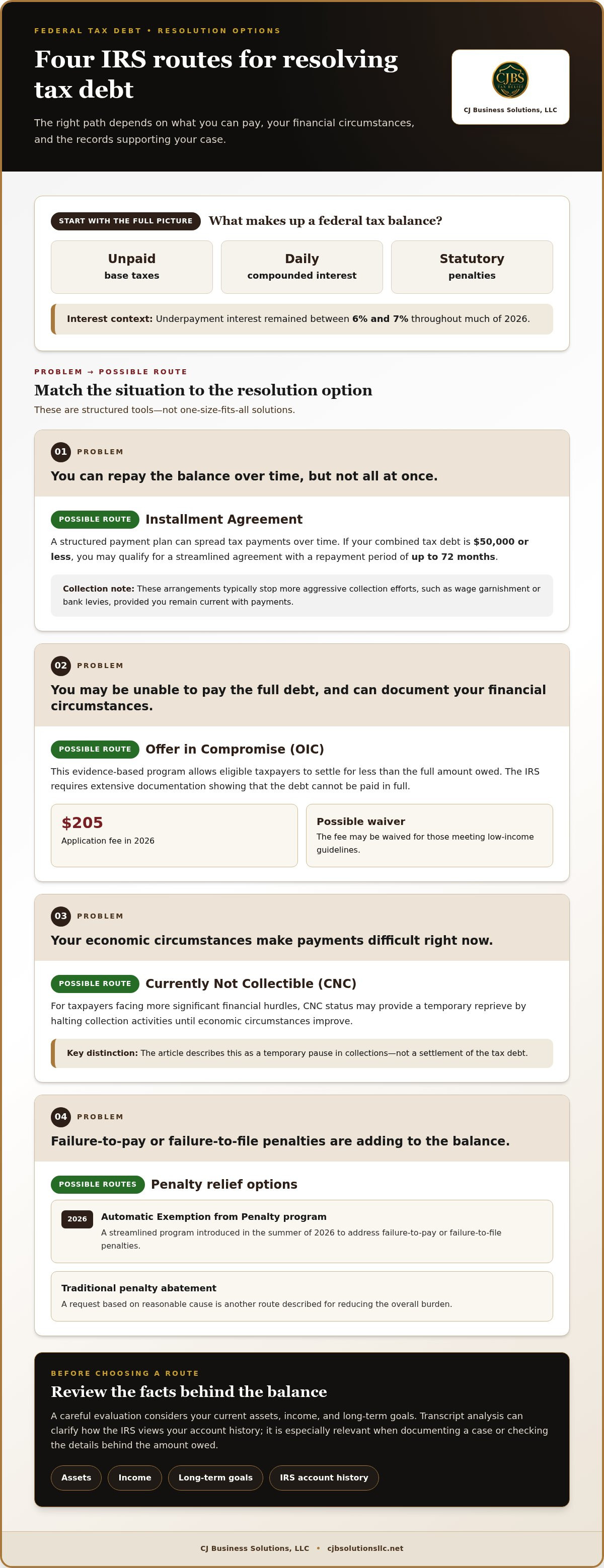
It may be helpful to begin by clarifying exactly what constitutes a tax liability. When we speak of federal tax debt, we're referring to a cumulative figure that includes your unpaid base taxes, daily compounded interest, and various statutory penalties. For many taxpayers, the debt grows not from a single event, but from a combination of factors such as insufficient employer withholding, the complexities of self-employment tax, or simple clerical errors on a prior return. These back taxes can accumulate quickly, especially with interest rates on underpayments remaining between 6% and 7% throughout much of 2026.
While the presence of a tax balance is naturally a source of concern, it's possible to address the situation with quiet confidence. By acting as a reliable guide, we aim to help you move away from the high stress of mounting penalties and toward a structured resolution. Taking a methodical approach early in the process often prevents the more disruptive collection actions that the IRS is legally required to pursue when accounts remain unaddressed.
The Consequences of Inaction
If a tax balance remains unpaid, the IRS follows a specific progression of notices designed to secure the government's interest. This process typically moves from initial balance-due reminders to more serious measures, such as the filing of a Notice of Federal Tax Lien or the issuance of a levy. In 2026, the failure-to-file penalty remains significant at 5% of the unpaid tax for each month a return is late. When these penalties are combined with daily interest, the total burden can expand by 25% or more in a relatively short period, making it difficult to regain your footing without professional federal tax debt help.
A Reassuring Path Toward Compliance
It's important to remember that the IRS has established clear protocols for taxpayers who find themselves unable to pay their balance in full immediately. The tax landscape in 2026 is increasingly focused on automated relief and streamlined processes, such as the new Automatic Exemption from Penalty program launching this summer. By following a steady, step-by-step strategy, you can navigate these options without the need for panic. We prioritize a thorough understanding of your specific history to ensure that any path we choose is both sustainable and compliant with current regulations.
Legitimate IRS Resolution Options: Finding the Right Fit
Identifying the most suitable path for your financial situation requires a careful review of your current assets, income, and long-term goals. The IRS provides several established avenues for taxpayers to address their liabilities, each with its own set of eligibility requirements and procedural steps. When you seek federal tax debt help, it's beneficial to approach these options as a series of structured tools rather than a one-size-fits-all solution. Whether you require a temporary pause in collections or a long-term repayment strategy, a methodical evaluation ensures you select the most sustainable route forward.
Structured Payment Plans
Installment Agreements are perhaps the most common method for resolving tax balances over time. If your combined tax debt is $50,000 or less, you may qualify for a streamlined installment agreement, which allows for a repayment period of up to 72 months. These arrangements are particularly helpful because they typically stop more aggressive collection efforts, such as wage garnishment or bank levies, provided you remain current with your payments. You can review the various IRS payment options to see which plan aligns with your monthly budget. For those facing more significant financial hurdles, the "Currently Not Collectible" status may offer a temporary reprieve by halting collection activities until your economic circumstances improve.
The Truth About Tax Settlements
The Offer in Compromise (OIC) is a specific, evidence-based program that allows eligible taxpayers to settle their debt for less than the full amount owed. In 2026, the application fee for an OIC is $205, though this may be waived for those meeting low-income guidelines. It's important to maintain a realistic perspective on this option. While it can be a life-changing tool for those who qualify, the IRS requires extensive documentation to prove that the debt cannot be paid in full. We encourage you to be cautious of high-energy marketing that promises "pennies on the dollar" without first performing a deep dive into your financial records. If you're unsure which path is right for you, exploring professional tax resolution services can provide the clarity and transcript analysis needed to make an informed decision.
Additionally, the new Automatic Exemption from Penalty program, introduced in the summer of 2026, offers a streamlined way to address failure-to-pay or failure-to-file penalties. This program, alongside traditional penalty abatement requests based on reasonable cause, represents a significant opportunity to reduce the overall burden of your debt through compliant, professional negotiation.
The Strategic First Step: Why Transcript Analysis Is Critical
Before deciding on a specific path for federal tax debt help, it's essential to understand exactly how the IRS views your account history. A formal transcript analysis serves as a deep dive into the official record of your tax life, providing a level of detail that standard notices often lack. This diagnostic process allows for the identification of technical errors, such as misapplied payments or deductions that were never properly credited to your balance. By uncovering these discrepancies, we ensure that your resolution strategy is based on accurate data rather than incomplete assumptions.
One of the most valuable pieces of information revealed during this process is the Collection Statute Expiration Date (CSED). The IRS generally has ten years from the date of assessment to collect a tax debt, and knowing this date is vital when determining what to do if you can't pay your taxes. If a debt is nearing its expiration, the strategy for resolution might shift significantly compared to a newly assessed liability. This level of insight allows for a more methodical and reassuring approach to your financial compliance.
Decoding IRS Language
IRS transcripts are written in a specialized language of transaction codes and status indicators. To the untrained eye, these documents can appear as a confusing series of numbers, but for an expert, they tell a complete story. A professional analysis looks for specific "red flags" that might suggest a higher risk for an audit or indicate that a previous return requires an amendment. By identifying these issues early, we can address potential complications before they interfere with your resolution progress, maintaining a calm and steady path forward.
Developing Your Resolution Roadmap
The data gathered from your transcript acts as the roadmap for all future negotiations. Rather than guessing which program might work, this evidence-based approach informs the negotiation strategy with precision. It's often helpful to work with a "Seasoned Mentor" who can interpret these complex documents and translate them into a clear plan of action. If you're ready to see the true status of your account, our transcript analysis services provide the foundational data needed to secure a stable financial future.
Navigating the Path Forward: The Role of Professional Representation
Securing an accurate diagnosis through transcript analysis is a vital beginning, yet the effectiveness of your resolution often depends on how that data is presented to the IRS. Professional representation serves as a necessary buffer, ensuring that all communications are handled with precision and a deep understanding of tax law. This distance allows for a composed approach to your case, where negotiations are driven by facts and established protocols rather than the high emotions that often accompany tax liabilities.
A central component of this support is audit strategy defense, which protects your interests during any official inquiry. By prioritizing substance and long-term trust, a seasoned partner helps you maintain compliance while seeking the most favorable outcome allowed under current regulations. This methodical way of working ensures that your federal tax debt help is not just a temporary fix, but a foundation for lasting financial stability.
The Advantage of an Enrolled Agent
An Enrolled Agent holds the highest credential awarded by the IRS and is a federally authorized tax practitioner with unlimited rights to represent taxpayers before the agency. Unlike general accounting services that may focus primarily on bookkeeping or business consulting, an Enrolled Agent specializes specifically in tax law and resolution strategies. This specialized expertise is particularly beneficial when you're navigating complex audits or negotiating settlement agreements, as it ensures your representative is intimately familiar with the internal procedures and standards of the IRS.
Taking the Next Step with Confidence
We believe that a clear, methodical plan is the most effective remedy for the stress associated with tax debt. If you're feeling overwhelmed by mounting penalties or the threat of collection actions, we invite you to begin with a professional consultation and transcript analysis. This initial step provides the clarity needed to choose your path with certainty. We encourage you to learn how CJ Business Solutions, LLC can help you resolve your federal tax debt through expert-led strategies and a commitment to your long-term success.
Restoring Your Financial Peace of Mind
Resolving your tax liabilities is a journey that begins with a single, informed step. We've explored how a methodical approach, centered on transcript analysis and professional representation, can transform a stressful situation into a manageable plan. By identifying the specific codes within your IRS record and understanding the various resolution programs available in 2026, you can move forward with quiet confidence. It's possible to address your balance without the pressure of aggressive collection efforts when you have a clear roadmap in hand.
Our firm is led by an Enrolled Agent authorized to represent taxpayers in all 50 states, providing you with a reliable guide through the complexities of federal tax law. We specialize in audit strategy defense and utilize a data-driven methodology to ensure your interests are protected. If you're ready to secure the federal tax debt help you deserve, we invite you to request a professional transcript analysis from CJ Business Solutions, LLC. We're here to offer the steady, expert support you need to navigate this process at your own pace and reclaim your financial stability.
Frequently Asked Questions
What is the first thing I should do if I receive an IRS notice about tax debt?
The first step is to carefully read the notice and verify the specific tax period and amount being questioned. It's often helpful to compare the IRS's figures with your own records to identify any obvious discrepancies. Taking this initial action promptly prevents the automatic progression of collection efforts and allows you to address the matter with a calm, methodical perspective.
Can I really settle my tax debt for less than what I owe?
Legally settling for less than the full amount is possible through the Offer in Compromise program, though it requires substantial financial documentation. The IRS evaluates your ability to pay based on your income, expenses, and asset equity. While the 2026 application fee is $205, this can be waived for those who qualify under low-income guidelines, making it a viable form of federal tax debt help for those in genuine hardship.
How does an Enrolled Agent differ from a CPA when dealing with the IRS?
An Enrolled Agent is a federally authorized tax practitioner who has earned the highest credential awarded by the IRS, specifically focusing on tax law and representation. While CPAs have broad expertise in accounting and auditing, Enrolled Agents specialize in navigating the complexities of the tax code and defending taxpayers in audits. This specialized focus makes them ideal partners for resolving intricate debt issues.
What is an IRS transcript analysis, and why do I need one?
Transcript analysis is a deep dive into the official IRS records of your tax history to identify errors, misapplied payments, or missed deductions. This process reveals the Collection Statute Expiration Date, which tells us exactly how much time the IRS has left to collect the debt. It's a critical diagnostic tool that ensures your resolution strategy is based on facts rather than guesswork.
Will the IRS stop my wage garnishment if I seek professional help?
Seeking professional help can often lead to the release of a wage garnishment by establishing a formal resolution plan with the IRS. Once an Installment Agreement is accepted or Currently Not Collectible status is granted, the IRS typically stops taking a portion of your paycheck. Having an Enrolled Agent manage these negotiations provides a professional buffer that can help expedite the process and lower your stress.
How long does the federal tax debt resolution process usually take?
The duration of the resolution process depends on the complexity of your case and the specific option you pursue. A streamlined installment agreement might be established in just a few weeks, while an Offer in Compromise can take six to twelve months for the IRS to fully investigate and approve. We prioritize a steady, thorough pace to ensure every detail is handled correctly for your long-term success.

Article by
Crystal R. Johnson, MBA EA
Crystal Johnson founded CJ Business Solutions to give individuals and small-business owners something often missing from the tax and accounting process: clear explanations, practical solutions, and trusted support.
With more than 27 years of accounting and financial experience, Crystal helps clients understand complicated tax matters, restore compliance, respond to IRS concerns, and make stronger business decisions. As an Enrolled Agent, she is federally authorized to represent taxpayers before the Internal Revenue Service.


